
El Hospital F-M Habana realiza el primer implante de Regeneten en España y Europa continental
Hace aproximadamente un mes, se realizó por primera vez en España el primer implante de Regeneten para el tratamiento de una recidiva en una rotura de tendón supraespinoso, intervenida hace 9 meses con una técnica de hilera simple. Se ha utilizado como aumentación biológica, tras una nueva reparación en doble hilera Speedbridge.
Una de las patologías que más se trata en Hospital, casi en un 80 por ciento, es la de hombro especialmente la del manguito rotador, específicamente con roturas o bien del tendón supraespinoso o del infraespinoso. Esos tendones muchas veces se rompen por sobreuso, no por un traumatismo, sino porque algo incide sobre un tendón que ya está previamente dañado y lesionado, entonces eso hace que se rompa. Y esa misma razón, le añade dificultad al tratamiento y a la cicatrización.
En la actualidad estás lesiones se tratan con buenos resultados por artroscopia, haciendo construcciones muy sólidas, pero la parte biológica, es decir la parte que hace que ese tendón cicatrice, no está todavía del todo resuelta. Se han intentado muchas tratamientos, el plasma rico en plaquetas que no parece que tenga una influencia decisiva en el tendón y lo que se ha realizado de manera pionera en el Hospital Fraternidad-Muprespa Habana, es un parche de colágeno bovino, que actúa como si de un andamiaje se tratara, sobre el que penetran células que ayudan a reestablecer la integridad estructural del tendón.
Esos parches se ponen sobre tendones que se han reparado, que siguen dañados y no tienen muy buena salud, para que independientemente de la parte mecánica, que es lo que se hace normalmente a través de las suturas, se complemente con algo biológico, es decir que las células puedan crecer y cicatrizar con más facilidad ese tendón.
Este parche de colágeno bovino es muy fino, bioinductor (no tiene ningún tipo de resistencia mecánica) y se va a utilizar en aquellos casos de reintervenciones por suturas que han fallado previamente y en tendones en muy mal estado.
El parche viene premontado en un dispositivo que lo despliega y se une al tendón con material reabsorbible, biocompatible, poliláctico y con poliéter éter cetona (PEEK).
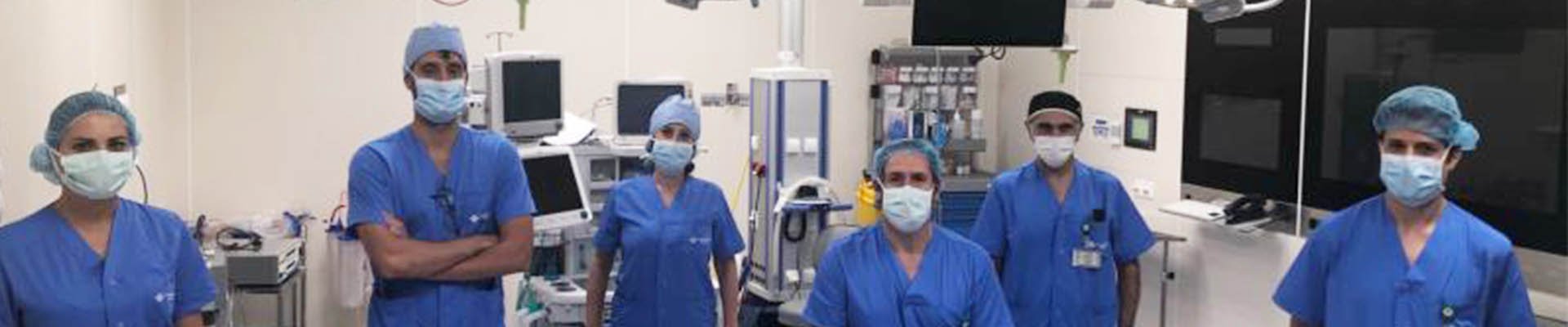
En la intervención participaron el jefe del servicio de Traumatología, los integrantes de la unidad de Hombro y Codo, además del personal del bloque quirúrgico que ayudaron a hacer más fácil el trabajo de esta nueva técnica.
Hemos sido los primeros en utilizar este parche en España y en Europa Continental, se ha hecho uno en Reino Unido y en EE.UU ya se lleva realizada más casuística, porque además allí lo utilizan en otro tipo de roturas, las parciales articulares del tendón.
Además está abierto un programa piloto en el que se van a intercambiar estadísticas y experiencias de cuatro países europeos Alemania, Francia, Italia y España, con un registro común para los pacientes intervenidos con esta técnica y poder sacar conclusiones de su funcionamiento y el Hospital Fraternidad-Muprespa Habana aportará los resultados obtenidos de esta innovadora técnica.