
Change in risk perception in road safety through virtual reality: Prevencia 2019
XPROTXe99 f2c79 “Experiences of technology applied to occupational health”.
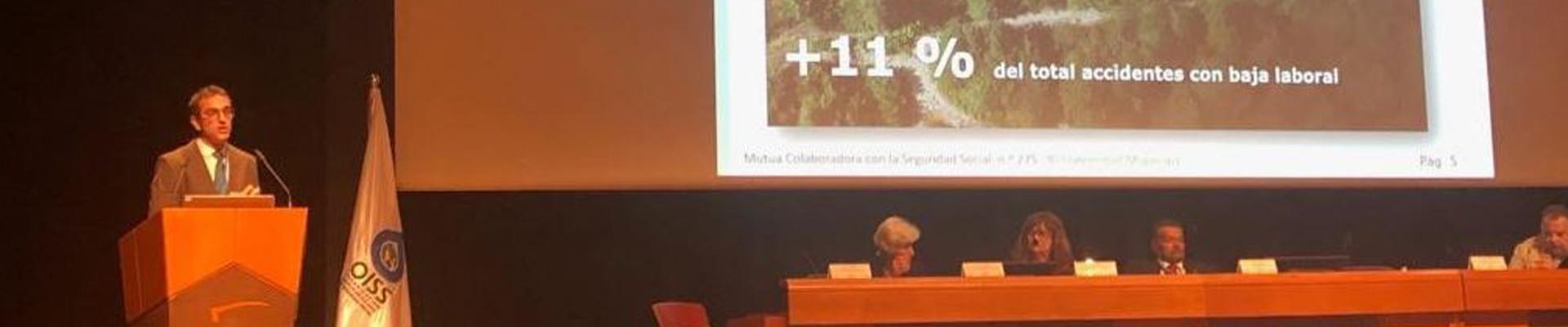
David Revillo Vidales, senior occupational risk prevention technician, gave the presentation “Changing the perception of risk with Virtual Reality”, focused on the need to act on the human factor to achieve behavioral changes while driving."The majority of traffic accidents are caused by the human factor, around 90%. Excessive speed, alcohol, drugs, medications, distractions, vehicle maintenance, non-use of passive safety systems, fatigue, tiredness constitute unsafe behaviors that we must change."
Workplace accidents are an issue that must be addressed from the preventive culture of companies with the goal of zero injuries in traffic accidents."Data at the workplace level indicate that every 3 days, 2 workers die due to work-related traffic accidents, both those that take place while traveling during the day and those that we suffer when going or returning to work. Every day more than 180 workers suffer accidents due to traffic. The consequences are clear from an economic point of view but also on a personal level with deaths, families and injured people affected."
David has highlighted that in health and safety, unfortunately, we continue to act in a reactive manner.
We wait for an accident to happen to take action, unfortunately we have to live the experience to be sensitive to the consequences of a traffic accident.
To contribute to achieving this goal of zero injuries, Fraternidad-Muprespa has developed a road safety workshop project since 2017, which has already had more than 2,000 attendees. Currently, the Mutua has 5 teams distributed throughout the national territory.
In our workshops we use immersive virtual reality with road safety, since in this way people can live safe simulated experiences without leaving the classroom and in this way check the consequences to achieve a change in behavior that lasts over time.
The feedback we are receiving is very positive, we are contributing our part to change the perception of risk and now the next step is to continue working to ensure that this change in perception lasts over time to provide society with safer drivers.
Regarding virtual reality, he highlighted that "It is the tool of the moment in terms of occupational safety awareness. We use it in this field of road safety but it has other applications in terms of ergonomics, risks of falls from height, confined spaces or firefighting. Our assistants can carry out driving practices with exposure to different risk factors or view 360º videos. The key to this tool is that it is enjoyable, participatory, safe, without leaving the classroom and, most importantly, learning is more effective because everything "What we experience generates consequences that last in our brain.".