
Fraternidad-Muprespa, present at the XL Congress of the Spanish Society for Healthcare Quality
Organized by the Spanish Society for Healthcare Quality (SECA), the Spanish Foundation for Healthcare Quality (FECA), and the Canarian Association for Healthcare Quality (ACCA), the Congress was held between October 16 and 18 in the Alfredo Kraus Auditorium of the Canary Islands Conference Center, in Las Palmas de Gran Canaria.
Fraternidad-Muprespa, which participated together with the Mutual Insurance Companies that form +Compromiso, Congress and supervisors Carolina Ruiz (Emergency Room), and Elena Muñoz Bodega (Operating Room).
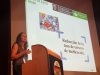
Charity Amadorparticipated in the work table on patient safety, presenting the key safety indicators that positively impact better quality of care and risk reduction.
“These indicators are essential because they allow continuous monitoring of patient safety, which facilitates the early detection of possible problems before serious adverse events occur,” he assured, adding that
“The implementation of indicators promotes a culture of safety within institutions, helping to improve care processes through data collection, analysis and taking corrective actions”
During the presentation, two cases were presented in which the use of key indicators has had a tangible positive impact. The first is the improvement in informed consents, and thanks to constant measurement, a significant improvement has been achieved, reaching 100% correct consents in the clinical history.
Secondly, the reduction of medication errors. Amador explained that the measurement of indicators related to safety in the administration of medications has made it possible to identify areas for improvement. "As a result, we have managed to reduce the rate of errors associated with medication by half, demonstrating the value of the measures implemented based on the analysis of this data," he stated, concluding that "these examples reflect how key patient safety indicators are powerful tools to improve the quality of care. Not only do they allow problems to be detected and corrected before they escalate, but they also promote a culture of safety and efficiency in health management."
In the days,Carolina Ruiz, hospital emergency supervisor, and Elena Muñoz Winery, operating room supervisor at the same center, presented a poster on theprogramof continuous training at the Fraternidad-Muprespa Havana Hospital, focused on updating and improving the training of health personnel, a plan that includes specialized training for employees throughout the national territory, with emphasis on patient safety and efficiency in care processes, and whose results reflect an increase in the quality of care and staff motivation, directly contributing to the objectives of the organization.