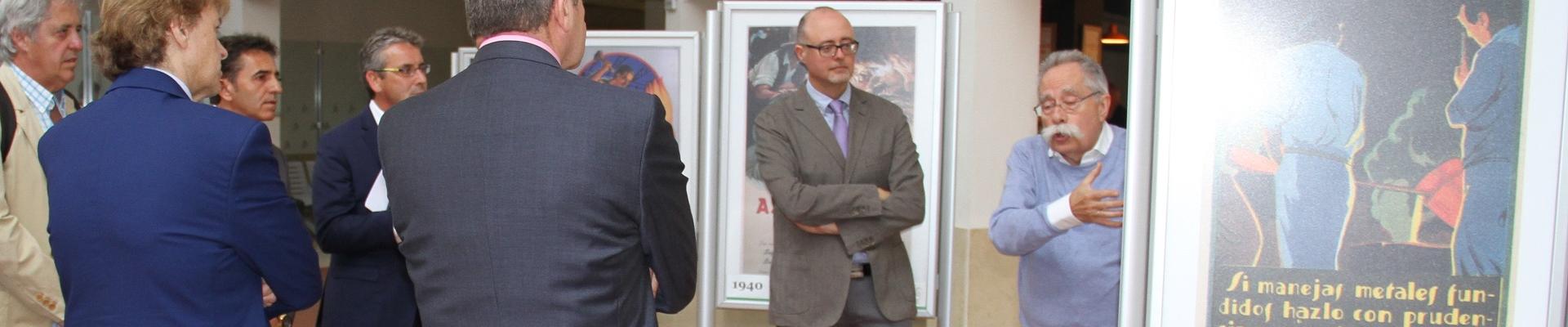
The exhibition of prevention posters from the 20th century organized by Fraternidad-Muprespa visits Ciudad Real
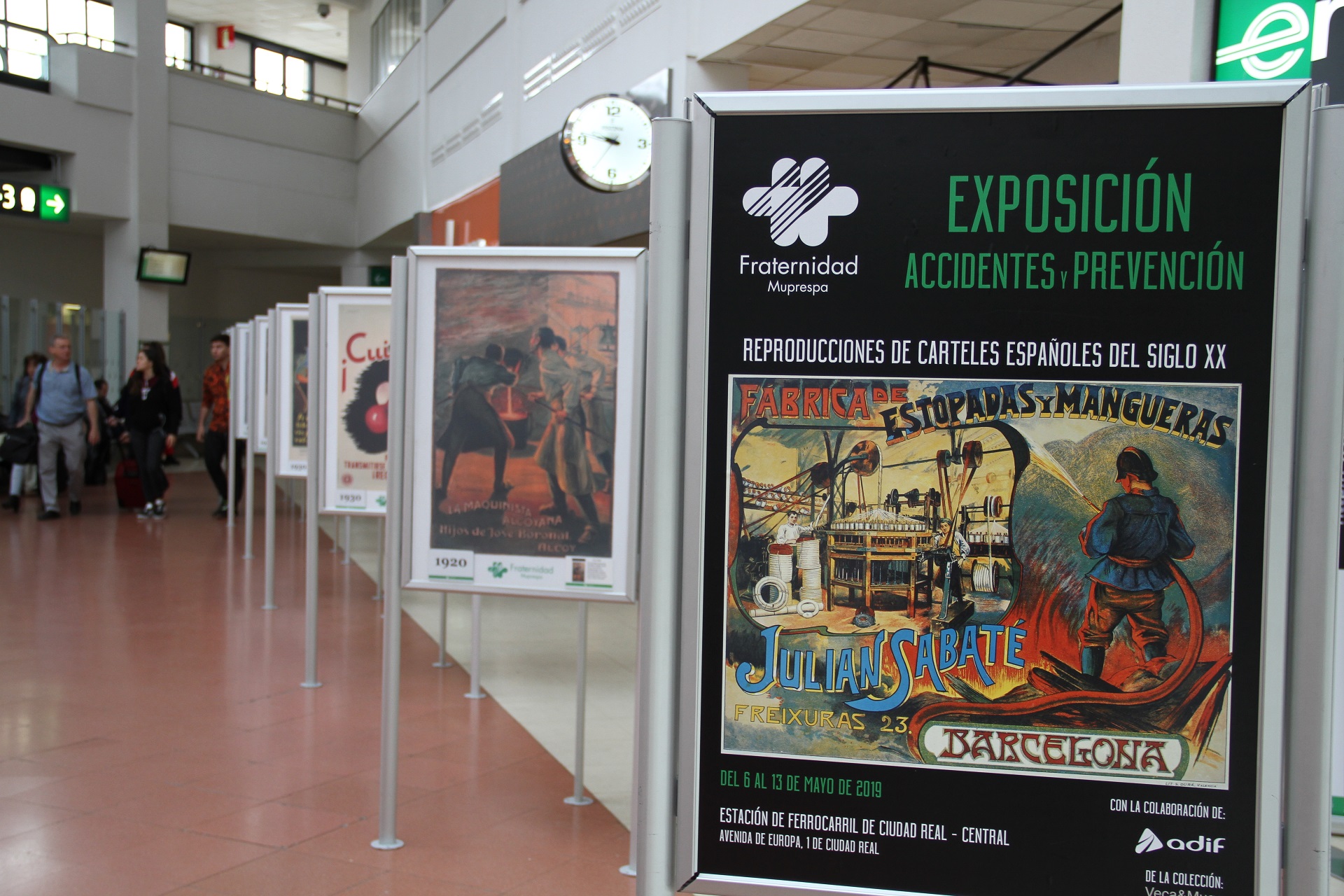
The exhibition, which can be seen at the Ciudad Real railway station until May 12, is organized by the Mutual Collaborator with Social Security, in collaboration with Adif, within its project to disseminate preventive culture.
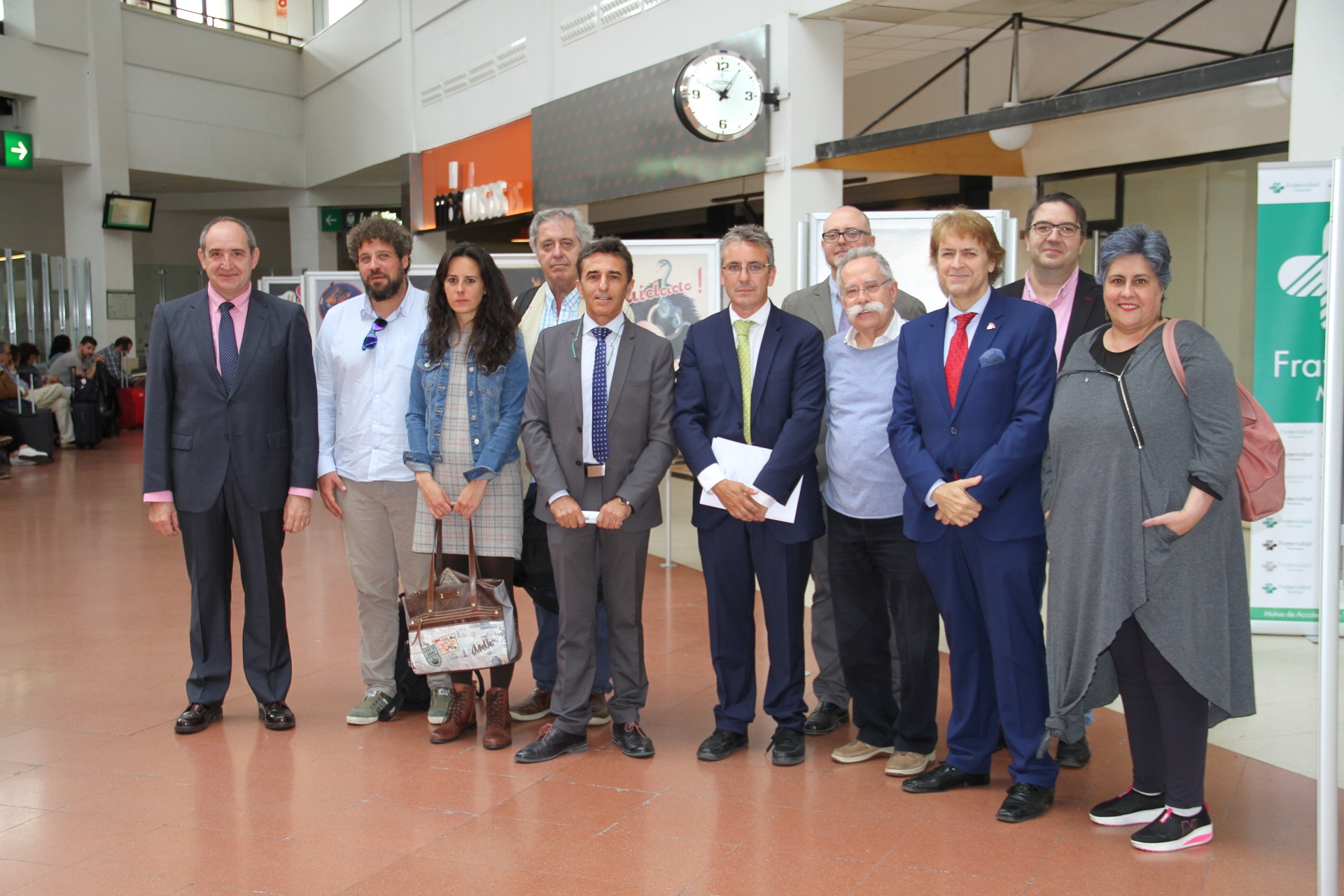
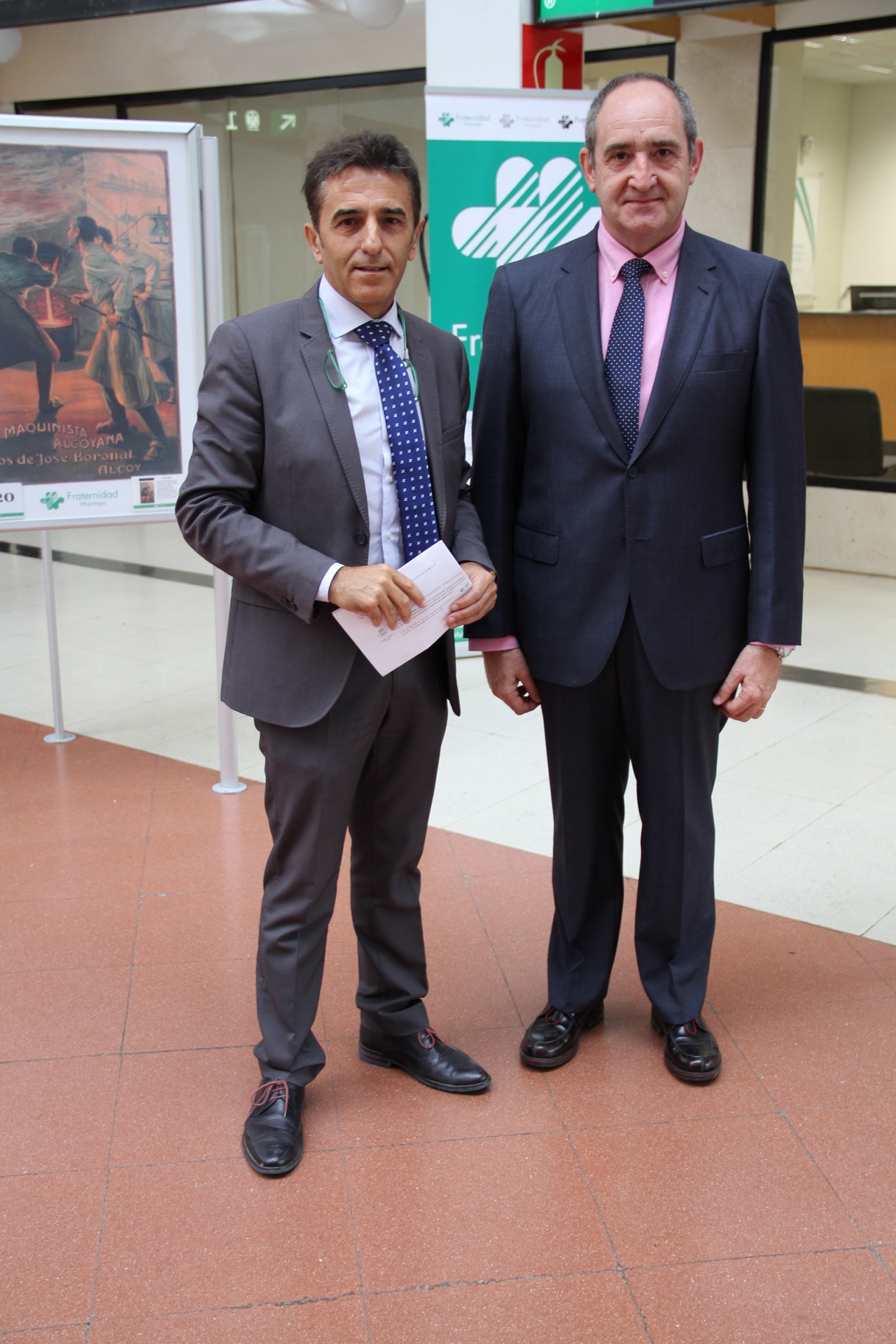
The attendees were received by the Provincial director of the Mutua in Ciudad Real,Jose Luis Agudo, who thanked them for their assistance, and with whom they took a brief tour of it. The curator of the collection,Carlos Velasco, was in charge of describing and detailing the characteristics of the posters and the collection.
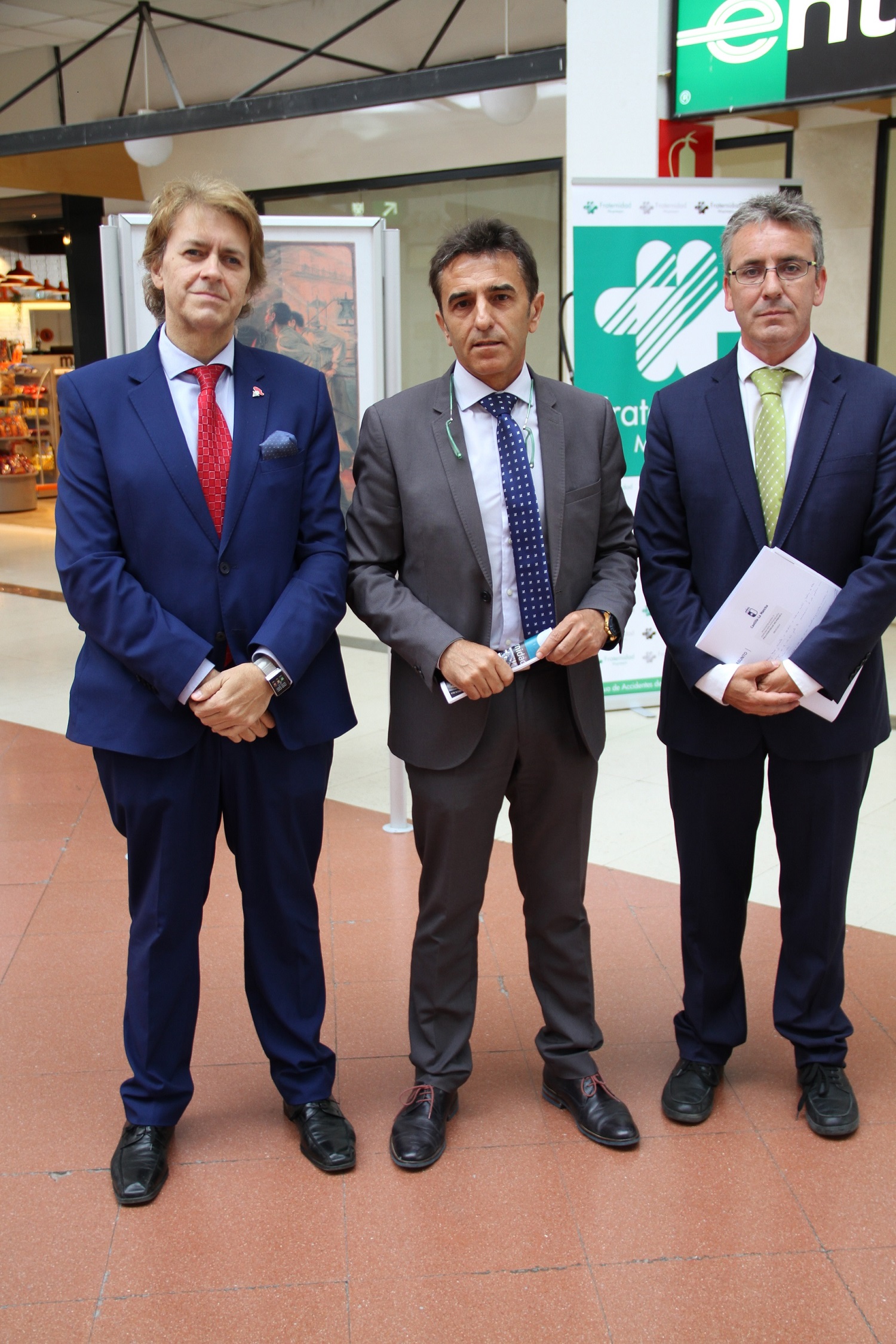
The opening ceremony was attended by Eduardo del Valle, general director of Labor, Training and Occupational Safety of the JCCM, accompanied by Agustín Espinosa, director of Economy, Business and Employment of Ciudad Real. They also attended Santiago Cabuchola, head of the Occupational Health and Safety service of Ciudad Real, and Modesto Soto, belonging to the Subdirectorate of Adif Central Stations, as well as representatives of the General Directorate of Traffic and the University of Castilla-La Mancha, among others.
The exhibition is made up of 48 reproductions of posters from the 20th century, whose themes are safety at work, prevention and occupational health, and allow us to see their evolution during the last century. Of a traveling nature, the exhibition aims to continue promoting preventive culture. It has already visited different Spanish airports (Málaga, Madrid-Barajas, Lanzarote, Fuerteventura, Gran Canaria, Palma de Mallorca and Tenerife North), the Almansa House of Culture and different railway stations such as Madrid Chamartín, Córdoba, Zaragoza-Delicias, Valladolid Campo Grande, Logroño, Bilbao Abando Indalecio Prieto and Sevilla Santa Justa, within the framework of the Open Station Program Adif.
This Program is Adif's main instrument to materialize collaboration with the third sector, making available, free of charge, an excellent platform (every year more than 150 million people pass through Adif stations) to carry out activities that help them achieve their objectives, while the stations increase their value for citizens by providing them with cultural, social or environmental content.