

Raúl Maturana in the SETLA webinar on the role of the physiotherapist in ACL injury
Fraternidad-Muprespa has participated this Saturday, October 7, in the webinar of the Spanish Society of Occupational Traumatology (SETLA), with the title "What to do when faced with an ACL knee injury? Role of the physiotherapist", in which he has intervened Raúl Maturana Mulero, physiotherapist of the Barcelona delegation with the presentation "Return to Work. Mutual members are our elite athletes" about returning to work after anterior cruciate ligament injury. Besides Laura Valtueña Príncipe, Supervisor in the Madrid delegation, has participated in the organization of this webinar.
The day began with the presentation of the Dr. José García López, President of SETLA thanking the attendees for their participation to give way to the moderator Joaquin Torres Belda, member of the Physiotherapy Advisory Committee on the SETLA Board of Directors.
During the session, experts such as Dr. Santander, head of the Knee Unit at the Asepeyo Hospital in Coslada, Joaquín Rodrigo, physiotherapist at Fremap Barcelona, and Rocío Alminos, physiotherapist at Mutua universal in Seville, spoke, each exposing the different phases of the treatment.
An Anterior Cruciate Ligament (ACL) injury is one of the most common injuries to the knee, whether due to a tear or rupture of the ligament. It usually occurs in activities that put strong pressure on the knee, such as turning with the foot firmly supported, slowing down and changing direction suddenly, poor support when jumping, a blow or an impact with the knee itself.
In his presentation Raúl Maturana explained the keys to optimal recovery and return to work, analyzing the determining factors in the treatment and making a simile between elite athletes and the patients/workers we serve at mutual insurance companies.
It is important to work on all muscular parameters and integrate the muscles into functional chains in a personalized way for each patient and type of injury.
Maturana has indicated that the first thing is value the functional performance of the patient, for this it will be necessary to observe different aspects such as:musculature through thebiomechanicswith tests such as ROM (“Range of movement”, maximum range of movement according to the physiological limits of the joints, the structures of the tendons and ligaments, and the conformation and physiological action of the muscles involved); the stability with the “Y balance” Test that measures dynamic balance; and performing eccentric exercises and polymetric(exercises whose objective is the development and improvement of power, speed and muscle strength).
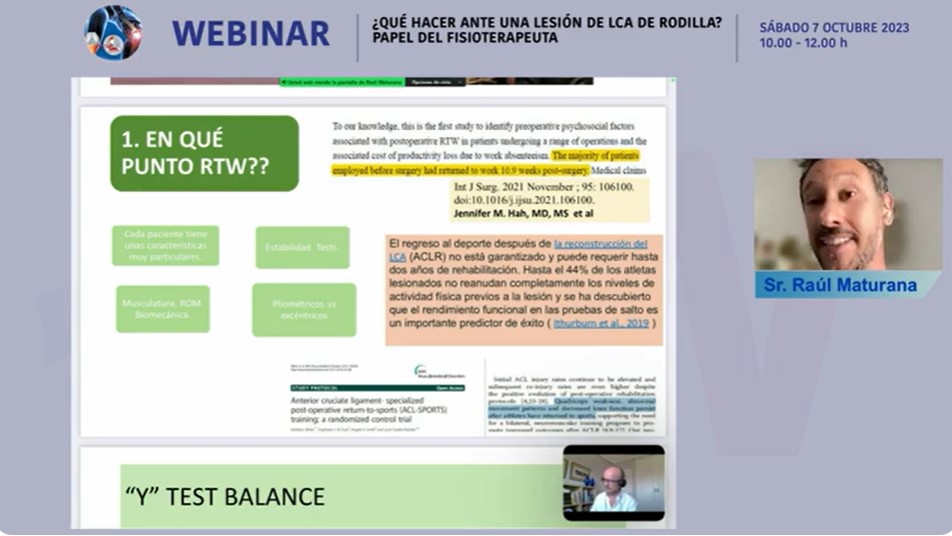
He has highlighted the “Side Hop Test” (jump between two marks on the floor without touching them) and the “Single Leg Hop Distance” (distance achieved through a jump on one leg) as predictors of success in evaluating the patient's recovery, since they serve to assess and correct incorrect movement patterns, thus avoiding possible relapses.
Below you have indicated the functionality of the TSK Questionnaire to know the degree of kinesiophobia(pathological fear of performing certain movements that may cause pain or worsen a previous injury), sharing research that shows the relationship of kinesiophobia with biodynamics and movement alterations, and how it can affect recovery and therefore RTW (return to work).
To address kinesiophobia it is necessary to work on communication, trust, involve the patient in their treatment by proposing achievable goals, educate on the neurophysiology of pain and promote feedback in the physiotherapy consultation.
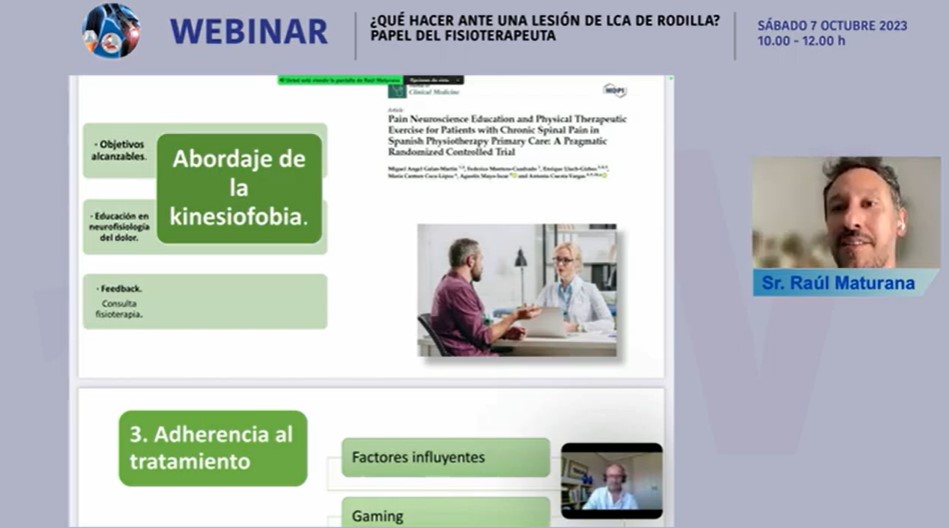
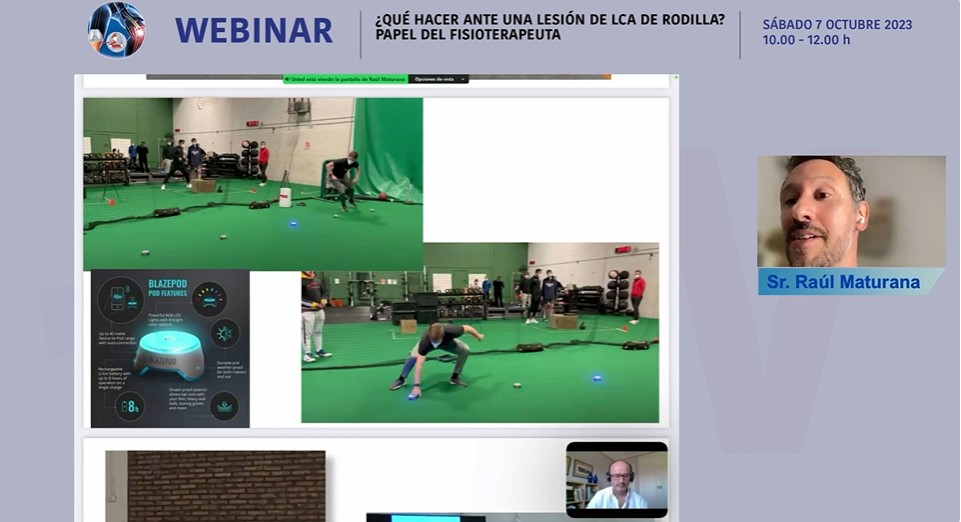
Another of the points highlighted in his presentation is to strengthen the adherence to treatment and for this purpose it proposes several strategies. On the one hand, analyze the influencing factors, such as the characteristics of rehabilitation, the provision of services and psychological and physiological factors. On the other hand the work groups which represent a social support mechanism that generates relationships of trust, both in person and online with mobile apps. Another strategy is the “ Gaming”: Through games and virtual reality, patients show higher levels in functional parameters (greater speed, strength, stability). And finally the placebo and nocebo effect It can help or hinder recovery by creating or avoiding pain pathways.
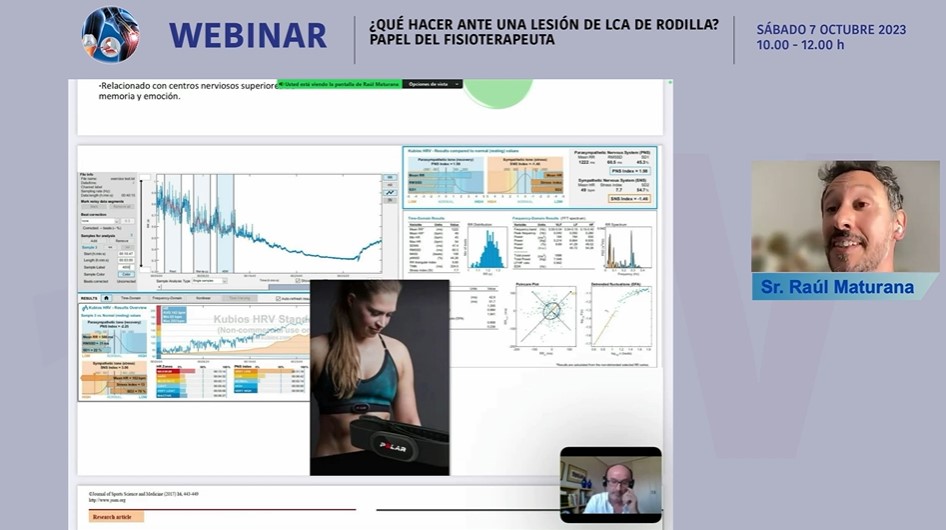
He has also explained the importance of assessment of the ANS(Autonomous Nervous System) to predict the exacerbation of the injury, and the need to assess and modulate it to avoid relapses and control pain. Finally, he stressed that it is necessary to close the recovery cycle through gesture reeducation assessing synergies, gait and work behavior to prevent future injuries.
With this presentation Raúl Maturana has shown that the perspective for success in physiotherapy treatment is in a biopsychosocial model that articulates a fabric of networking between the professionals involved, which consolidates the recovery after the injury and thus obtains a discharge compatible with the patient's return to work.
The bond between the patient and the physical therapist is an intrinsic need to achieve the recovery goal.
These are the hallmarks of the innovative project by Fraternidad-Muprespa aimed at transforming the rehabilitation process (Rehabilitation reengineering and in the second phase Recover) to offer the best quality in the health treatment of our patients.
You can watch the webinar on the SETLA website by clicking on thislink.