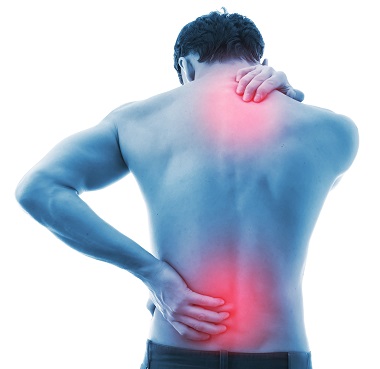

Good practices to avoid MSDs
Like every month, this August was not going to be different, we are going to tell you good practices to try to avoid musculoskeletal disorders as part of the campaign that EU-OSHA is carrying out entitled: Healthy jobs, let's relax loads.
On this occasion, we bring practical examples included in our Guide of Good Practices for the Prevention of Musculoskeletal Disorders, which we carried out in collaboration with Prevencontrol. In this guide you will find multiple examples of good practices that are easy to implement in any type of company and that will help prevent the appearance of this scourge that is musculoskeletal disorders, let's not forget that it is one of the most prevalent causes of sick leave in the European Union. Let's see some of them:
Incorporating healthy habits:
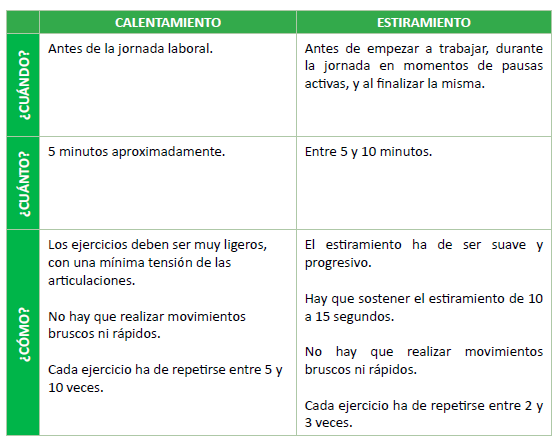
From a postural point of view, it is very important to carry out daily activities, both inside and outside of work, following good postural hygiene: maintaining an upright posture to prevent back pain, handling loads in a safe way and trying to minimize repetitive movements. In addition, strengthening and stretching exercises help maintain strong bones, muscles and ligaments, promoting injury prevention. The warm-up will help us prevent the appearance of MSDs, as we see in the table below, it will be a few small minutes that will not affect production except to help us avoid having prolonged "stops", something like Lean preventive maintenance, we stop 5 minutes a day so as not to have to stop the lines one day due to serious failure:
On page 92 of our guide, you will find two videos with different routines that you can incorporate into your daily life in a simple way, one of them with music that you will not be able to get out of your head...especially if you are mothers/fathers...
Make them enjoy!!!:
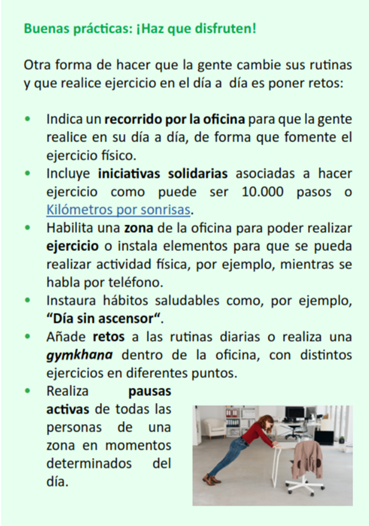
As you see, simple practices that can be implemented quickly.
DO YOU ENJOY?
In Fraternidad-Muprespa we hope that these guides are of interest to our mutual members, meet their expectations by predominating practical cases and help to strengthen the necessary preventive knowledge, as well as the implementation of preventive measures that can be effectively transferred to the workplace, thus guaranteeing the safety, health and well-being of the employees. workers.