
Guide to good practices in emotional intelligence applied to ORP
Within the series made up of 15 good practice guides that we present monthly, carried out in collaboration with Prevencontrol, we delve today into what we have called the Good Practice Guide in emotional intelligence applied to the prevention of occupational risks. Like all our guides, this one is also focused on entrepreneurs and workers in small and medium-sized companies, who on many occasions must compensate with dedication for the lack of technical personnel. To do this, we have described a series of good practices that have already proven to be successful in different companies and that will serve as an example for our readers.
We will answer a fundamental question: why do we need emotional intelligence in the company? Nowadays, companies look for profiles with intellectual abilities but also who know how to listen and communicate, are effective at work, feel proud of belonging, are leaders in their areas, empathetic, know how to work as a team, among others. Emotional intelligence can help us improve all of them. As we reflect in the guide:
People who develop their emotional skills more feel more satisfied, are more effective, and feel more capable of mastering the mental habits that determine productivity (Goleman 2006).
In this new way of understanding work, the role of the leader within organizations becomes, if possible, more relevant. The most emotionally intelligent leaders have in their hands the keys to creating a greater connection with their teams and the rest of the workers, we propose these:
- They must be aware of how their team is doing.
- Make them feel heard.
- Value people's time, short meetings!
- Go beyond empathy.
- Provide follow-up and support.
We will also explain the types of leadership, taking into account that there is no perfect leadership style, but rather it must be a combination of several; those who master the leadership styles with the most positive impact on the company's climate will be more effective.
Throughout the entire guide we are giving different ideas of strength, which reflect the most important items, we emphasize, for example, the following:
- Soft or liquid skills (soft skills) have proven useful to increase effectiveness and efficiency at work.
- Empathy and self-expression are powerful tools to achieve a more participatory work environment.
- Emotional leadership is distinguished by establishing good treatment, transparent communication and a satisfactory work environment.
- The absence of emotionally responsible leadership can generate significant work disorders.
- Emotionally intelligent people can better manage work teams.
The entire guide is full of good practices, so we recommend a complete and careful reading of it. The one we reflect here serves as an example and teaches us how to train emotional intelligence through gamification techniques:
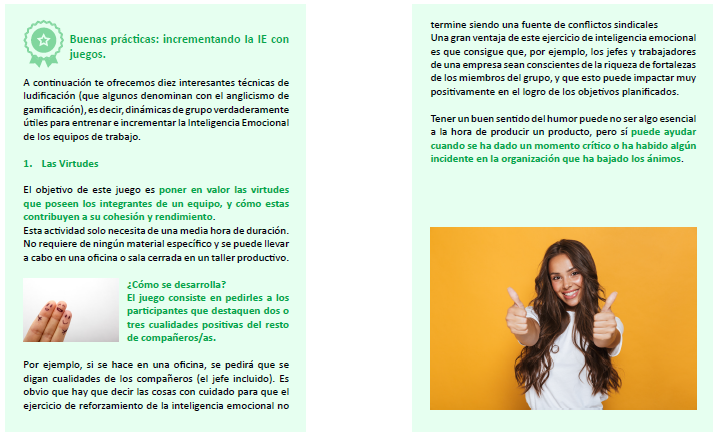
All our guides have the same structure:
- A brief introduction where the guide is put into place.
- A presentation and objectives section that reflects what is intended with this guide and the target audience.
- Central part with the different chapters, within which practical and accessible content will be included for all people who follow the guide.Each chapter includes:
- Introduction.
- Summary associated with the chapter.
- Conclusions.
- Final reflection questions.
- Solutions.
- Final section with bibliography.
If you are mutualist of our entity and want to know more about this topic, you can read these guides in full by accessing our platform onlineClassroomHTMLTAG78___ Prevention which you can access from our portal Previene.
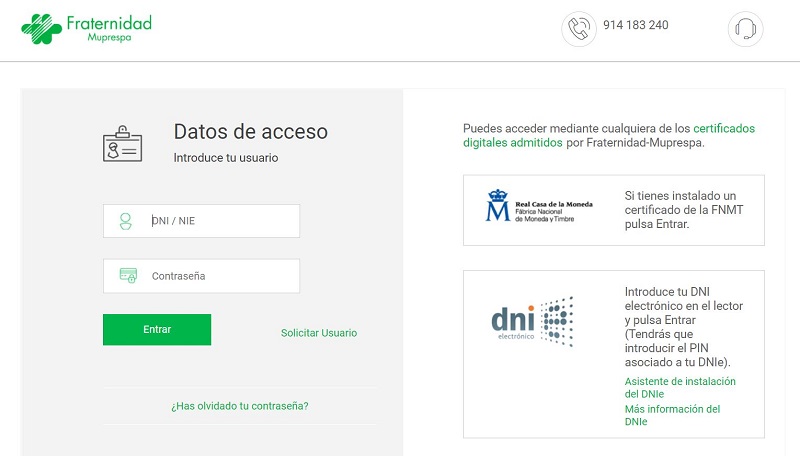
You can easily register and access with your ID and password or digital certificate.
At Fraternidad-Muprespa we hope that these guides are of interest to our mutual members, meet their expectations by predominating practical cases and help to strengthen the necessary preventive knowledge, as well as the implementation of preventive measures that can be effectively transferred to the workplace, thus guaranteeing the safety, health and well-being of employees. workers.