How can I handle loads in construction without hurting myself?
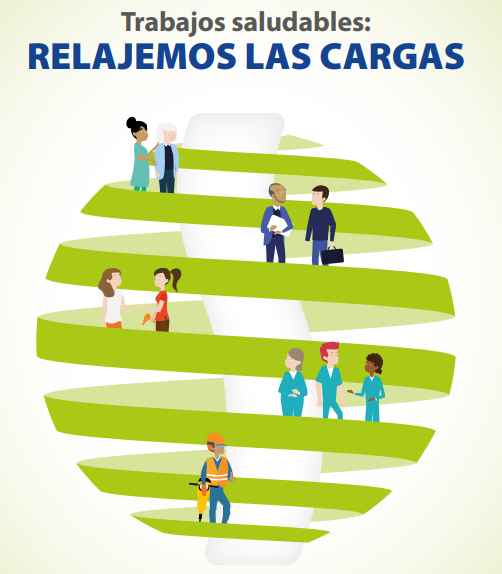
On this fourth day within the European Week for Safety and Health at Work, we are presenting you with good practices on a daily basis to avoid musculoskeletal disorders, and thus contribute to the campaign whose title is:
belonging to the European Agency for Safety and Health at Work, EU-OSHA. Today we bring a sector that has traditionally been largely forgotten about ergonomics, let's see an example we bring an example belonging to our guide of good practices for the prevention of musculoskeletal disorders, prepared in collaboration with Prevencontrol:
Good practices in the construction sector:
Jobs as a formworker, plasterer, ironworker, painter, plumber...require considerable physical effort as well as the handling of heavy and bulky loads, as well as continuous forced postures. In many cases this load handling is done on unstable and irregular surfaces.

As organizational measures we propose good planning of the work, planning for the purchase, collection and adequate distribution of materials in the workplace, so what we avoid is handling loads at inappropriate heights or carrying out unnecessary lifting. In addition to including in the planning the necessary breaks to rest from the efforts made.
It is also essential (not only in this sector but in all), to have good information and training on the risks of the workplace, for which we propose here all the courses and workshops that we have in our Prevention Classroom.
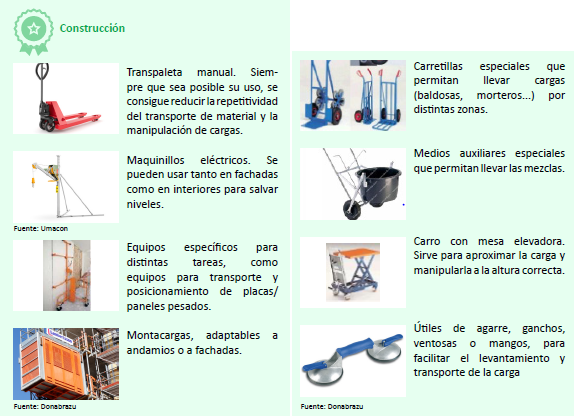
Technical measures that we can implement, we give examples:
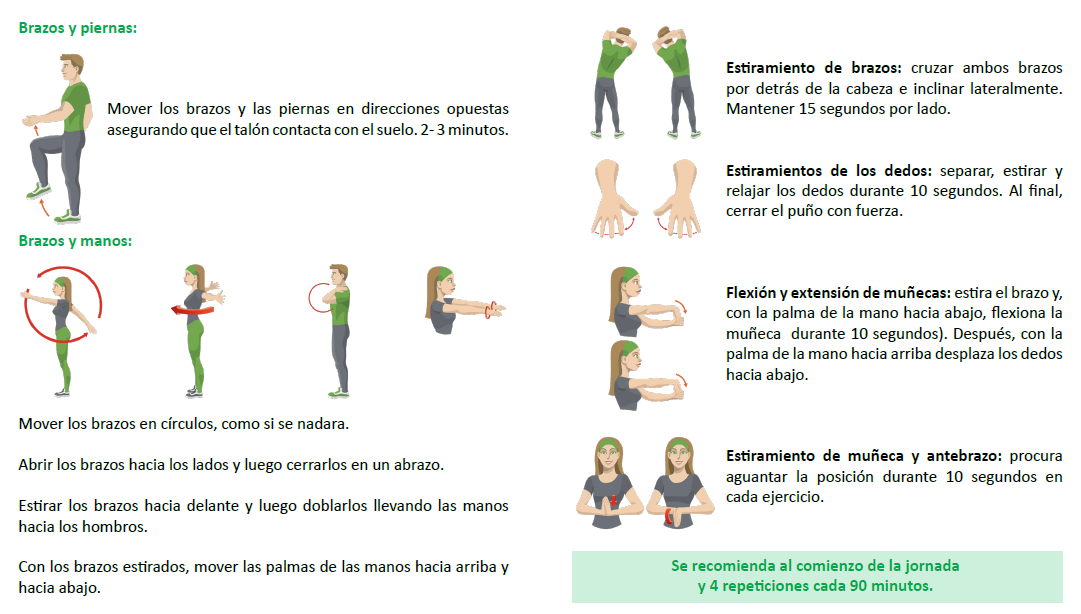
To finish, reader, you've been sitting for a while, wake up! wake up! wake up!!!, we propose a warm-up exercise, this way we demonstrate that movement is demonstrated by walking:
At Fraternidad-Muprespa we hope that these guides are of interest to our mutual members, meet their expectations by predominating practical cases and help to strengthen the necessary preventive knowledge, as well as the implementation of preventive measures that can be effectively transferred to the workplace, thus guaranteeing the safety, health and well-being of the employees. workers.