Hygiene and Prevention in phase 2 of transition to the new normal
Normativa
On Monday, May 25, 47% of the Spanish population moves to phase 2 of the de-escalation and to establish the actions to follow from this moment on, the Official State Gazette published Order SND/414 of May 16, 2020, which includes the relaxation of certain national restrictions established after the declaration of the state of alarm in application of phase 2 and that applies to the territorial units that move to said phase as well as to the people who reside in them.
The conditions included in the aforementioned order regarding measures at work, hygiene and prevention are the following:
Measurements at work
- Whenever possible, the continuity of teleworking will be encouraged.
- It will be ensured that all workers have at their disposal in the workplace hydroalcoholic gels or disinfectants with virucidal activity for cleaning their hands, or when this is not possible, soap and water.
- When the interpersonal safety distance of approximately two meters cannot be guaranteed, it will be ensured that workers have protective equipment appropriate to the level of risk and are trained and informed about the correct use of said protective equipment.
- These measures are also applicable to workers of companies that provide services on a regular basis or occasionally in companies, businesses, centers and other entities.
- Fingerprint time control must be replaced by another system that guarantees adequate hygiene measures to protect the health and safety of the worker, or the device must be disinfected before and after each use.
- The arrangement of jobs, the organization of shifts and the rest of the working conditions must guarantee the maintenance of the interpersonal safety distance of two meters between workers, being the responsibility of the owner of the activity or director of the entity. Distance measures must be met in changing rooms, lockers and toilets, as well as in any other area of common use.
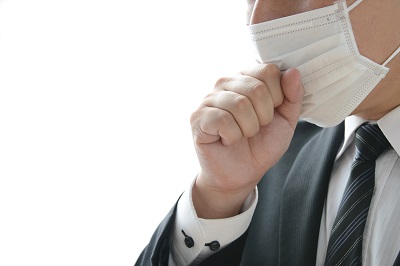
- If a worker begins to have symptoms compatible with the disease, they will immediately contact the telephone number set up for this purpose by the autonomous community or health center and, where appropriate, the Occupational Risk Prevention Service. The worker will put on a mask and leave his or her workplace until his or her medical situation is assessed by a health professional.
- Centres must make adjustments to their time organization to avoid the risk of massive coincidence of people, workers or not, in work spaces or centers during the time slots of maximum expected influx or concentration and during entrances and exits.
Hygiene and prevention measures
- Hotels, establishments, shops and premises open to the public will carry out cleaning and disinfection of the facilities appropriate to the characteristics and intensity of use, with special attention to areas of common use and the most frequent contact surfaces such as doorknobs, counters, furniture, handrails, dispensing machines and floors.
- A break during the opening of the establishment dedicated to maintenance, cleaning and replacement tasks may be carried out throughout the day, preferably at noon. These closing times for cleaning will be duly communicated to the consumer through visible signage or public address messages.
- Dispensers of hydroalcoholic gels or disinfectants with virucidal activity will be made available to workers and clients.
- Cleaning and disinfection of workplaces will be carried out at each shift change.In the case of workplaces shared by more than one worker, the workplace will be cleaned and disinfected after the end of each use. It will be ventilated every day to allow air renewal and the uniforms and work clothes will be washed and disinfected daily.
- The staircase will preferably be used and the use of an elevator or forklift will be limited to the essential minimum with a maximum occupancy of one person, unless the separation of two meters is guaranteed or in cases of people who need assistance.
- If the use of the toilets by clients, visitors or users is permitted, their maximum occupancy will be one person, except in the case of people who need assistance. Cleaning and disinfection must be reinforced. Payment by card will be encouraged, avoiding, as far as possible, the use of cash. The dataphone will be cleaned and disinfected after each use.
- There must be trash cans to deposit tissues and any other disposable material, which must be cleaned frequently, and at least once a day,
- The distance between seller and customer will be at least one meter when there are protection or barrier elements, or two meters without these elements. In the case of services that do not allow interpersonal safety distance to be maintained, such as hairdressers, beauty centers or physiotherapy, protective equipment appropriate to the level of risk must be used. The time spent in the establishments and premises will be strictly necessary.
- In textile, clothing repair and similar stores, fitting rooms must be used by only one person. After use, they will be cleaned and disinfected and after testing garments or returns, they must be sanitized. There will be no trial products available to the client (such as cosmetics, perfumery products and similar products), which involve direct manipulation by successive clients, nor will there be telecommunications products without permanent supervision by a seller.
- Establishments and premises must expose to the public the maximum capacity of each premises and ensure that said capacity, as well as the interpersonal safety distance of two meters, is respected inside.