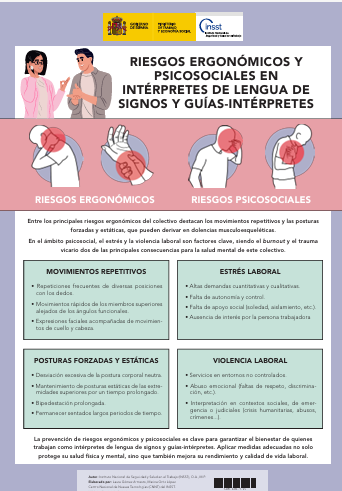

Riesgos ergonómicos y psicosociales en interpretes de lengua de signos
El Instituto Nacional de Seguridad e Higiene en el Trabajo (INSST) ha presentado el cartel titulado: "Riesgos ergonómicos y psicosociales en el colectivo de interpretes de signos y guías interpretes" que acompaña al documento técnico, que ya se presentó en diciembre pasado, y que analiza los principales riesgos ergonómicos y psicosociales a los que están expuestos las personas trabajadoras de este colectivo así como las medidas preventivas necesarias para garantizar su seguridad y salud laboral.
Su labor es fundamental para la accesibilidad y la comunicación de personas sordas y sordociegas, pero conlleva desafíos que pueden afectar su salud física y mental y por eso uno de los factores clave en la prevención de riesgos laborales es la diversidad de entornos en los que trabajan, muchas veces en espacios proporcionados por clientes. Esta situación puede aumentar su exposición a ciertos riesgos debido al desconocimiento previo del entorno laboral. Además, sus ritmos de trabajo vienen impuestos por la naturaleza de la tarea, lo que limita su capacidad de hacer pausas o adaptar el esfuerzo, generando una elevada carga física y mental.
Dado que esta profesión presenta altos niveles de riesgos ergonómicos, resulta imprescindible contar con recursos adecuados para minimizar su impacto. Este documento ofrece un análisis detallado de estos riesgos y propone medidas preventivas específicas que contribuyan a mejorar las condiciones laborales del colectivo de ILS y guías-intérpretes, asegurando su seguridad y salud.