
Psychosocial Risks and their influence on MSDs
Continuing with our series of news that we publish monthly on our web related to the campaign of the European Agency for Safety and Health at Work (EU-OSHA) entitled: healthy places, let's relax the burdens, we bring today a document that we find very useful to introduce the influence of psychosocial risks in musculoskeletal disorders. If you want to recover all the news that we have written about it since January 2020, you simply have to filter our web by Ergonomics.
There are a multitude of factors that influence (increase) the permanence of MSDs in the first place in the ranking of the conditions suffered by workers at the European level, some of them are organizational, others are physical (biomechanical), others are psychosocial. We know that the ergonomic factors that increase or cause MSDs are being solved, or perhaps they are the first ones we have focused on. Now it's time to give way to the organizational and psychosocial ones. In this news we will talk about the psychosocial factors, which specifically affect the return to work after a sick leave suffered due to MSD.
In general, what are the psychosocial risks that affect MSDs? Among them we find jobs with high demand, low level of control in our work, lack of autonomy in decision-making in our work, little social support from commanders and managers, high intensity jobs, lack of recognition for work well done, high workload, insecurity at work, discrimination, harassment, bullying, all of which are the origin of stress and psychological and even physical damage. We point out here data from the EU-OSHA report (2020b) that we find relevant:
- Low level of control at work: is related to back, neck, shoulder, wrist, elbow, hip and knee pain.
- Job dissatisfaction: particularly associated with pain in the upper extremities and lower back (lumbar).
- Discrimination, harassment, bullying: all of them point directly to TME.
Solutions?
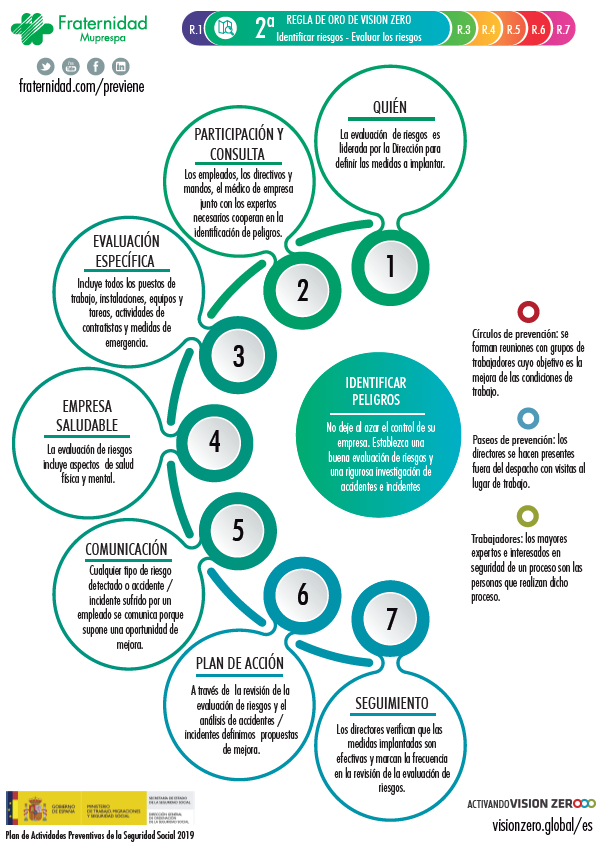
We are not going to reinvent the wheel now....to avoid MSDs, a personalized risk assessment must be carried out for jobs and companies, we need to be aware of the risks that our workers may suffer, so prevention technicians will be able to help us evaluate these risks and implement measures early to avoid them. We are going to talk to our workers about the risks of their jobs, they are the ones who know the operations best, we are going to trust in their good work, we will achieve several goals at once: involve the staff, discover risks that perhaps we had not evaluated. Two-way and effective communication.
The document in question below proposes two practical examples of two cases of return to work after a prolonged absence due to an MSD where we can see in a simple way, measures so that this return to work is done in a progressive and positive way for both the employee and the company.We encourage you to read these practical cases since we believe they are good examples of how to carry out this task that is sometimes complicated to carry out: the adaptation of work to the worker, which is one of the basic principles of prevention and which in certain cases seems difficult to carry out.
The author has a strong belief that organizations with a strong preventive culture anticipate MSDs more effectively and earlier, especially those related to psychosocial ones, it is about adapting the work to the worker, involving all members of the company, generating a healthy environment and of course taking prevention regulations and return-to-work processes seriously after long absences.
And how do we do all this?
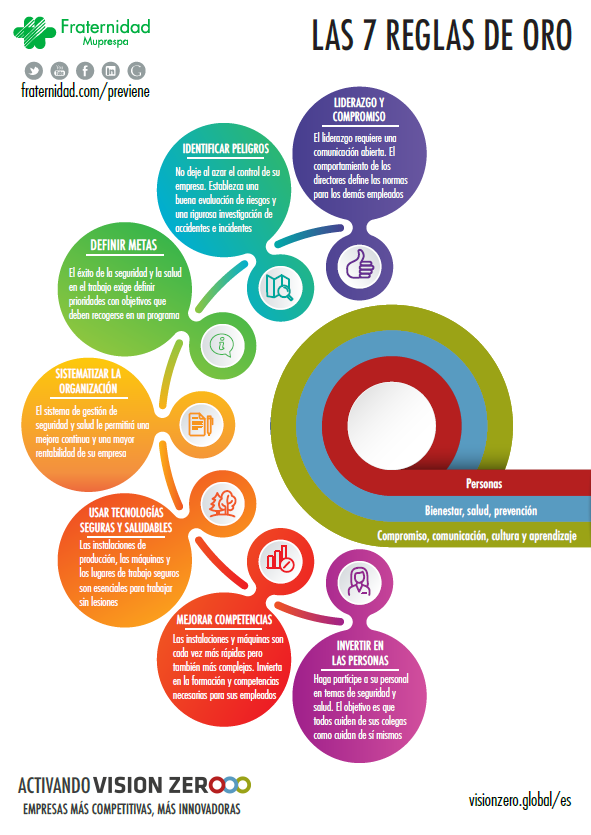
Well, starting at the beginning, as always and following the 7 golden rules of Vision Zero, as well as speaking with our Prevention Consultants spread throughout the Spanish provinces, they, free of charge, for all our associated companies, will be able to advise you on how to start and how to continue to avoid MSDs and reduce accident rates in companies.