Conference in Santander on the invisible abilities of the PRL, with Natalia Fdez. Laviada and Rafael Delgado
Prevention does not begin when we give an instruction, it begins when we ensure that that instruction can be heard. This has been one of the ideas that marked the day “Invisible skills that transform prevention”, held on Thursday the 24th in Santander.
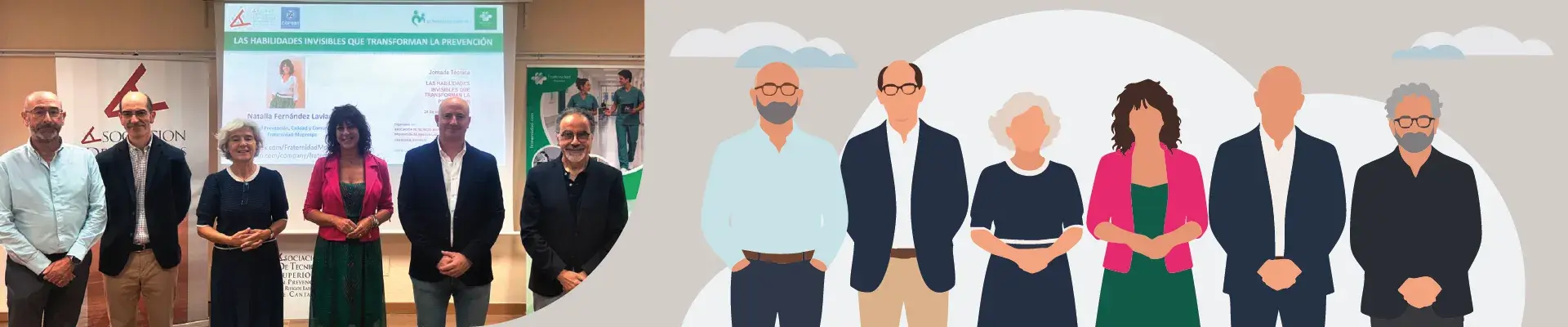
Organized by the Association of Higher Technicians in Occupational Risk Prevention of Cantabria (ATSPRLC) and the Cantabrian Institute of Safety and Health at Work (ICASST) and with the participation of Fraternidad‑Muprespa, the meeting brought together occupational health and safety professionals, prevention technicians, HR managers. HH. and institutional representatives of the region.
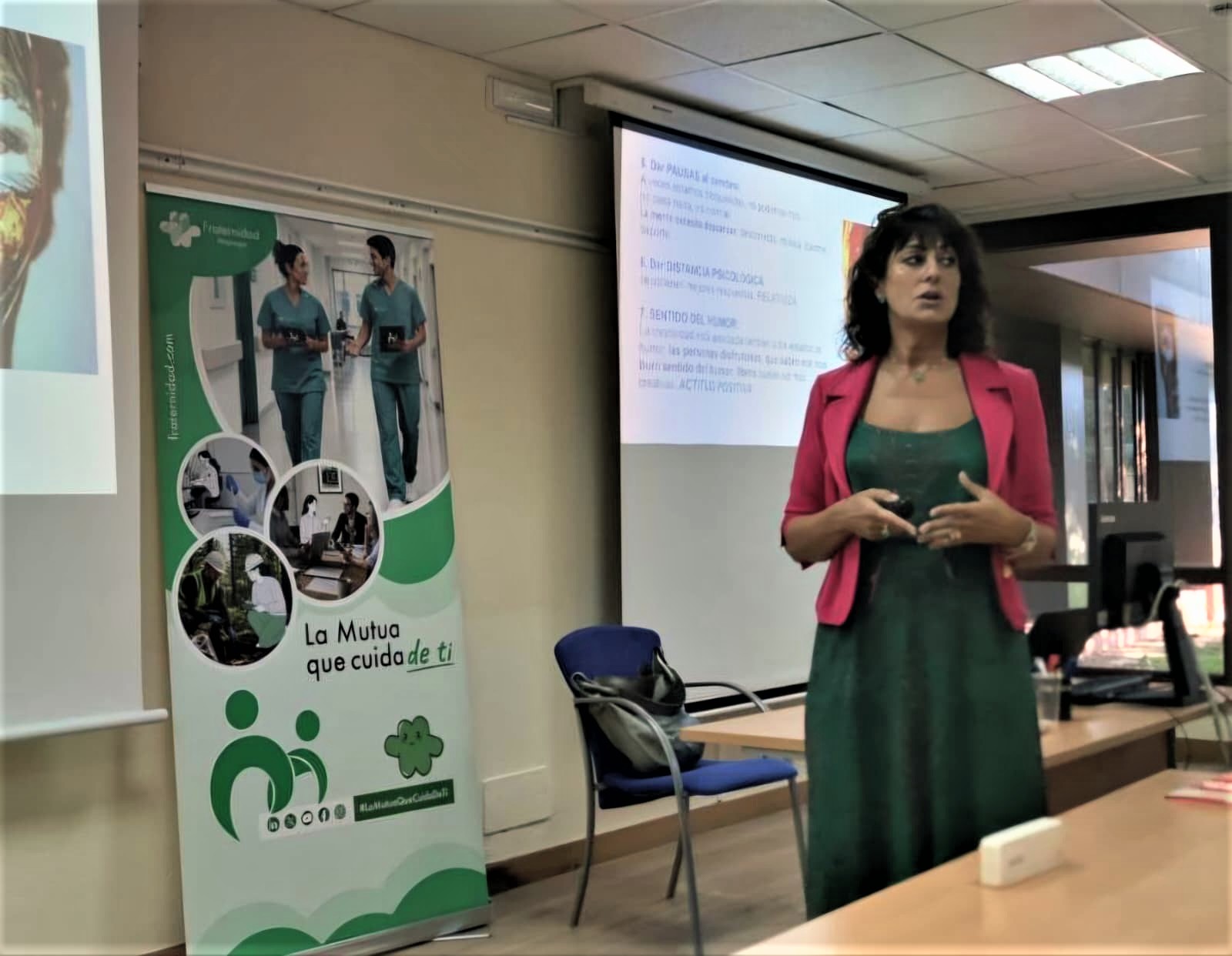
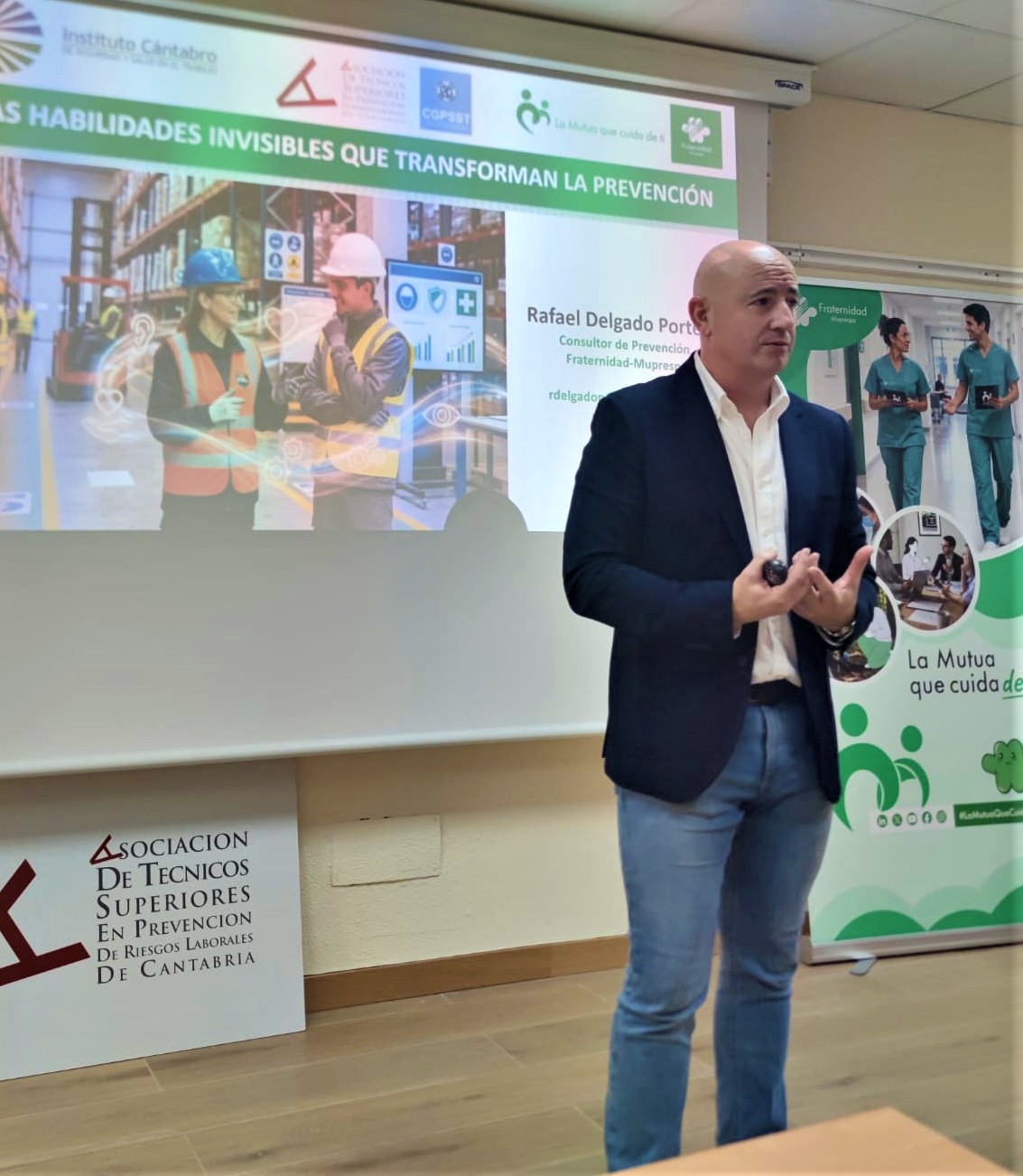
The day opened Ana Gonzalez, director of ICASST, and Enrique Rodriguez, president of the ATSPRLC, was in charge of its presentation, articulated around the presentations of Natalia Fernández Laviada, Deputy General Director of Prevention, Quality and Communication of Fraternidad-Muprespa, and Rafael Delgado, Mutual Prevention consultant in Córdoba.
Creativity to transform prevention
Fernández
He also explained that creativity is not a talent reserved for a few, but rather an absolutely trainable capacity that allows us to see problems that others do not see, combine ideas and generate original solutions. To do this, it is essential to have an open mind, overcome unconscious biases, work with methodology and develop mental habits that promote flexibility, curiosity and the ability to rethink what has been learned.
The presentation covered the phases of the creative process, the premises necessary to stimulate it, the keys to enhance it and the practical techniques that prevention professionals can apply to innovate in their daily lives. He also addressed the impact of generative AI, convergent and divergent thinking, and the importance of knowing how to sell ideas so that they can be implemented in organizations.
The final message was clear: creativity and innovation are not a complement, but rather a strategic competence to advance preventive culture, improve decision-making and generate more humane, effective solutions adapted to the challenges of the 21st century.
Behaviors, emotions and interpersonal connection
For his part, Rafael Delgado focused his intervention on aspects linked to correct prevention of occupational risks, from behavioral analysis applied to prevention and personal emotional management, to decision making and impact communication for safety technicians. PRL, through active listening, interpersonal connection and team and conflict management.
Delgado assured that “andIn prevention, knowing what to do does not guarantee that we will do it. The key is to understand what drives our behaviors” and rHe recalled that unsafe behaviors are just the tip of the iceberg behind which there may be factors such as habituation, overconfidence, productive pressure or the need for recognition.
He also insisted that interpersonal connection is not an accessory element, but rather a decisive component so that an instruction, a correction or a difficult conversation can be received without resistance.“Before trying to influence another person, we must ask ourselves: from what state am I intervening?”, he pointed out. His intervention left a central idea: behind every preventive behavior there is a person, and to influence their decisions it is essential to understand their context, their state and the relationship we establish with them.
The session concluded with two key messages: prevention advances when we understand that we are not just managing risks, but people, and that invisible skills, such as empathy, listening, emotional regulation and relationship quality, can transform the way safe environments are built.