Convention and Recommendation to combat violence and harassment at work
Last June, the International Labor Organization (ILO) launched a global campaign, encouraging member countries to ratify the Convention 190 on violence and harassment at work:
This Convention C190 and its Recommendation 206 that complements the convention, have several important characteristics that we will try to summarize here. Directly in its preamble it recognizes that violence at work affects human rights, which are fundamental:
- Recognizing the right of everyone to a world of work free of violence and harassment, including gender-based violence and harassment.
- Recognizing that violence and harassment in the world of work may constitute a violation or abuse of human rights, and that violence and harassment are a threat to equal opportunities, and are unacceptable and incompatible with decent work.
- Recognizing the importance of a work culture based on mutual respect and human dignity to prevent violence and harassment.
We consider it truly important to highlight the definition made in article 1 and that differs from that of the renowned author H. Leymann:
The term "violence and harassment" in the world of work designates a set of unacceptable behaviors and practices, or threats of such behaviors and practices, whether manifested once or repeatedly, that aim at, cause or are likely to cause, physical, psychological, sexual or economic harm, and includes gender-based violence and harassment, [...]
The purpose pursued by this standard is to protect all workers, in addition to confirming that violence and harassment at work affects equal opportunities and, of course, is contrary to Sustainable Development Goal 8: decent work.
We note that in several articles it encourages all members to adopt appropriate measures to prevent violence and harassment in the world of work, we list some of them here:
- Legally prohibit violence and harassment.
- Ensure that relevant policies address violence and harassment.
- Adopt a comprehensive strategy to implement measures to prevent and combat violence and harassment.
- Establish implementation control and monitoring mechanisms or strengthen existing mechanisms.
- Ensure that victims have access to means of recourse and reparation and support measures.
- Predict sanctions.
- Develop tools, guidance and educational and training activities, and awareness-raising activities, in an accessible form, as appropriate.
- Ensure that there are effective means of inspection and investigation of cases of violence and harassment, including through labor inspection or other competent bodies.
We cannot finish this note without including a relevant item included in the recommendation, part II, article 8, since we are dedicated to prevention, said item says:
The workplace risk assessment referred to in Article 9(c) of the Convention should take into account factors that increase the likelihood of violence and harassment, including psychosocial hazards and risks.We have to pay special attention to the dangers and risks that arise from working conditions, their organization and the management of human resources, going further, risks and dangers that involve third parties and arise from discrimination, abuse of power relations and gender, cultural and social norms that promote violence and harassment.
As we see, a capital document in prevention such as risk assessment, must be customized for each company, reflecting its own idiosyncrasy, including psychosocial risks, risks that are finally taking on the importance they should have always had.
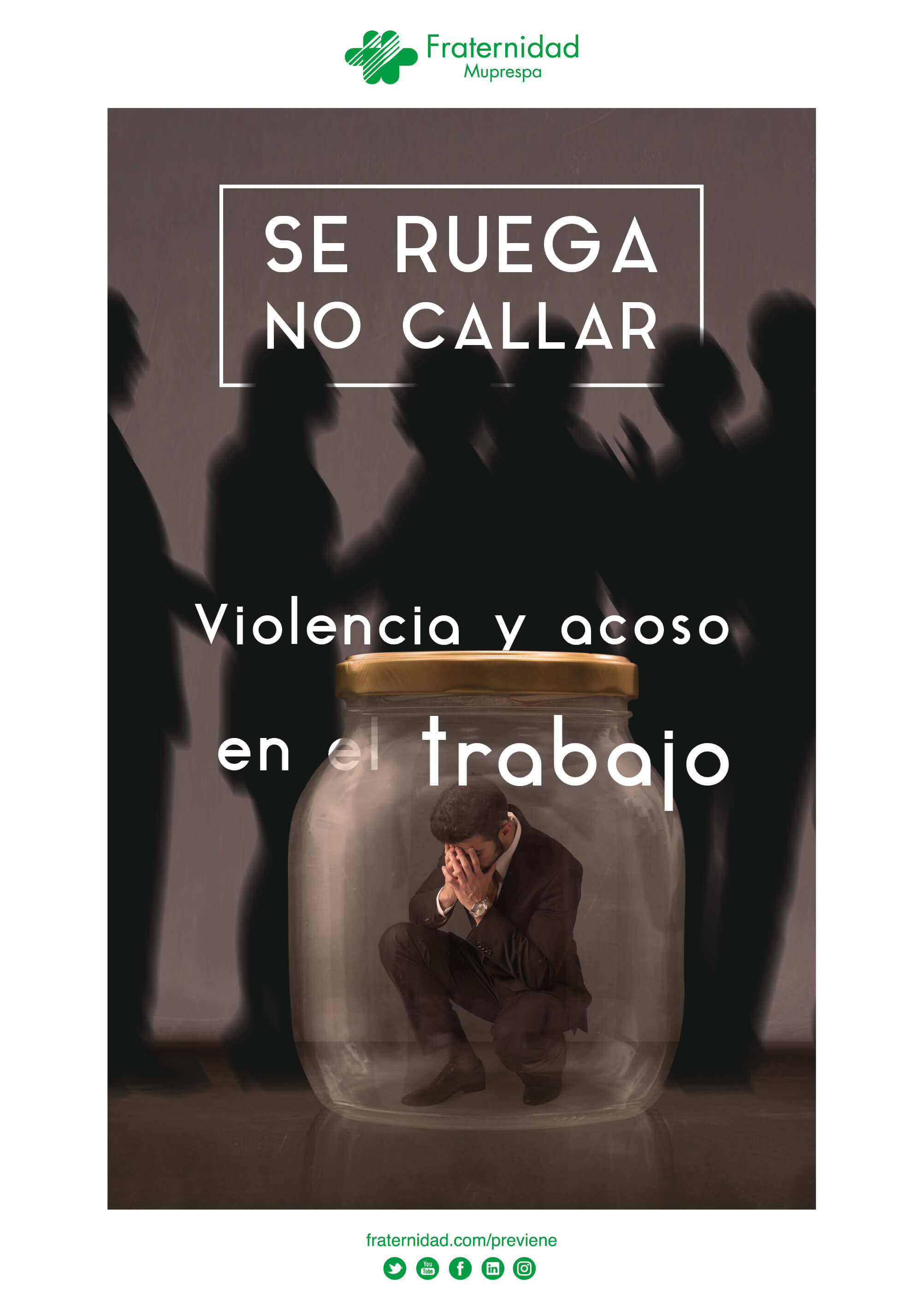
In line with this campaign from Fraternidad-Muprespa and we have developed posters, infographics and digital content that can be downloaded for free and that we will publish throughout this week.