
Fraternidad-Muprespa participates in the SETLA course on the pathology of the acromioclavicular joint
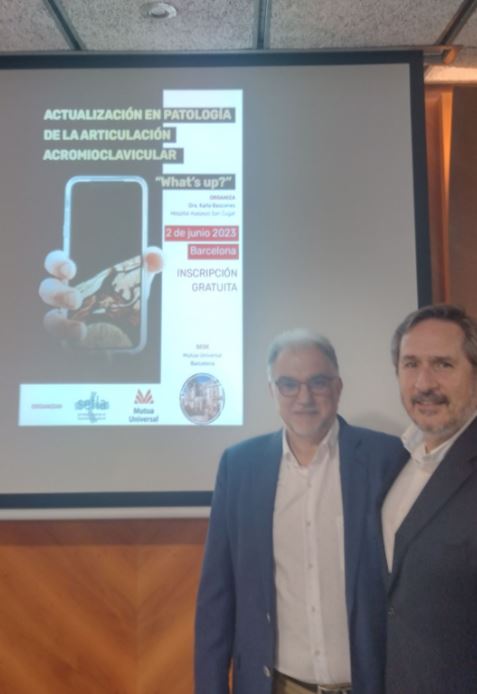
On June 2, the Spanish Society of Occupational Traumatology, SETLA, held a conference in Barcelona on "Update in pathology of the acromioclavicular joint", in which a wide range of professional experts from the Mutual Insurance sector have participated, presenting the latest developments and lines of work in terms of biomechanics, functional anatomy, clinical approach and treatment.
Representing Fraternidad-Muprespa, Dr. José Luis Bada Jaime, orthopedic surgeon at the Barcelona Delegation and Dr. Álvaro Minuesa Asensio, head of the Traumatology Service of the Fraternidad-Muprespa Habana Hospital.
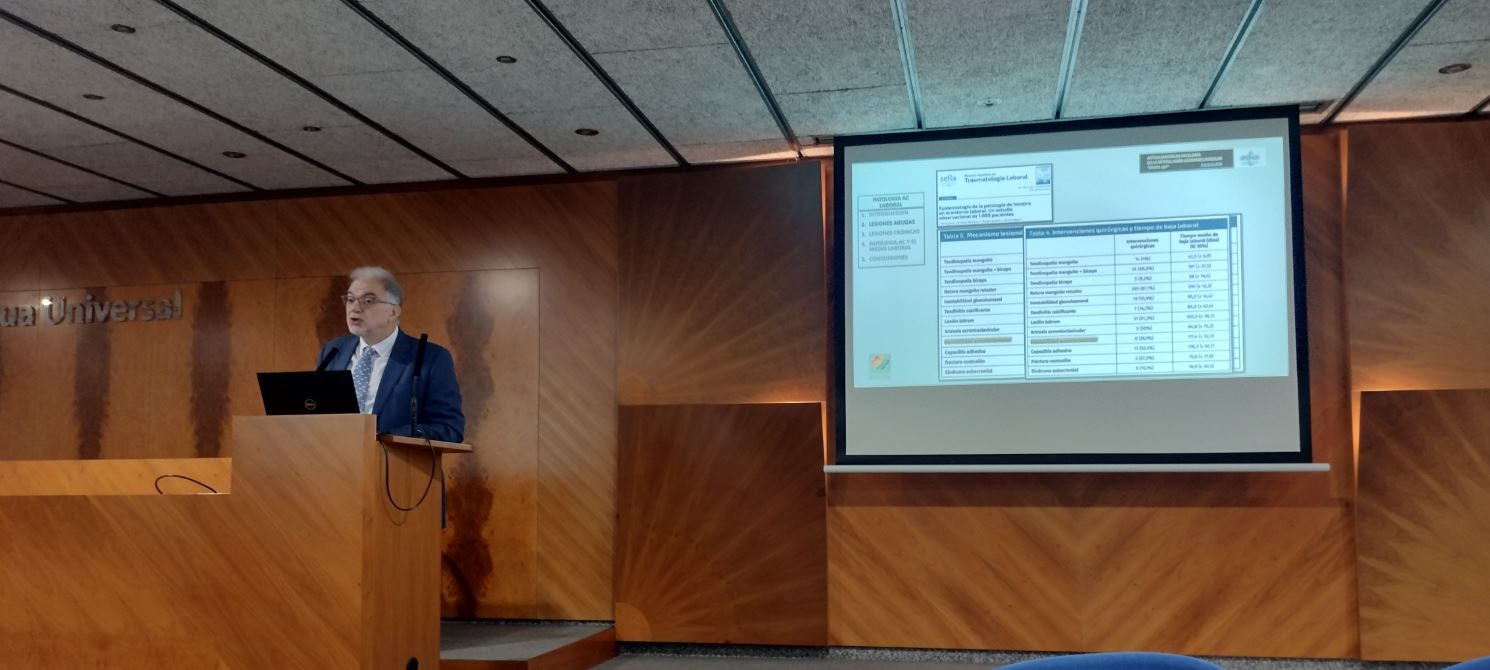
The Dr. Bada, shared with the attendees the presentation on the "Occupational AC Pathology: from dislocation to osteolysis", highlighting the following conclusions:
- Faced with pain at the level of the shoulder, we must think about other causes of pain in the shoulder.
- The acute pathology of the acromioclavicular joint is not the most frequent injury of the shoulder in temporary disability due to accident work.
- The non-acute pathology of this joint is not recognized as an occupational disease.
- The dislocation of the acromioclavicular joint is a three-dimensional instability that must condition our approach to the treatment.
- _type IV to VI dislocations are always surgically treated, for type III there is no scientific evidence to support it today, although the reviews do not include the most modern.
- _fractures of the distal end of the clavicle type II or with the 3rd Neer fragment are for treatment surgical.
- In the recovery of the injured, not only does surgery influence, social and social aspects must be taken into account. psychological.
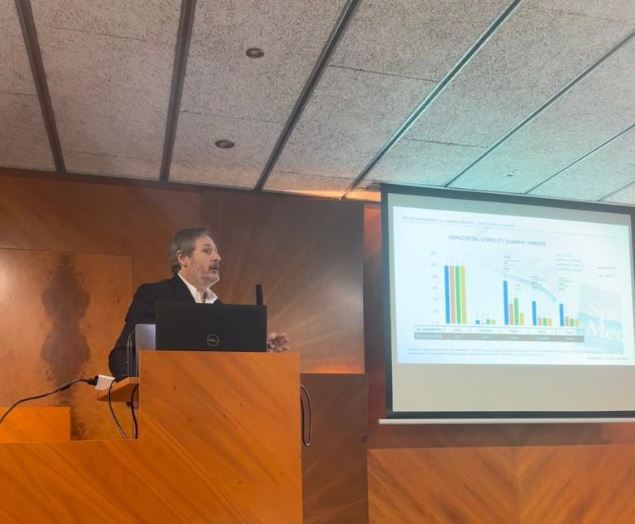
The Dr. Minuesa made a presentation on the "Capsular reconstruction technique with dermal allograft: what, how and when?" result of the implementation at the Fraternidad-Muprespa Havana Hospital, of a technique that seeks to ensure both vertical, rotational and horizontal stability in the repair of previously treated chronic lesions, in which it has failed the initial technique or in which part of the distal end of the clavicle has been resected.
In the presentation he explained the need not only to ensure vertical stability with the repair or reconstruction with a plasty of the coracoclavicular ligaments, but that the reconstruction or repair of the joint capsule and the acromioclavicular ligaments may be more important. Emphasizing that the technique described, with a dermis patch currently measuring 2 mm, allows this reconstruction.
Dr. Marta Pérez together with the Shoulder and Elbow Unit of the HFMH has recently published an article developing this technique, in the prestigious journal Arthroscopy Techniques Vol. 12Issue 3e433–e440Published online: November 17, 2021