Building efficiency
The Fraternidad-Muprespa Hospital in Paseo de La Habana is a building designed and designed from the beginning to achieve optimal efficiency in the use of resources (mainly energy and water).
This design has allowed us to aspire to achieve the necessary credits to achieve LEED certification for the building.
The energy efficiency measures that have been implemented in the building are the following:
- Installation of the optimal amount of thermal insulation in the thermal envelope of the building, to reduce energy consumption in heating and cooling. The building envelope is made up of the facades, roofs and floors in contact with unconditioned areas.
- Installation of glazing optimizing its physical characteristics of thermal transmittance and solar factor according to orientation, and taking into account the life cycle cost of the building.
- Reduction of undesirable infiltration of outside air through the thermal envelope.
- Installation of 2 chillers of the DAIKIN GOLD brand and model with an EER of 3.17.
- Installation of 3 boilers with an efficiency of 90% (PCI).
- Installation of heat recovery systems for the ventilation system.
- Incorporation of FreeCooling technology.
- Heat recovery for condensate from the HVAC system.
- Installation of highly energy efficient LED luminaires.
- Installation of artificial lighting control systems based on the existing natural lighting (Daylights) in most areas of the building, as well as occupancy (presence sensors).
During the construction of the building and its LEED certification, the following companies have participated:
• UTE FERROVIAL BANASA .
• CENERGÉTICA .
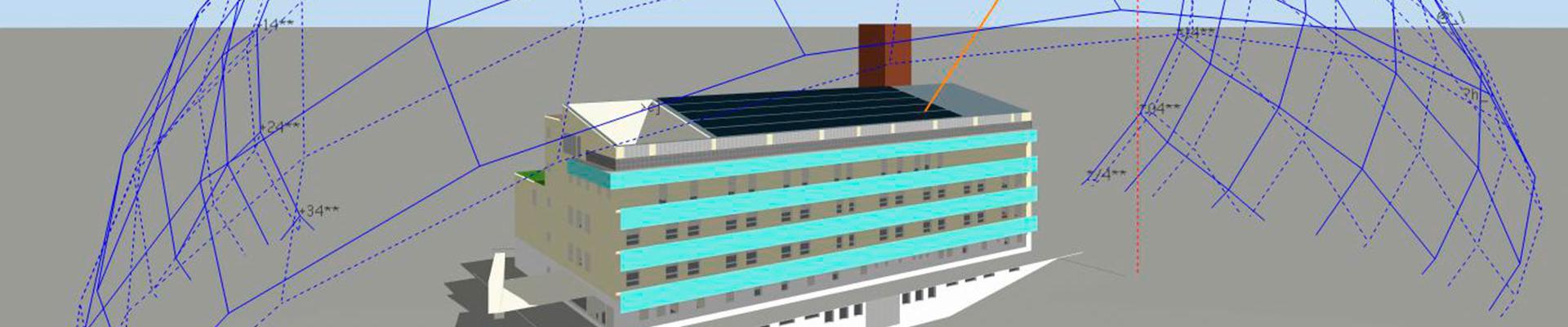
An energy simulation has been carried out with Energy Plus of the Proposed and Baseline Buildings to calculate the percentage of energy improvement of the projected building compared to the reference building according to ASHRAE 90.1-2007. All the energy efficiency measures mentioned above have been included in this simulation, as required by the ASHRAE standard. This simulation gives us an amount of economic savings of 42%.
“We obtain an approximate 42% economic saving compared to a reference building.”
In addition to the energy efficiency of the building, its design and construction have allowed other aspects to be optimized, among which savings in water consumption stand out.
The volume of water recovered daily from sinks and showers is 8,000 liters, and the daily needs for recycled water are 13,800 liters.
The reuse of the 8,000 liters of “new” water allows an annual saving of almost 3 million liters of water!
Another aspect is indoor air quality, which is achieved through the use of active polarization filters.