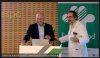

Master Class by Dr. Vilá y Rico at the Fraternidad-Muprespa Havana Hospital
On Friday, November 4, the second master class organized by the Hospital Fraternidad-Muprespa Habana was held with the collaboration of Dr. Jesús Vilá y Rico, specialist in Traumatology and Orthopedic Surgery of foot and ankle pathology, who has offered a scientific session on the “arthroscopic treatment of ankle instability”.
Dr. Vilá y Rico is a renowned traumatologist with a doctorate in Medicine and Surgery, who has trained in international hospitals such as the Charité in Berlin, one of the largest in Europe where 5 Nobel Prize winners in medicine have been trained, and the Johns Hopkins in Baltimore, considered one of the most prestigious in the United States. United. He is currently vice president of the Spanish Society of Orthopedic Surgery and Traumatology (SECOT), member of the senate of the Spanish Society of Medicine and Surgery of the Foot and Ankle (SEMCPT) and treasurer of the European Foot and Ankle Society.
In addition, Dr. Vilá y Rico carries out his activity in the Traumatology and Orthopedic Surgery services of hospitals such as H.12 de Octubre, where he is coordinator of the Foot and Ankle Unit, at the Ruber Juan Bravo Hospital as head of Service and member of the H.Ruber team International.
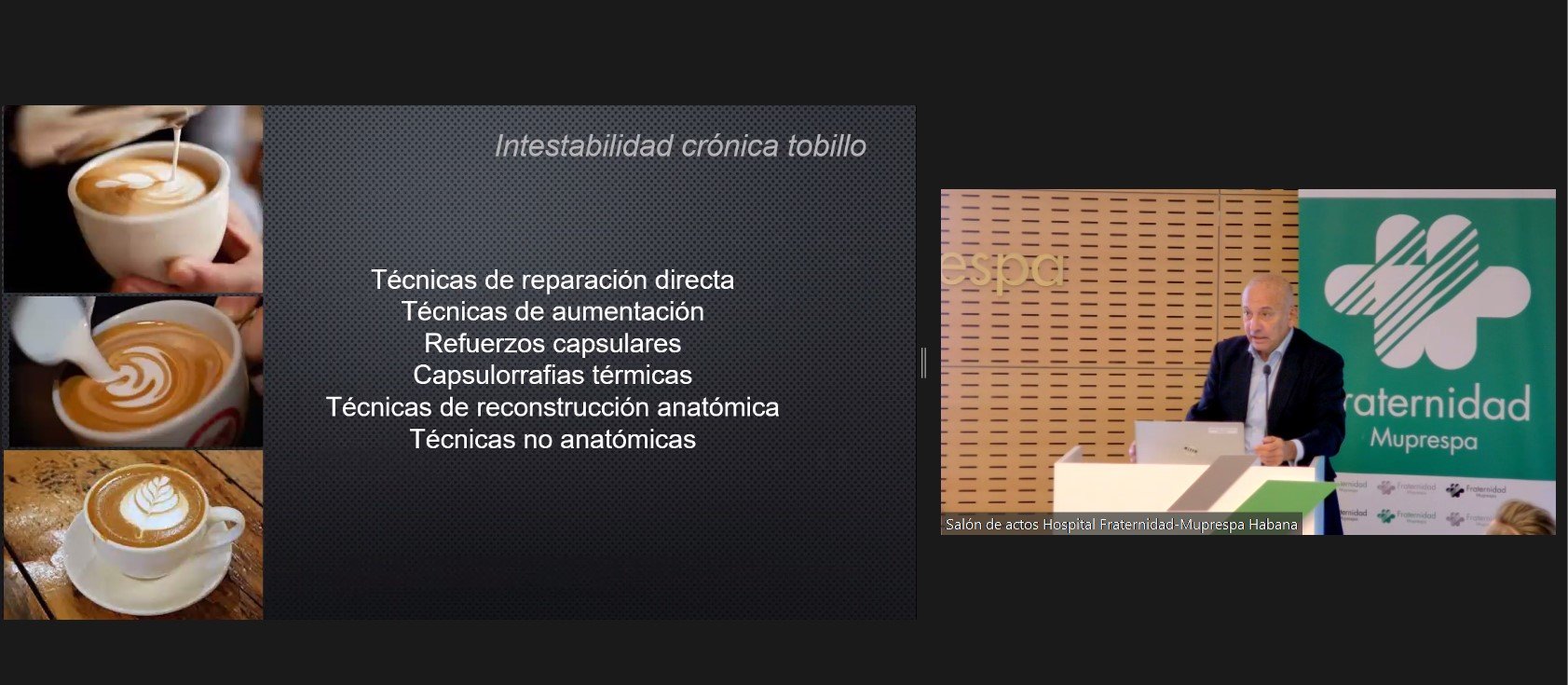
At the beginning of the session, Dr. Vilá y Rico explained that chronic ankle instability is a very common pathology, “between 15 and 20% of sprains evolve into chronic instability”. He has highlighted for its treatment that there are numerous techniques such as direct repair, augmentation (with halografts are the most used), capsular reinforcements, thermal capsulorrhaphies (application of thermal energy by laser in the capsular and ligamentous tissues), influencing the use of each of them according to the singularities of the case.
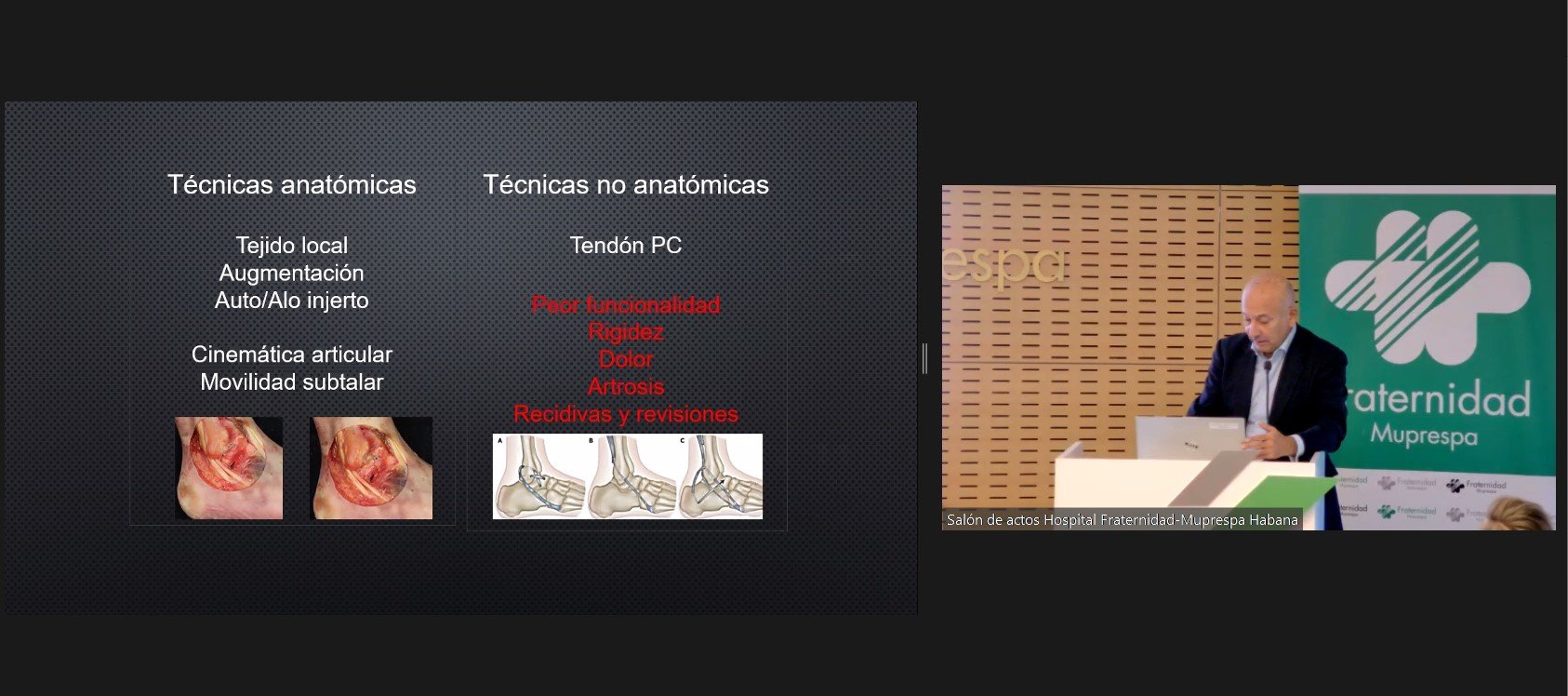
He has also pointed out the main differences between anatomical and non-anatomical repair techniques, explaining that the latter generally have more drawbacks, producing more stiffness, worse functionality, pain, osteoarthritis, higher recurrence rates and a greater number of reviews.
The technique must be adapted to each patient according to their injury and pathology, we have many techniques, we just have to know when use them
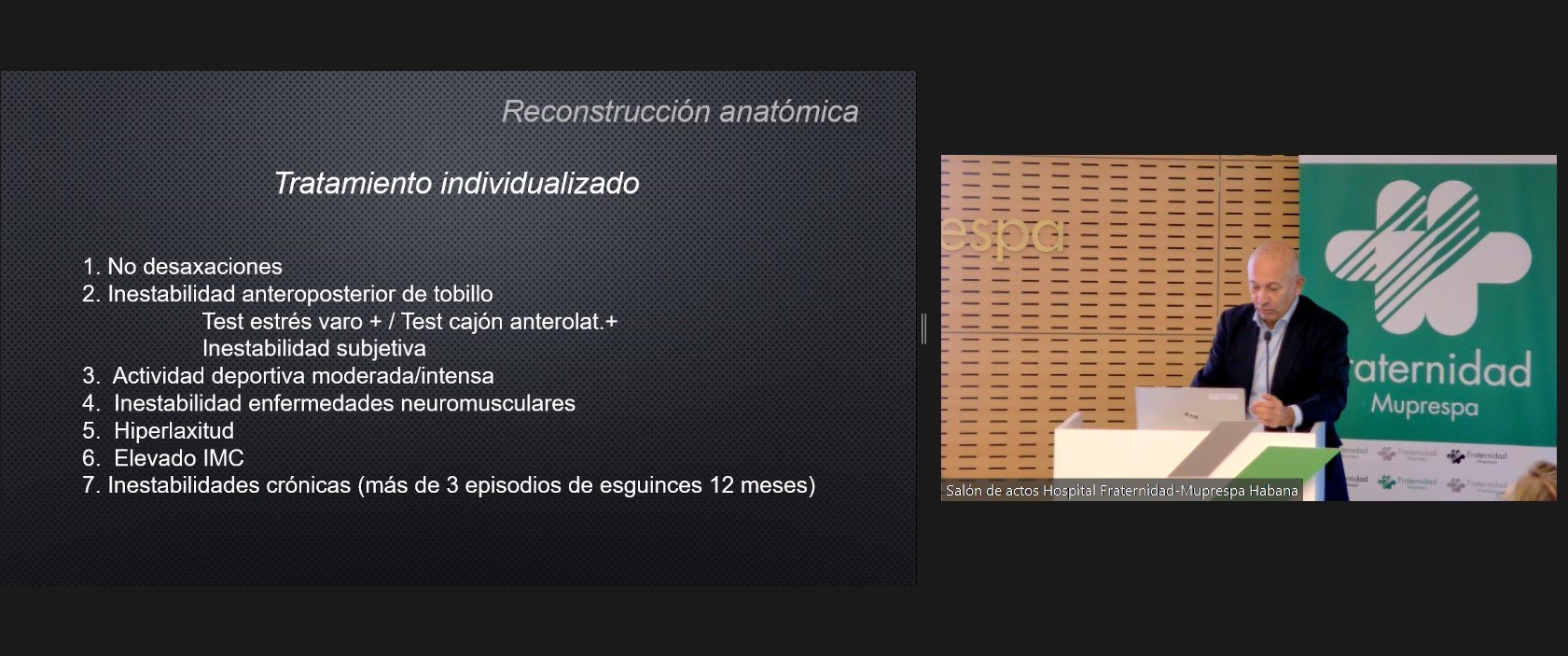
Dr. Vilá has highlighted the importance of a good diagnosis for individualized treatment with the choice of the most appropriate technique for tendon repair. It is essential to analyze the patient's characteristics during the examination, supported by the necessary complementary tests to assess tissue quality, hypermobility, the presence of misalignments (alteration or deviation from the normal axis of the joint) and take into account factors such as high BMI (body mass index), participation in intense sports activity or having suffered more than 3 sprains in the last year.
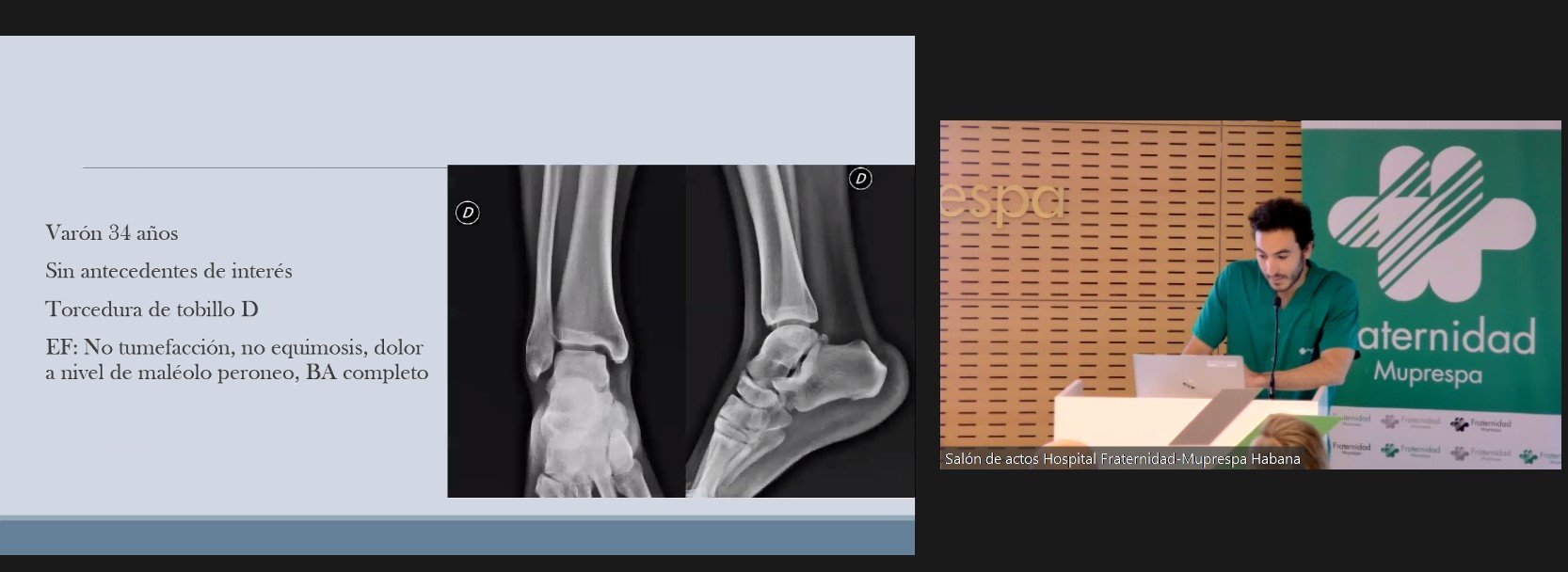
Next the Dr.Tomás Losa, R4 resident doctor, has been in charge of presenting a practical case to our guest to know his point of view.
Then the Dr. Álvaro Minuesa, head of the Traumatology Service, gave way to the question period that generated an enriching participation on the most used techniques, the advantages of arthroscopy, the use of nanoscopic techniques, the opinion on splints, the use of PRP (Infiltration of Platelet Rich Plasma), postoperative management, the unloading time and immobilization of the patient taking into account the peculiarities of the work environment.
Dr. Minuesa thanked Dr. Vilá and Rico for participating in these training sessions organized by the HFMH, inviting them to visit the avant-garde facilities that the center has. In addition, he has been present in two arthroscopic surgeries performed by members of the Lower Limb Unit, sharing his knowledge and contributions on the best management of the technique.
Fraternidad-Muprespa is committed to the continuous training of its professionals with the aim of obtaining maximum excellence care