
Energy saving, the most necessary tool to combat climate change
The increasing increase in the price of electricity has led many consumers to consider measures to save, but energy saving should not be considered something specific or seasonal, but rather it is a concept about which awareness must be raised. For this reason, the International Energy Savings Day is celebrated every October 21, a day that was established in 2012 by the World Energy Forum, with the aim of conserving natural resources and achieving greater global energy efficiency.
Generating electricity is a process that harms the environment. Currently in Spain a large percentage of the electricity consumed comes from non-renewable energy sources, such as oil, gas or coal. Gradually, other renewable sources, such as solar or wind, are gaining strength. The use of non-renewable and highly polluting energy causes the emission of a multitude of greenhouse gases, such as carbon dioxide and methane, which are largely responsible for climate change.
The climate change that the planet is suffering goes beyond having warmer temperatures. It also entails suffering from extreme weather events on an increasingly frequent basis: intense droughts, water shortages, catastrophic storms, serious fires, rising sea levels, floods, melting ice at the poles and loss of biodiversity are just some of the examples.
What has been said serves as a bridge for two very important days that are celebrated a few days apart. To the already mentioned International Energy Saving Day adds the World Climate Change Day, which is celebrated on October 23 and this year has as its motto “ Healthy air, healthy planet”.
It is everyone's responsibility to provide solutions that improve life on earth and at the same time protect the environment. As? With actions as simple as turning off unused lights, making the most of sunlight or choosing more sustainable mobility.
It is in the hands of large corporations, institutions or administrations to reach global agreements that provide solutions, such as the United Nations Framework Convention on Climate Change and the Paris Agreement, which proposes reducing emissions, adapting to climate impacts and financing the necessary adjustments.
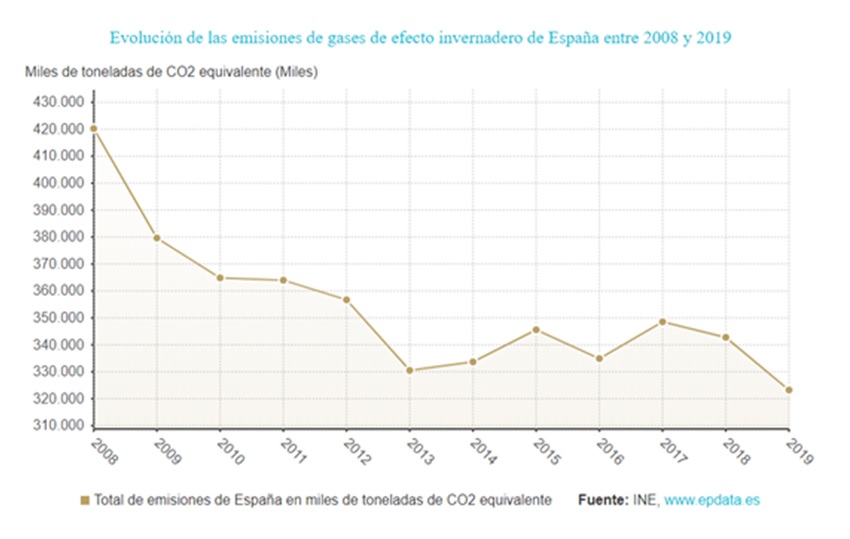
To reach 2050 without the Earth's temperature increasing by one and a half degrees Celsius, the use of fossil fuels must be reduced by 6% annually in the current decade. Spain is currently among the four countries in the European Union that have reduced their greenhouse gas emissions the most in recent years.
At Fraternidad-Muprespa we want to be green and what better way to achieve this than by applying measures to control electricity consumption, such as remote measurement and remote management, installing presence detectors for light, working with more efficient computer equipment and printers that allow us to activate the energy saving mode, as well as measuring our carbon footprint.