
The La Palma volcano in terms of occupational risk prevention
The interior of the earth hides a time bomb, as we have been seeing since the eruption of the La Palma volcano began, 51 days ago.
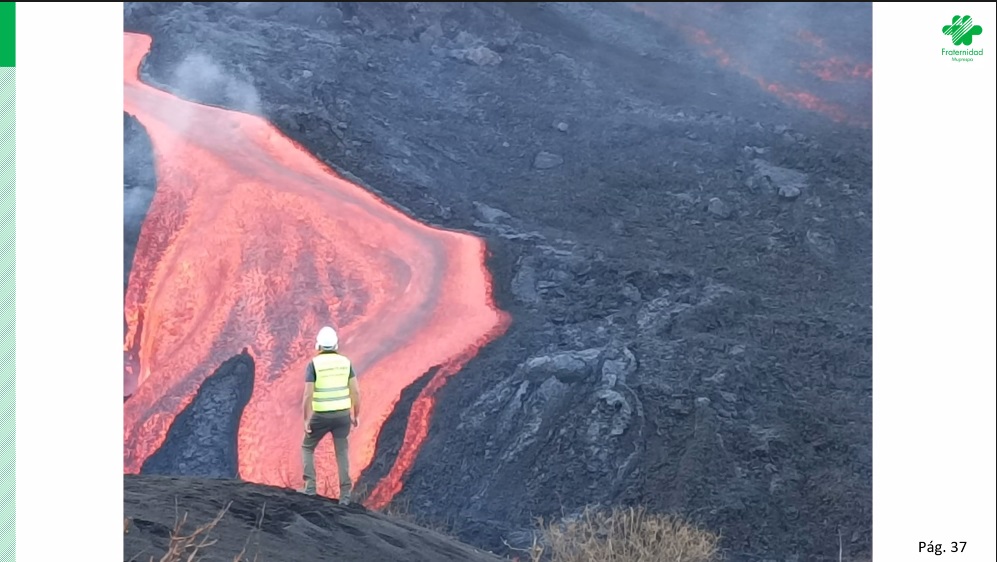
In addition to the obvious risks caused by this geological event, there are risks to the health of those who are working on the ground. That is why the Department of Prevention and Development of Health Culture of Fraternidad-Muprespa has carried out a webinar with the title “The La Palma volcano: prevention of volcanic and occupational risks”, in which they have participated Carlos Maya, Geological Engineer and Occupational Risk Prevention consultant Fraternidad-Muprespa, y Julio Lopez, g eologist at the Geological and Mining Institute of Spain, and researcher recently arrived from La Palma, where he has been working in the field.
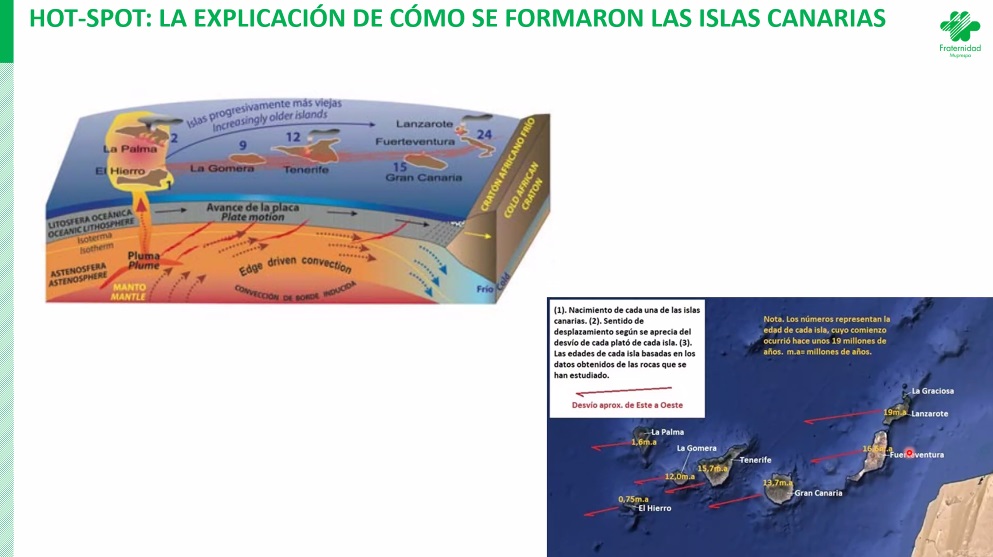
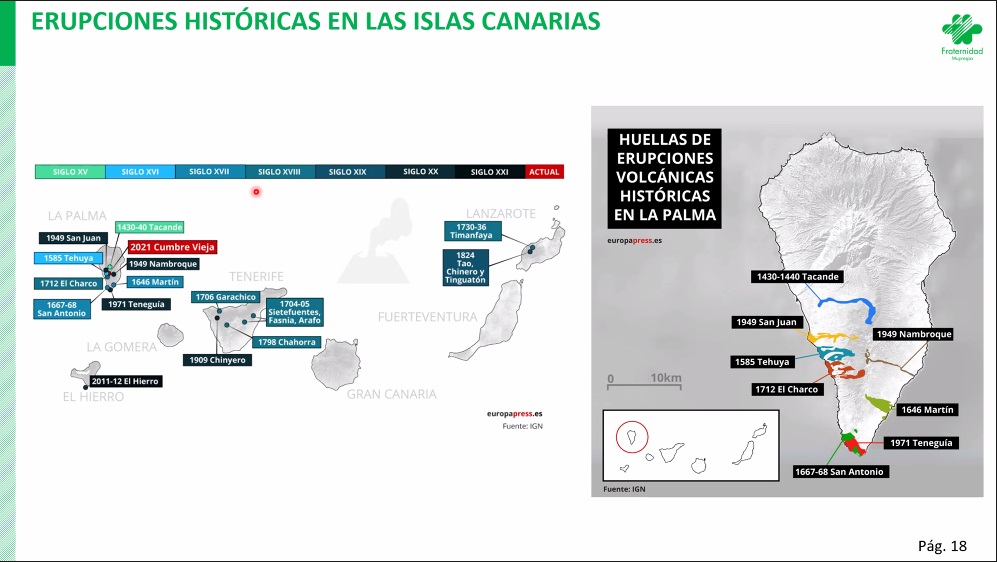
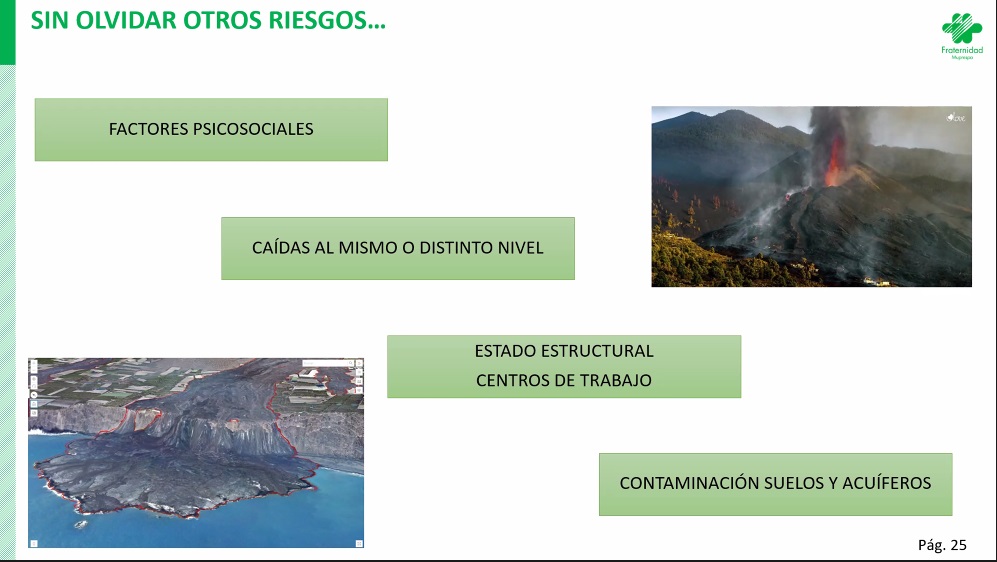
The event had two parts, a more theoretical one, by Carlos Maya, who recalled the stages of the formation of the planet and also the origin of volcanoes to subsequently list and detail the main occupational risks that workers can experience: high temperatures, exposure to toxic substances and gases, projection of particles, risks derived from occupational road safety, risks due to poor ergonomics, due to working in an emergency situation in addition to the obvious psychosocial factors, possible falls, the state of the structure of the work centers affected by the lava and the abundant ash and the contamination of soils and aquifers.
Regarding the risks derived from exposure to toxic substances and gases, they do not only refer to the effects on the respiratory system, but also on the eyes, given the large amount of silica dust in the air.
For its part,Julio Lopez, recently arrived from the island, where he has been carrying out his research work, assured that they had worked in the area from two aspects: on the one hand, treating the emergency, trying to stop any negative effects for the population and providing assistance to the authorities, and on the other, their scientific aspect, that is, the collection of data, samples, ash, gases, lava or rock... for the future processing of all this information so that the most peculiar characteristics of this eruption can be established and anything that has gone out of the ordinary can be corrected. "It is a normal eruption, quite typical. What we are learning from is the management of the emergency. Although the volcano was being permanently monitored, the management of the emergency began earlier because there were symptoms that something was happening," he said.
López highlighted the importance of the work in the preventive field of the UME, the Military Emergency Unit, because "they were ahead of the rest of society in the field of PRL, they were the ones who explained to all the professionals from other fields what measures they had to adopt to start working and how to protect themselves. In general, I believe that protocols should be established. In the face of future emergencies, everything must be redone and go with the lesson learned. At the moment we are learning," he added.