World First Aid Day: knowing them, as important as sharing them. Davinia's story
*Images provided by the NGO Africa Sawabona
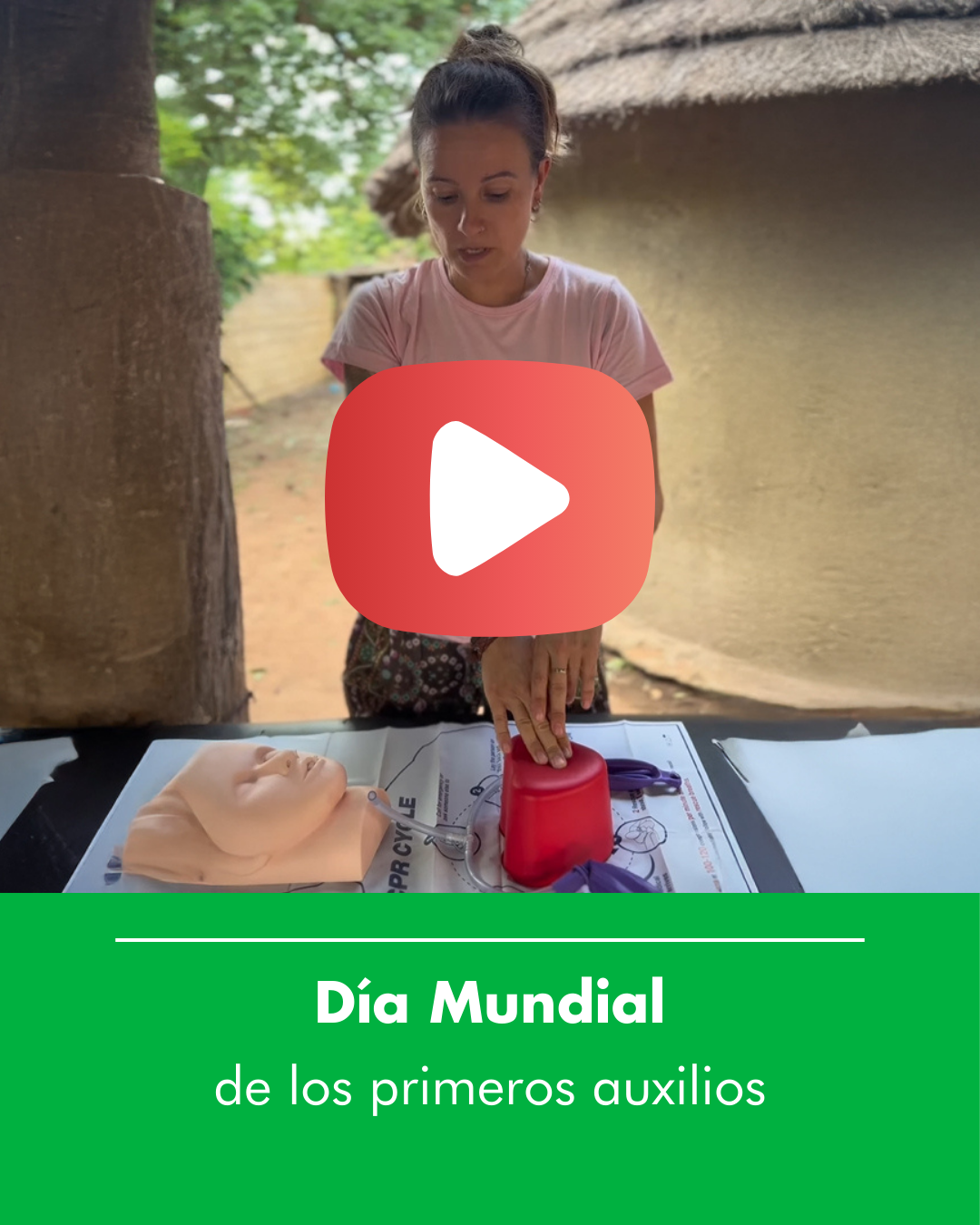
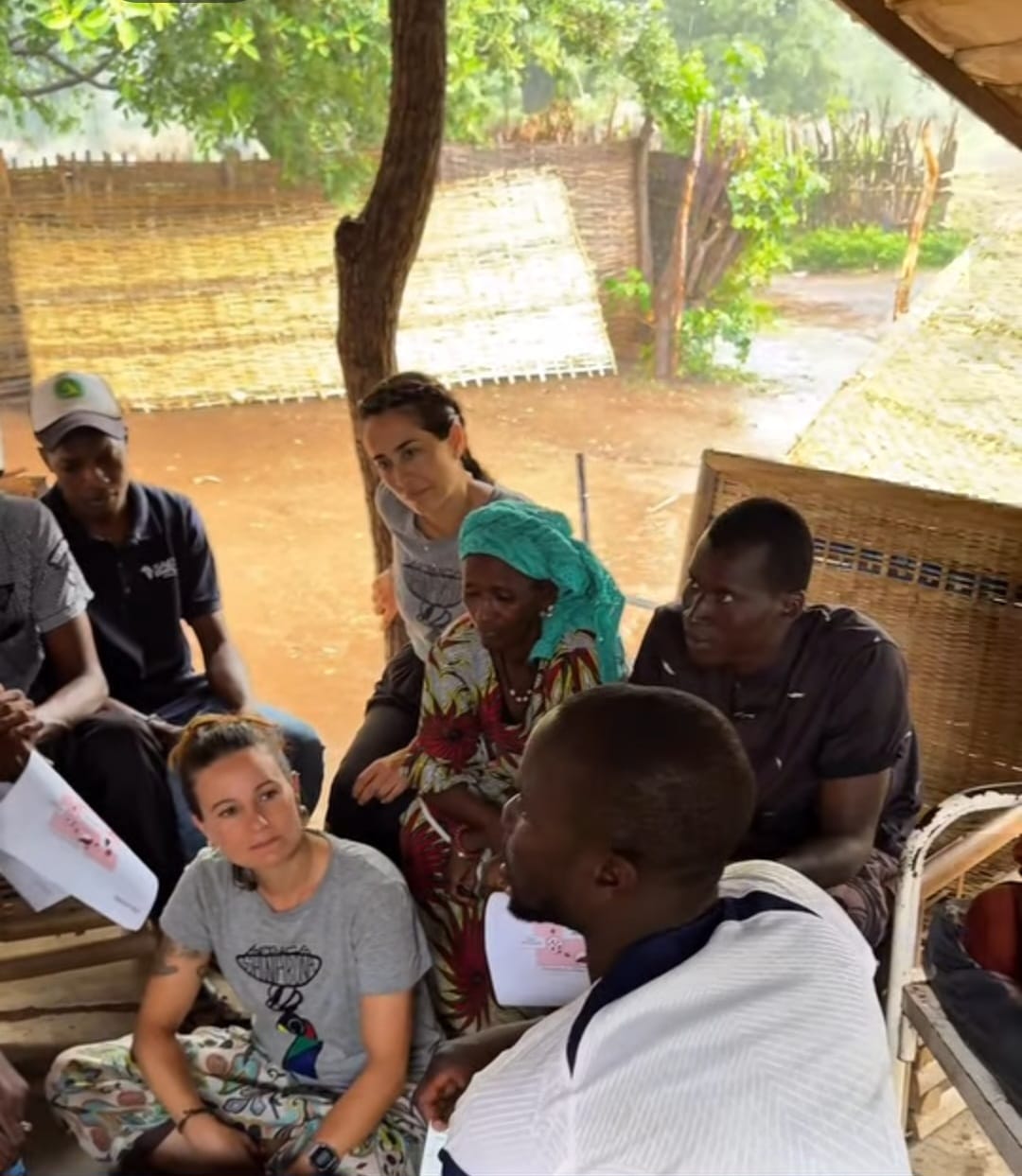
There is no coverage. There are no roads. The closest health center is on the other side of a river, but not just any river: the Gambia River, one of the largest in Africa. In the middle of the forest, there are hundreds of small communities made up of a few families. With scarcity of resources, difficulties and without access to basic services, such as healthcare.
Every year, World First Aid Day, which we celebrate this Saturday, reminds us of something essential: knowing how to act in the first minutes can make the difference between living and dying. But what to do if no one knows how to act?
Today we value the history of Davinia Arraez, nurse, trainer, mother, committed woman, lover of adventure sports and colleague of the provincial management of Fraternidad-Muprespa in Pamplona. This summer she traveled to Senegal and did so to teach first aid, a vocation she had since she was little.
“ This field has always attracted my attention and I knew at a very young age that I wanted to dedicate myself to healthcare and also that I wanted to cooperate, help whoever needed it. Before starting to study, I called Doctors Without Borders to find out what was needed to work as a volunteer.”, a statement that makes clear her desire to work as a volunteer and thatwas able to carry out when she finally studied nursing.
His first destination was Senegal, where he cooperated by setting up a hospital for patients with malaria and other pathologies. That experience taught him that healing is almost as important as teaching how to heal.
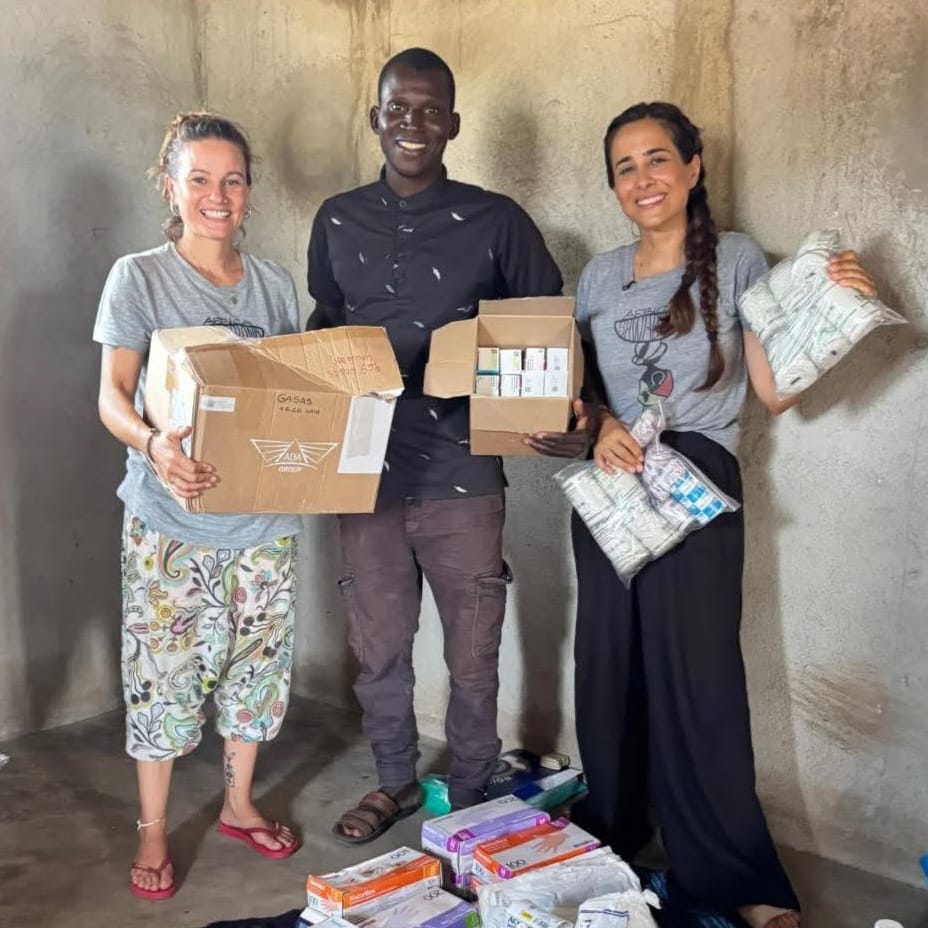
“ We were in a remote area, they had never seen a doctor before. After ten days we finished all the medications and material, and I wondered if it was fair to make that trip and then leave people exposed without a solution. That's why I decided to focus on providing training”.
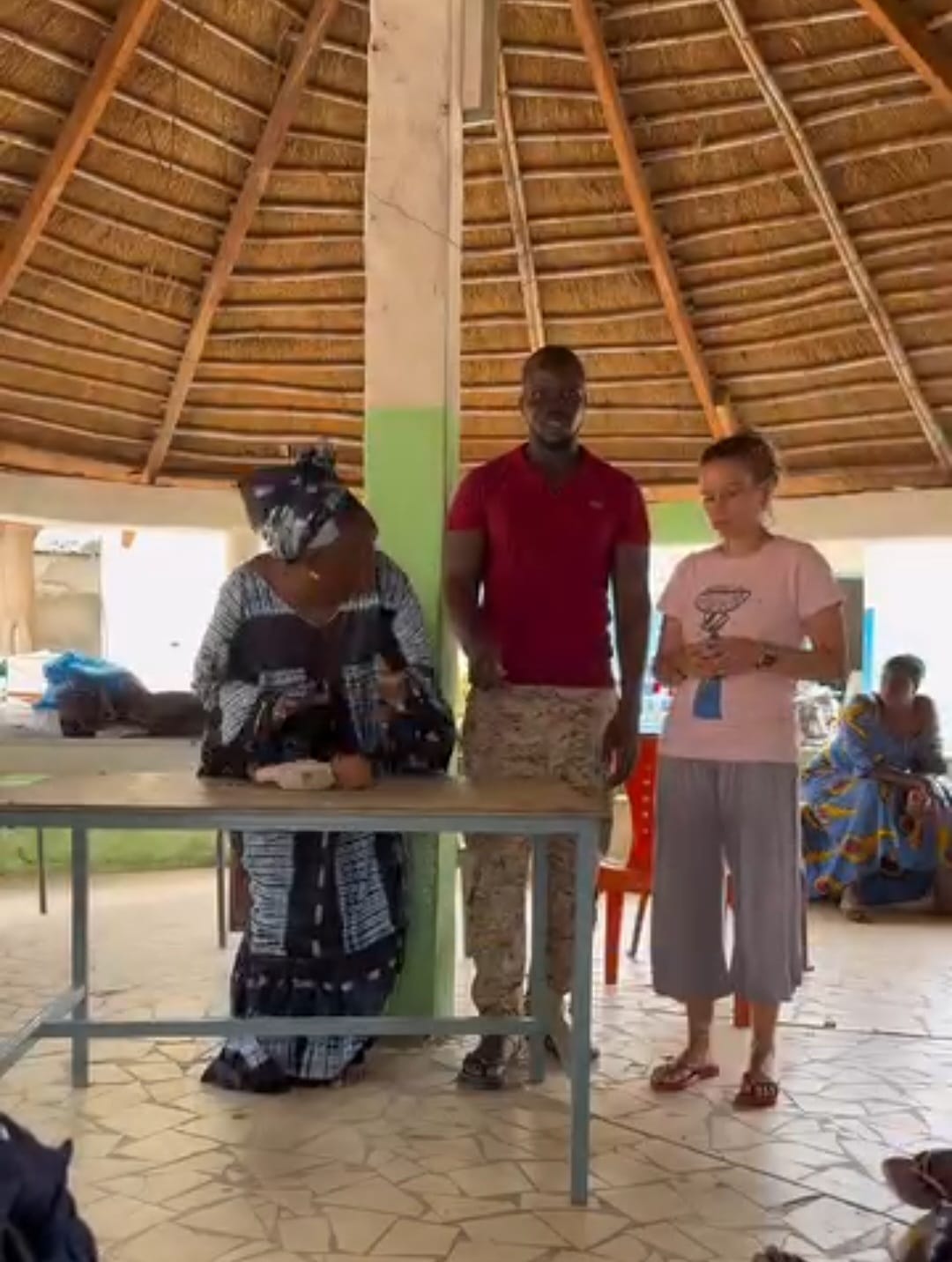
And after acquiring more kilometers and hours of experience in different cooperations, in addition to taking a personal break and becoming a mother, this summer she resumed one of those trips that she is always thinking about. He did it with the NGO Africa Sawabona, whom we thank for sharing with us the images that illustrate this news.
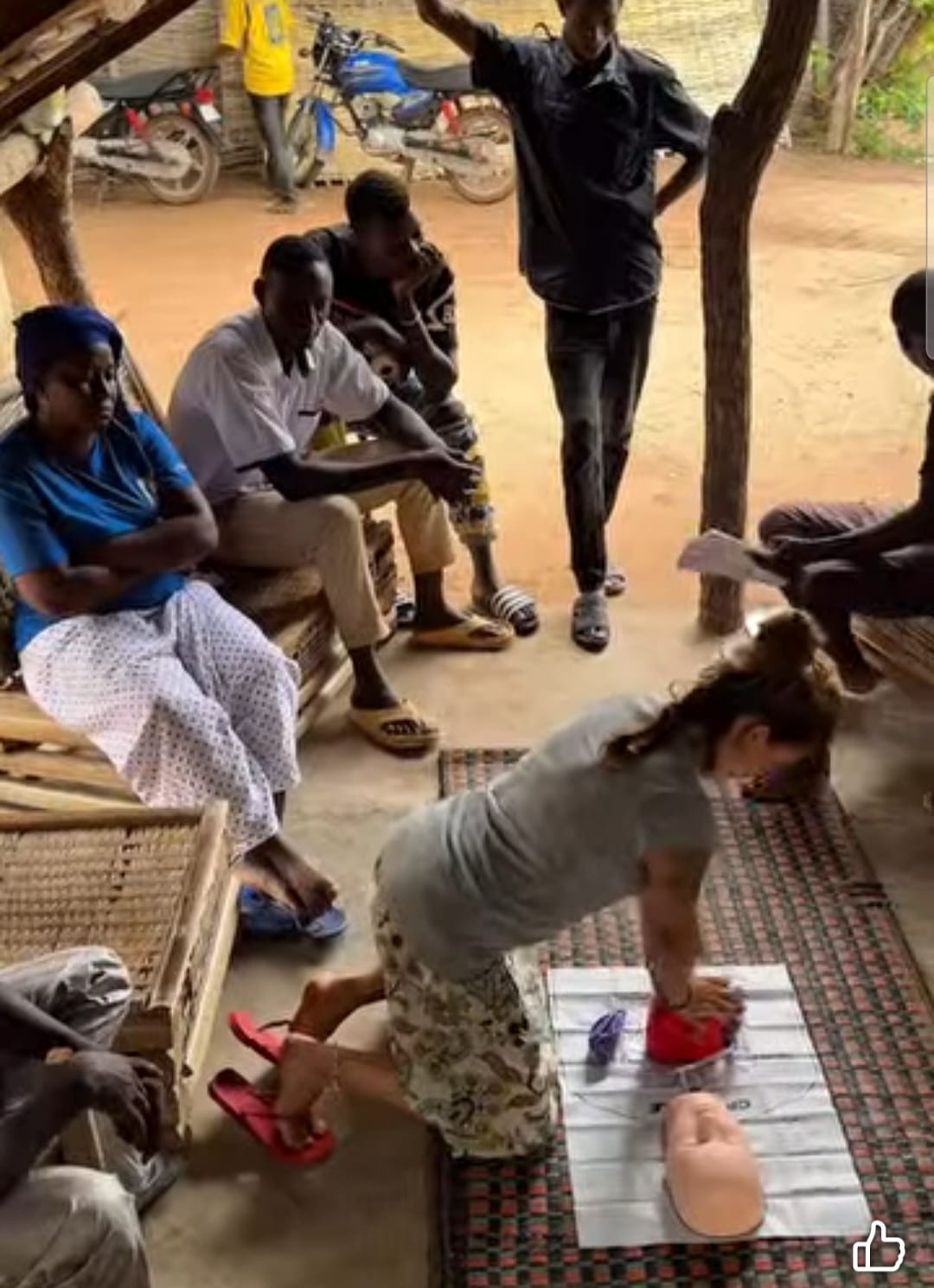
“ I love doing care, but it makes more sense to train so that they, who are health agents and midwife assistants, can do it. They can solve a small problem in the community, or know that they have to refer it because it is bigger. They are volunteers, they do not charge a penny for carrying out this function, and the worst thing is that they do not have any material, they heal wounds with water, soap and pieces of cloth”says Davinia.
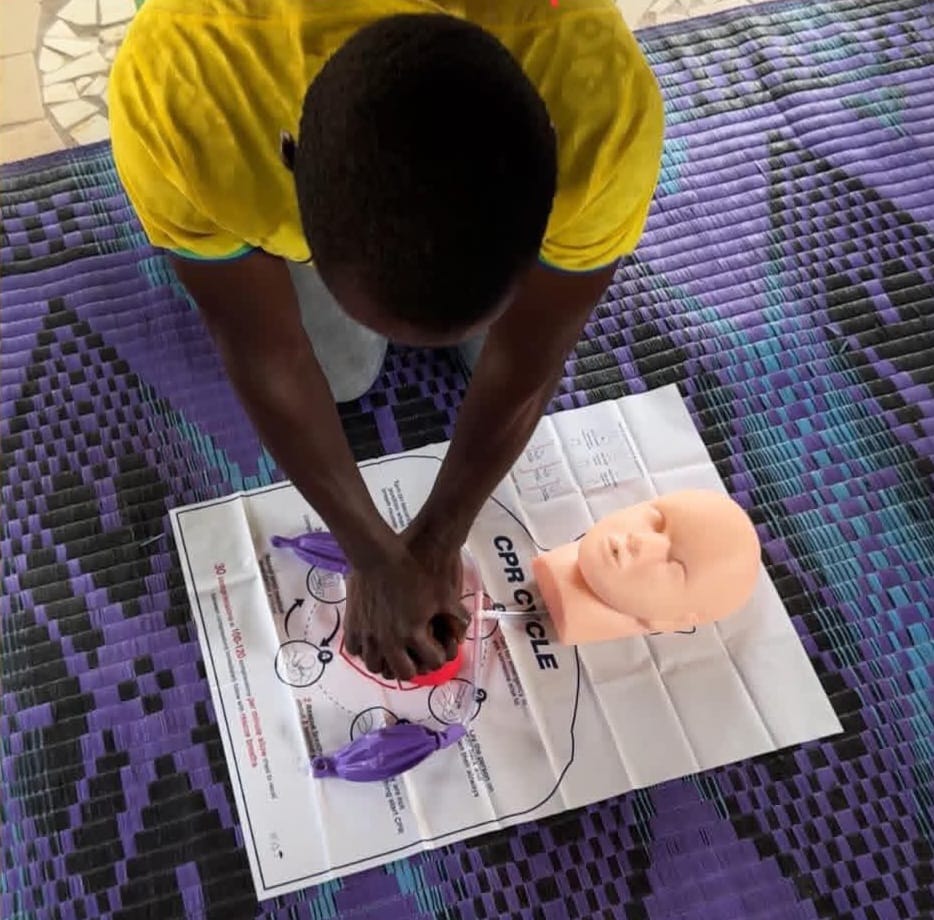
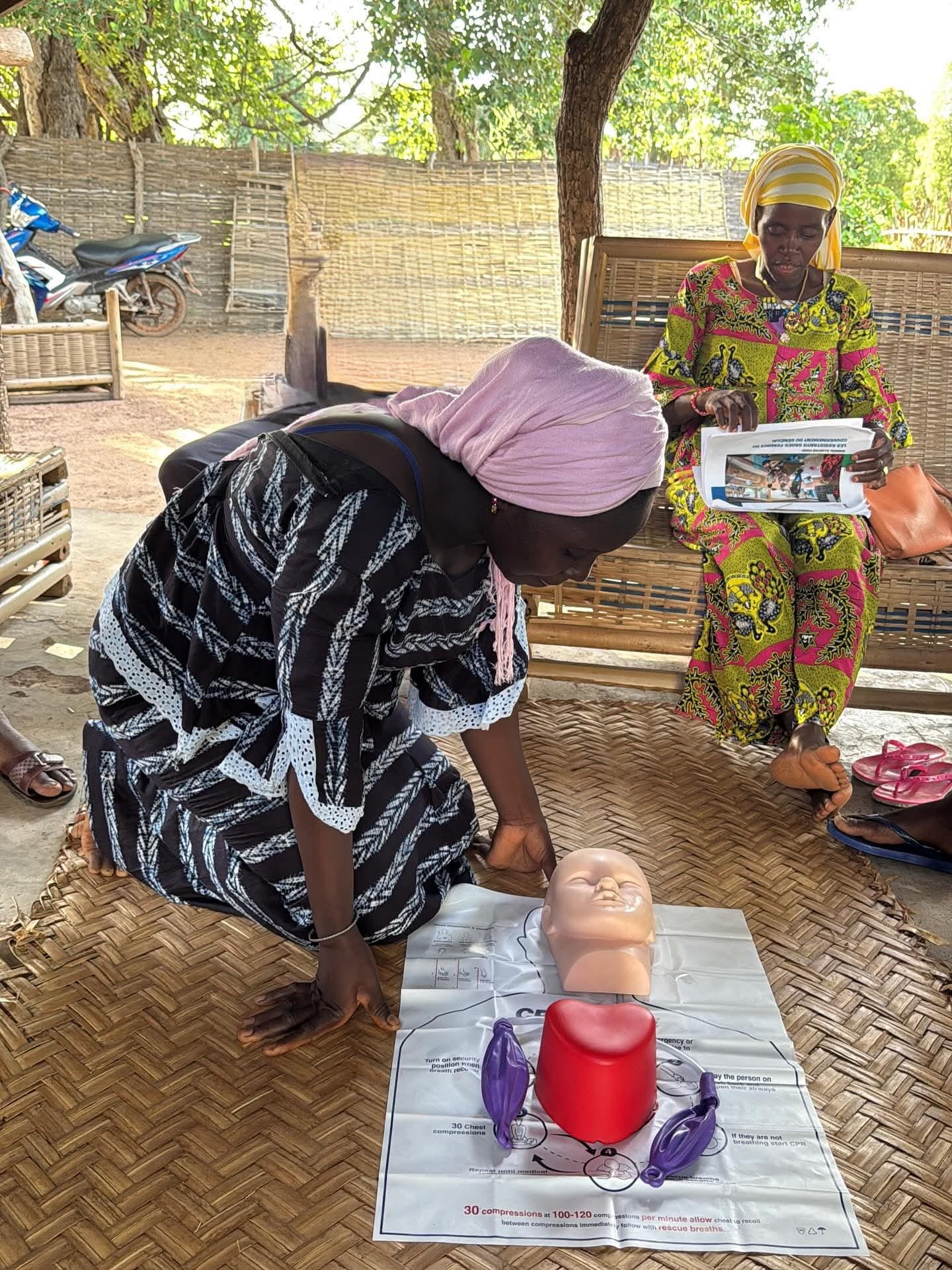
To teach notions of cardiopulmonary resuscitation, it was important to do some of the things that are done in the Western world, but the difficulty, for example, of transporting a CPR dummy was enormous, so it occurred to her to create a 'low-cost' one with recycled materials. Creativity at the service of life.
“ It is important that they learn to do things by doing them, like here because otherwise it is very difficult. I gathered recycled materials and for about 25 euros I created this doll, trying to make the formations adapted to their needs.”.
Since returning to Pamplona, Davinia has not stopped thinking about how to improve. Although in a very different environment from his international missions, he maintains the same purpose: to care, accompany and continue training, for example, to suture and care for wounds at Fraternidad-Muprespa, where he has been working for three and a half years. “ Sometimes we saw injuries at the Mutua that had to end up in the hospital because they were very complicated, and with the expert that I have done, I am now able to solve many of them here, in the provincial direction, and that makes me very happy.”.
Every training given, every moment lived reaffirms in people like Davinia something that many sense but few dare to prove: that volunteering transforms those who receive it, but above all, those who practice it.