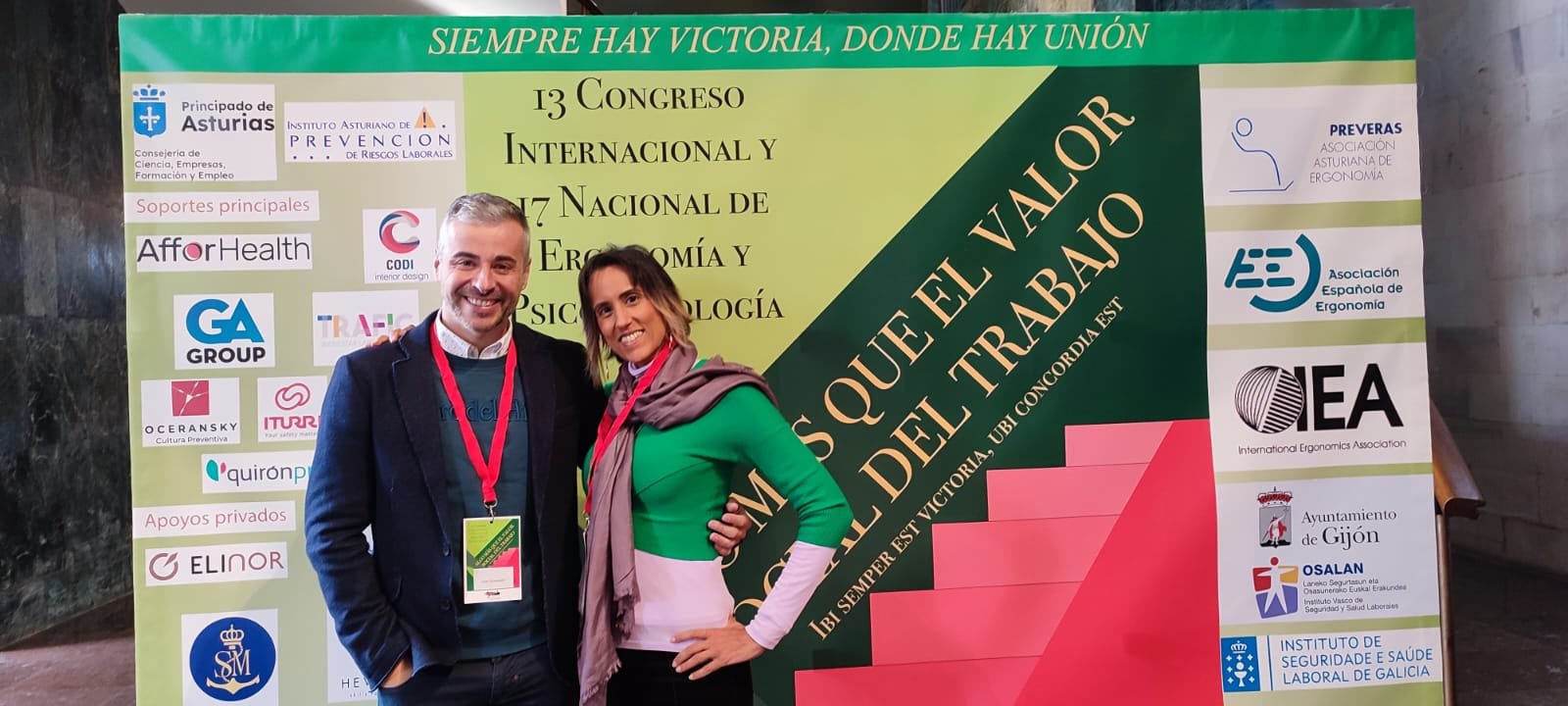

Eugenia Colotto and Iván Fernández, at the Preveras Congress representing Fraternidad-Muprespa
Fraternidad-Muprespa has been present, once again, at the 13th International Congress y 17th National Ergonomics and Psychosociology with the title "Something more than the social value of work" organized by the Asturian Ergonomics Association, PREVERAS and the Spanish Ergonomics Association, AEE, on November 9 and 10 at La Laboral.
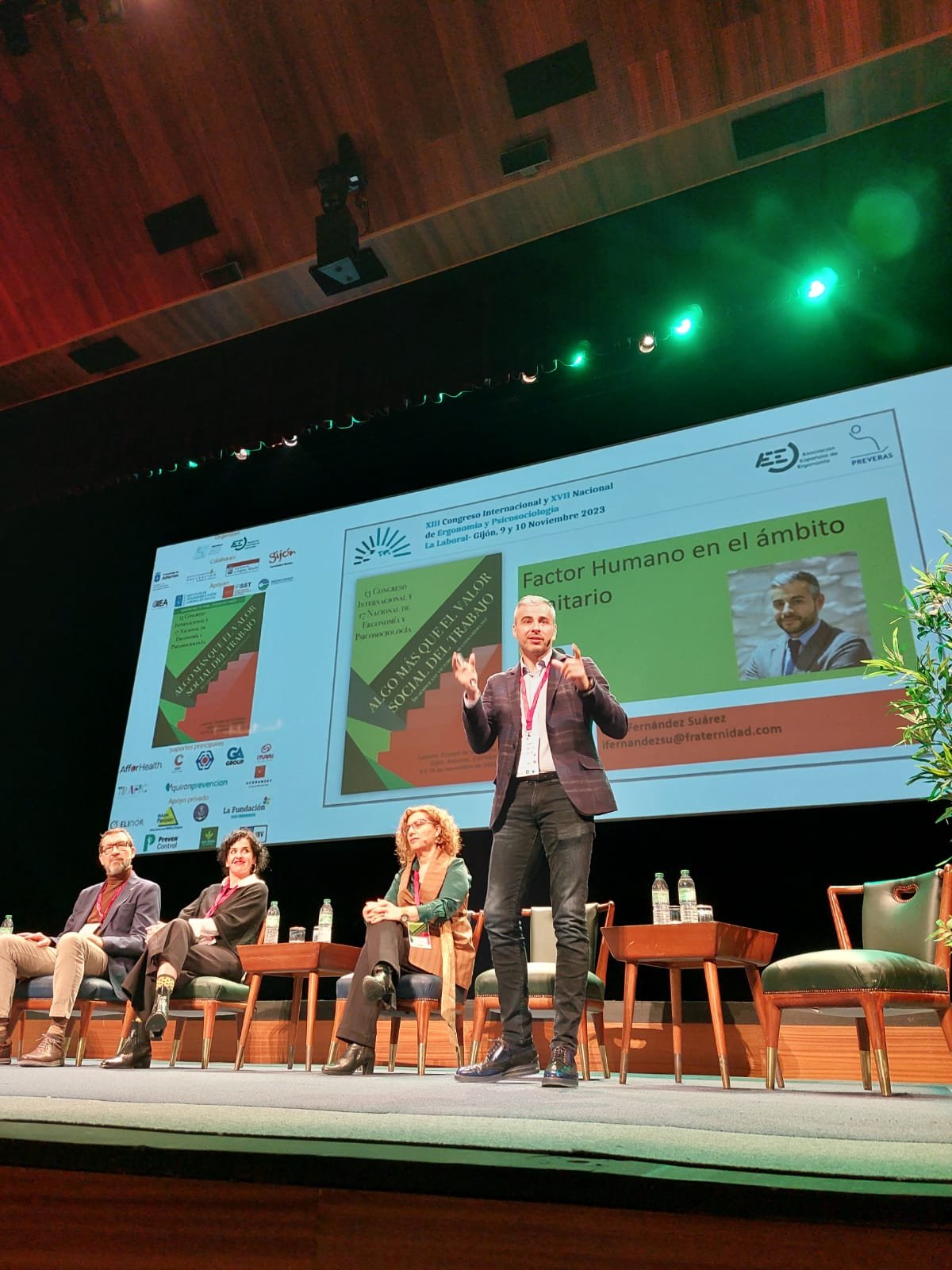
Maria Eugenia Colotto, Prevention consultant of the main Barcelona delegation, participated on Thursday the 9th in the workshop "Generational debate on the diversity of Ergonomics", while on Friday the 10th Ivan Fernandez, consultant of the main delegation of Oviedo, participated in the round table "Ergonomics in critical safety systems" with the presentation "Human Factor in the health field."
Colotto explained that ergonomics “has evolved in a very positive way,” describing that, initially, there were two trends. The first was focused on the human factor, which involved a scientific study in which the purpose was to increase productivity, minimizing production time with or without the participation of the owner of the process, that is, the workers. The second approach, the so-called 'activity ergonomics', is characterized by the human or social sciences in which the participation of workers was essential to find solutions.
"My tendency as a preventionist has been to integrate both schools, considering the technical-scientific aspects with the humanistic and inviting workers to participate, who not only know the process, but also possible solutions; in this framework, participatory ergonomics is being promoted in sick leave," he concluded.
For his part, Iván Fernández analyzed the human factor in the healthcare field, highlighting aspects such as high pressure, emotional exhaustion and the need to minimize errors in these environments. Factors that cause “psychosocial risks to be considered a priority,” he stated “in order to safeguard the health of workers and guarantee quality medical care, minimizing human error.”