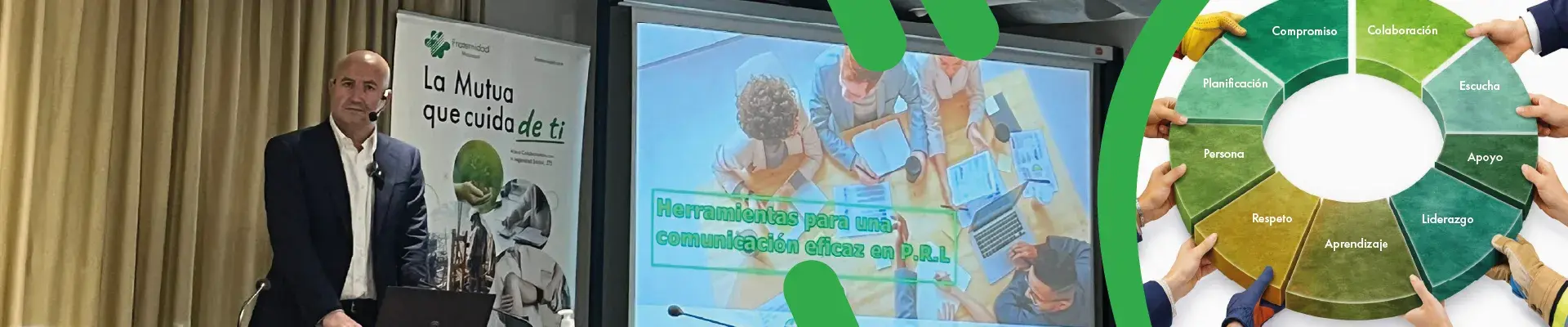
The CPRL of Seville holds a conference on effective communication in Occupational Health and Safety, with the presence of Fraternidad-Muprespa
On April 29, the “Tools for Effective Communication in Occupational Health and Safety” workshop was held at the Occupational Risk Prevention Center (CPRL) in Seville, a meeting focused on delving into the importance of communication as a key tool to improve occupational safety and which included the participation of Fraternidad-Muprespa,within the activities of your XI Prevention Week, under the motto“Circular Security: the commitment that unites us all”.
The session opened with the institutional intervention of Jorge Carbajal, director of the CPRL of Seville, who recalled that prevention is a dynamic process, and that it requires leadership capable of acting as a guide. He stressed that, for the preventive message to really penetrate the workforce, whoever communicates must be credible, coherent, exemplary and forceful.
The first presentation was given by José Manuel Muñoz, disseminator in the field of occupational risk prevention and executive director of Serpresur's external prevention service. Muñoz focused on a key idea: “your voice must live within the worker when you are not there.”
The speaker also defended the need to move towards more dynamic, close and motivating communication, capable of connecting emotionally with workers and transforming prevention into a natural habit and not an imposed obligation.
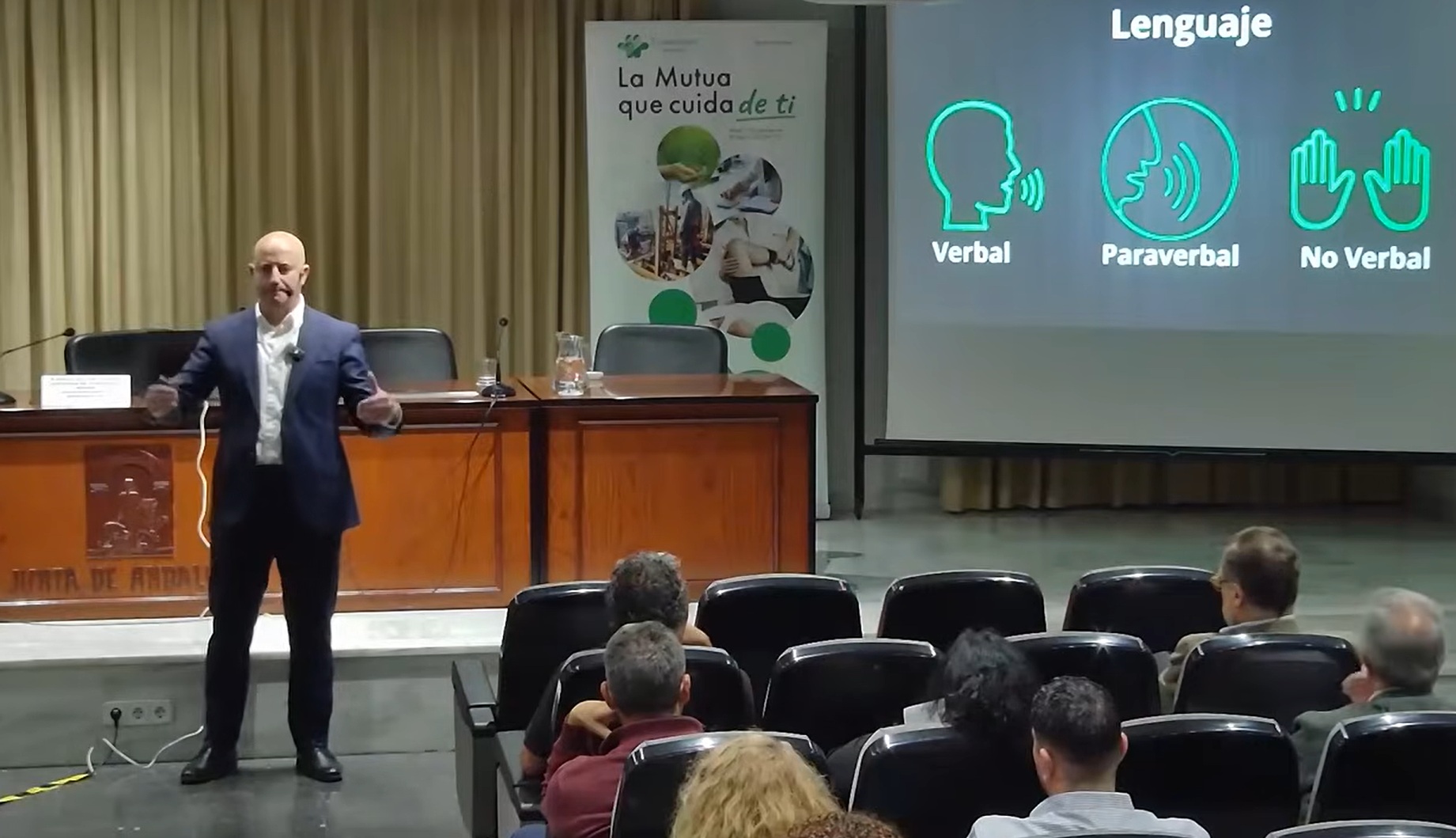
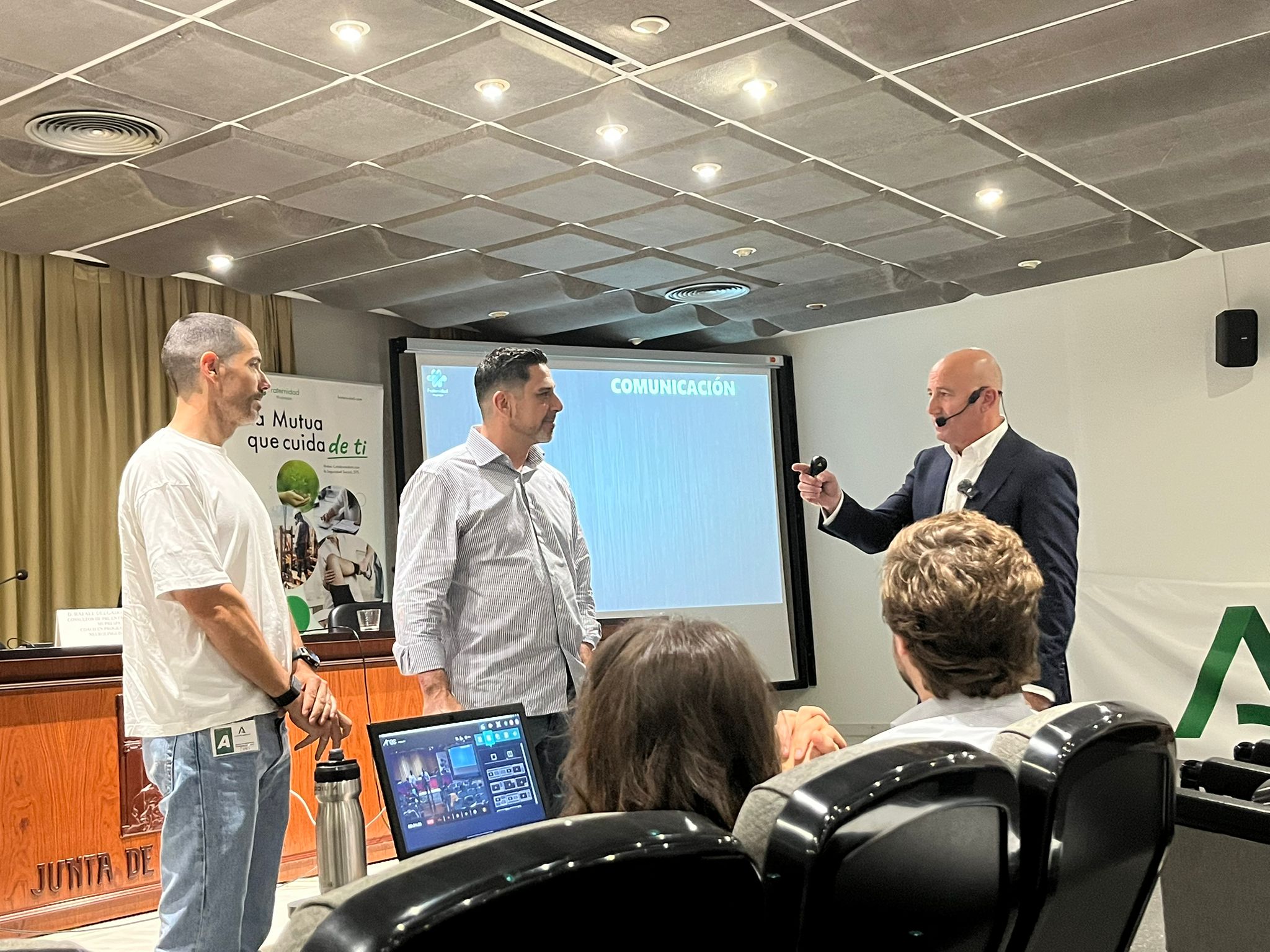
The second presentation was Rafael Delgado, Prevention consultant at Fraternidad-Muprespa, and was titled “Effective communication: the invisible that can prevent accidents.” Delgado delved into the psychological dimension of communication and defined it as a bidirectional process that allows exerting mutual influence and generating changes in the way of feeling, thinking and acting.
He also pointed out several common errors in preventive practice, such as assuming that the interlocutor has understood the message without verifying it, rigidly clinging to the law without showing flexibility or ignoring that each person filters information according to their own mental map. Finally, he described various 'paracommunication' tools that can make a difference in the interaction between technicians and workers.
The conference concluded with a reflection shared by both speakers: the success of prevention does not depend solely on technical knowledge or regulatory domain, but on the professional's ability to humanly connect with workers. This vision, focused on the person and the quality of the communicative link, is an essential element to move towards safer, more collaborative and healthier work environments.