
Fraternidad-Muprespa analyzes mobility after the pandemic at the Laboralia 2022 Fair
On March 29, the 'Meeting by Laboralia' took place at the Feria Valencia, whose objective was to analyze the strengths and weaknesses of the preventive sector after two years of pandemic, a time in which health and safety professionals have adopted a leading role.
With the presence of more than 400 prevention technicians from large companies and institutions, the event began in the morning with a plenary opening session of the Congress , in which he participated Carlos Arranz, director of INSST co n the conference 'The intervention of labor preventionism'. In it, he highlighted the importance of Collaborating Mutual Insurance Companies with Social Security, as axes in terms of occupational risk prevention in the different lines of work in the negotiation of the Spanish Occupational Health and Safety Strategy 2022-2027, closely aligned with the European Strategy.
The 'Meeting by Laboralia' was structured around different work tables that will take place in five different spaces of the Feria Valencia Events Center.
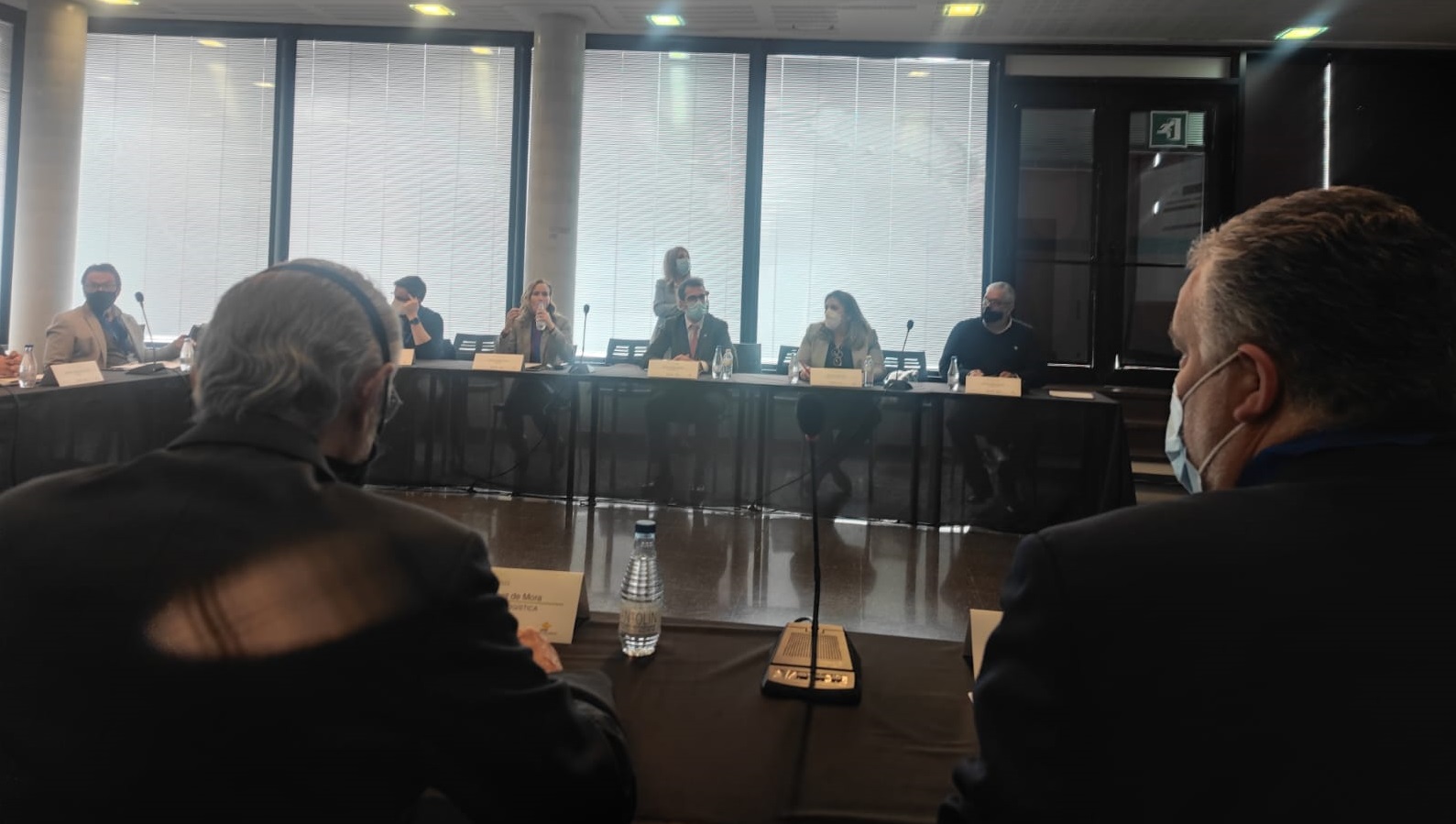
In Room 2 – INVASSAT Room, a workshop was held on the problems of transportation and its influence on the pandemic, moderated by Esteban Santamaría, from the INVASSAT center in Valencia, and in which David Revillo, prevention consultant from Fraternidad-Muprespa, representing AMAT together with the Labor and Social Security Inspection (ITSS), UGT, CCOO, various associations of external prevention services (SERPRECOVA, ASERPREV, ASPA-ANEPA and ASPREN), Correos, representing AESPLA, CEV, Business Confederation of the Community of Valencia (represented by TRANSDONAT and CADE LOGISTICS AND ADE LOGÍSTICA), FESVIAL, Foundation for Road Safety, and the General Directorate of Traffic.
Revillo had an impact with his exhibition ‘Urban mobility. New challenges and scenarios on the weaknesses and strengths around occupational road safety and the new challenges and scenarios that must be faced to reduce traffic-related accidents. Some of the aspects that stood out were the implementation of teleworking as a measure to prevent accidents in itinere, new emerging forms of mobility, such as the use of electric scooters in urban centers or shared vehicles (sharing), the protection of vulnerable groups.
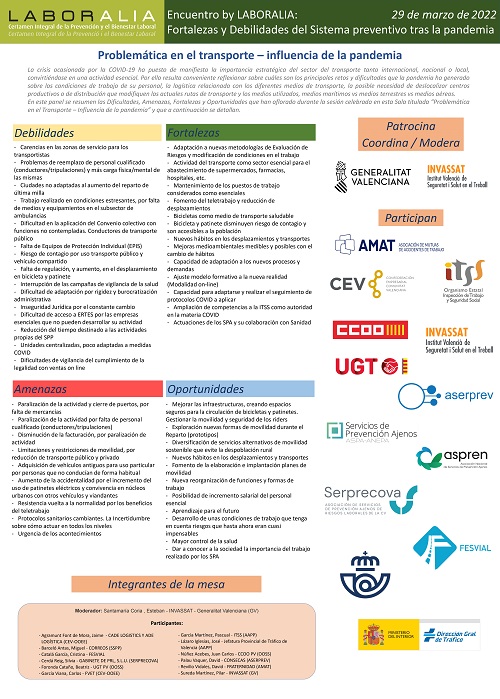
He continued to complete this list of preventive measures, emphasizing the need for the implementation of mobility plans and mobility analysis of company staff, the decrease in the use of collective passenger transport, the rise of electronic commerce and therefore, the increase in delivery companies, the human factor (distractions, alcohol, drugs, pharmaceuticals and speed), and the perception of risk. All this without failing to mention the education and awareness of alliances in society. At the end of the event, the conclusions were transferred to a poster in the form of a SWOT report to be made known to the attendees and which will soon be published in digital format.