This has been the participation of Fraternidad-Muprespa in the SESST Congress
X PROTXe99f2c79
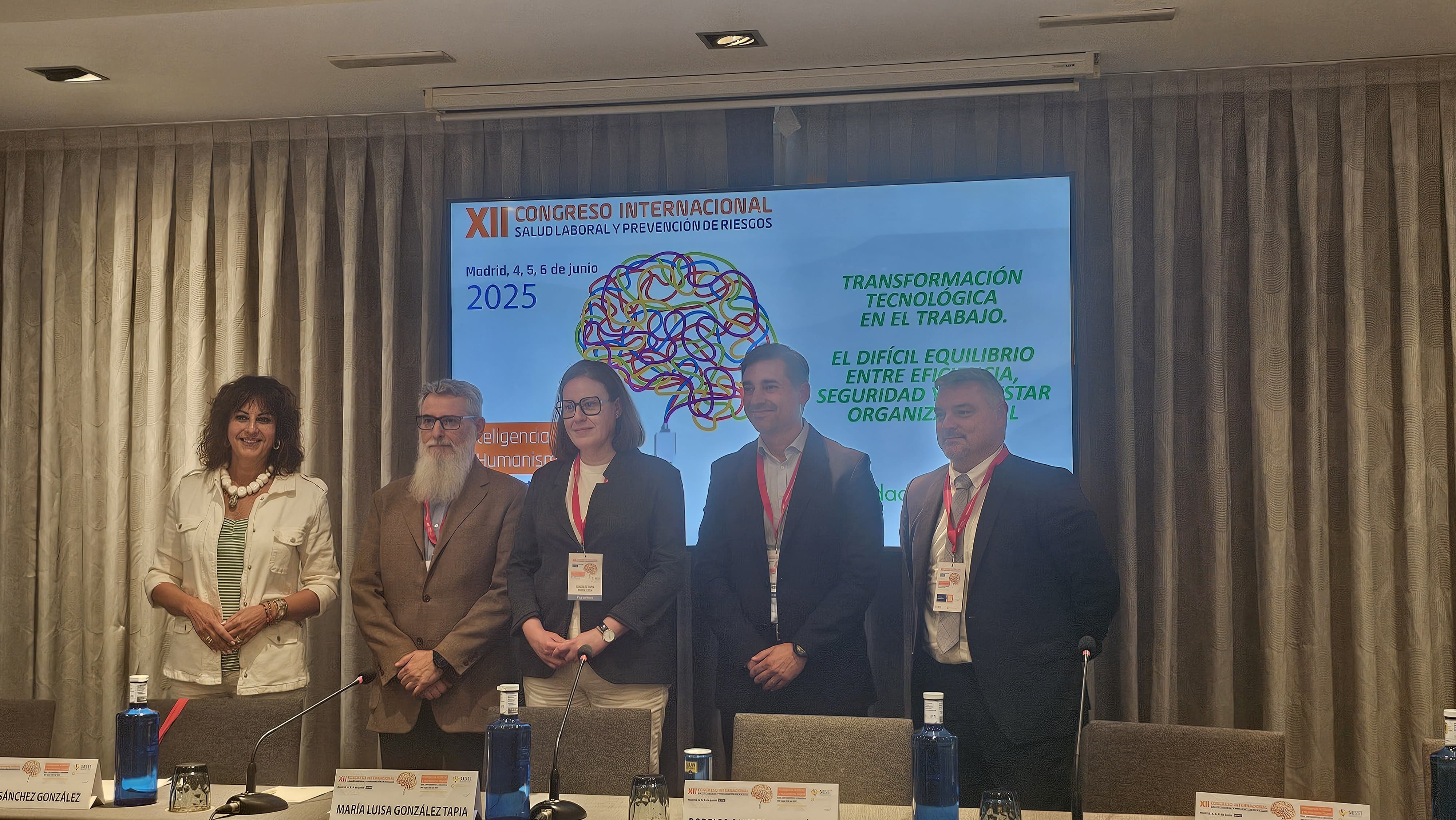
Natalia Fernández Laviada, Deputy Director General of Prevention, Quality and Communication, moderated the first symposium of the Congress, on Wednesday afternoon, "Technological transformation at work: The difficult balance between efficiency, safety and organizational well-being" with four great professionals.
Javier Sanchez, occupational risk prevention consultant at Fraternidad-Muprespa, gave the presentation "Technological transformation in Occupational Health and Safety. Risks, advantages and disadvantages";Maria Luisa Gonzalez, lawyer at Ramón y Cajal Abogados, who spoke about the rights and obligations in the application of new technologies, as well as automated decisions in the workplace;Rodrigo Sampedro, director of the High Performance Academy, who spoke about engineering and humanism at work; and Luis Salgado, responsible for health and safety in the Territorial Cantabria of the Construction Labor Foundation, who presented the study on the impact of AI and digitalization on the figure of the prevention technician.
Sánchez analyzed the advantages that technology brings to ORP, among others, greater efficiency, speed, personalization, traceability and predictive capacity. Likewise, he explained his 'face b', such as loss of privacy, technological dependency, the digital divide or cybersecurity problems.
He also highlighted that the key is balance: designing technologies centered on people, evaluating their ethical and organizational impact, training staff, protecting data and measuring their effectiveness. “It is not just about digitizing, but about transforming with meaning, responsibility and human vision,” he concluded.
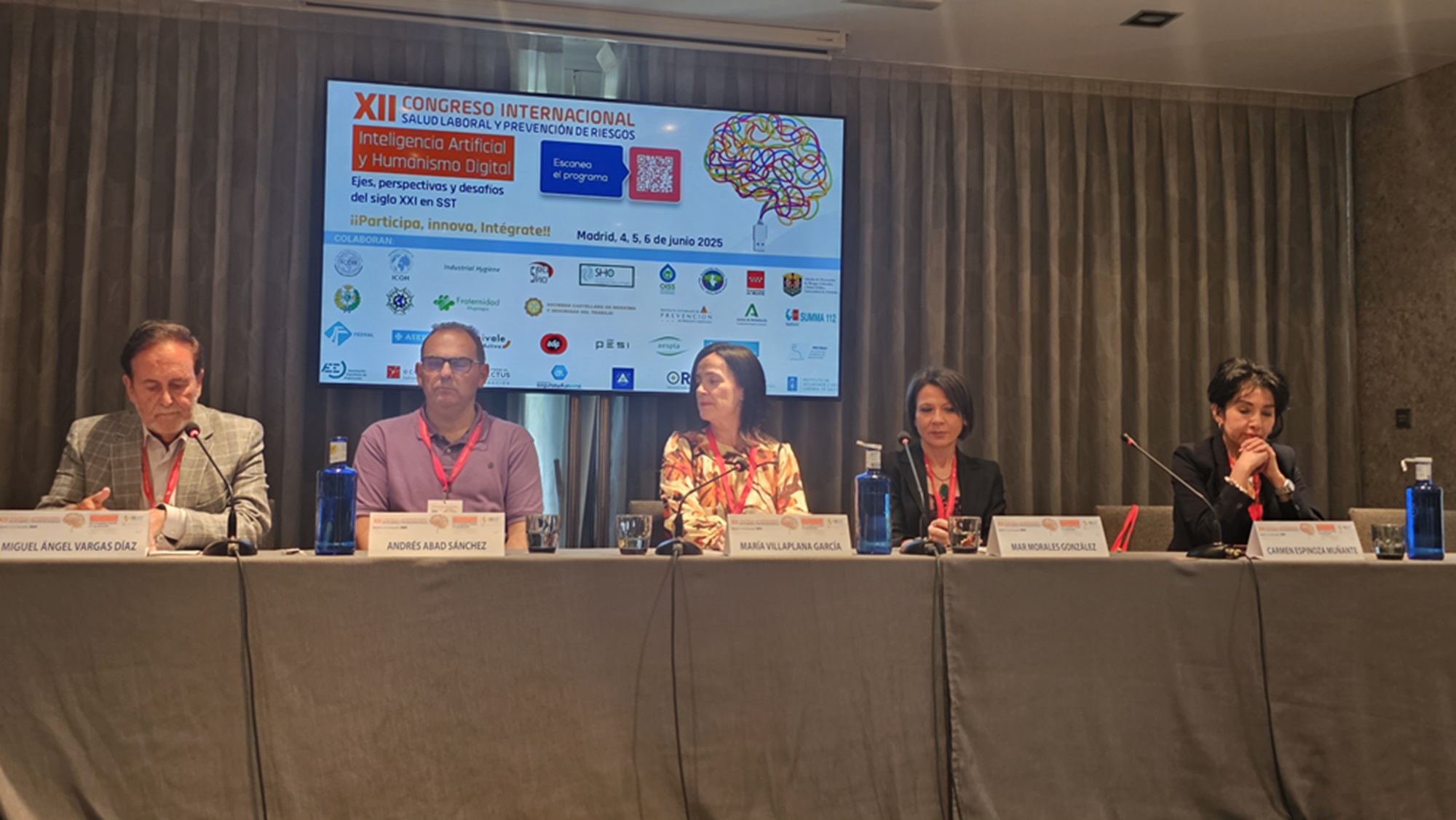
On the second day of the Congress, Fraternidad-Muprespa participated,Mar Morales, director of the Department of Prevention and Health Culture, who participated in expert panel 3 "Comprehensive health for physical and emotional well-being. Application of prevention strategies. Preventive culture" with the presentation "Digital well-being: towards sustainable comprehensive health."
Morales explained that "we live in an increasingly digital world, where technology influences practically every daily aspect, and along with its undeniable advantages, new health risks are also generated that, not only are we not valuing, but we are normalizing," he said.
He also described the different consequences of excessive use of digital devices, how it affects our cognitive, emotional and social capacity, and the need to manage them properly to promote and enjoy true digital well-being.
The Congress also presented the first Labor Welfare Observatory, born from the collaboration between Fraternidad-Muprespa and Fundación Personas y Empresas, which seeks to maximize the benefits of technology while minimizing its risks, promoting conscious and responsible use of digital environments. Its main objective is to offer information to measure, prevent and provide guidelines for action in the face of problems derived from the excessive or inappropriate use of technology.