Fraternidad-Muprespa participates in a conference in Seville on occupational road safety
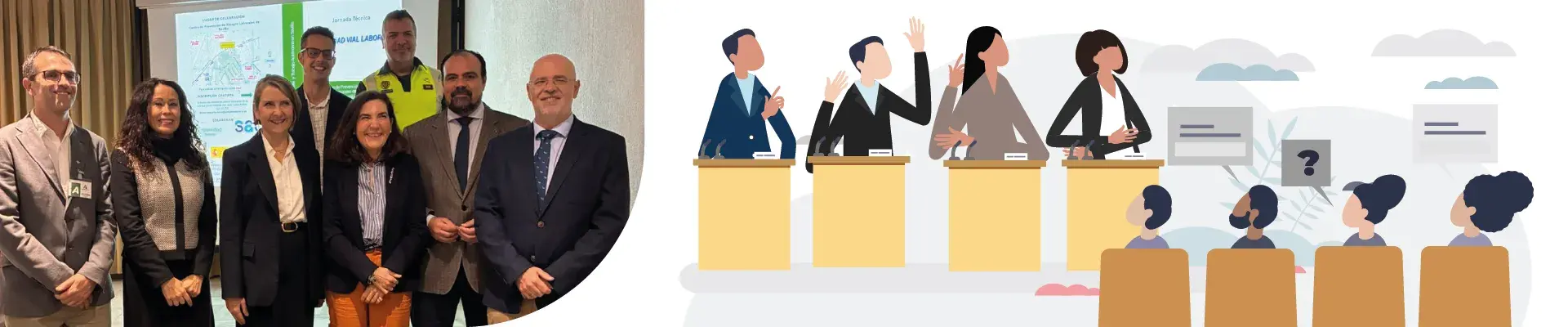
The Ministry of Employment, Business and Self-Employment and the General Directorate of Traffic (DGT) jointly organized this meeting, within the framework of the collaboration protocol signed on February 20 to reinforce coordination in matters of traffic, safe mobility and prevention of occupational risks. The event was held at the Seville Occupational Risk Prevention Center and was attended by institutions, companies and prevention experts, including David Revillo, Occupational Risk Prevention consultant. Fraternidad-Muprespa.
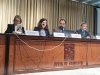
The inauguration was chaired by Jorge Carbajal, director of the Center;White Dew, Minister of Employment, Business and Self-Employment of the Board; and Ana Luz Jimenez, provincial head of Traffic of Seville and coordinator of the DGT for Andalusia, Ceuta and Melilla.
In their interventions they highlighted the importance of the human factor, risk perception and awareness, as essential axes to reduce accidents that are “everyone's responsibility.” They also highlighted the key role of companies as active agents of prevention, the need to integrate mobility plans, the value of analyzing the typology of accidents and the use of rigorous data to design effective preventive measures. The collaboration protocol was presented as a starting point that combines the efforts of administrations, organizations and social agents to promote a common preventive culture.
The first presentation was given by Manuel Jesus Rodriguez, Health and Safety Manager of the South Zone of Sacyr Conservación de Infraestructuras, who presented the experience of implementing the ISO 39001 standard in the company.
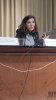
Next,David Revillo, Prevention consultant at Fraternidad-Muprespa, analyzed how risk perception directly influences mobility and safety during work trips. He recalled that companies must get involved in the preparation of safe and sustainable mobility plans, as stated in the future Sustainable Mobility Law.
“The subjective perception of risk conditions the attitude and behavior of workers, and only when they become aware that 'this could happen to me' does a real change in behavior occur.”, he assured.
Miryam Moya, judicial expert in reconstruction of road accidents and criminalistics, explained how forensic evidence allows us to reconstruct accidents and demonstrate the relevance of distractions as the main cause.
Antonio Granado, director of the DGT's Southwest Traffic Management Center, then intervened to present the entity's strategic lines in the field of occupational road safety, including the guide to incorporate road safety standards in tenders, their integration into corporate social responsibility policies and the new web space dedicated specifically to this matter.
The program closed on Sergeant Ángel Mudarra, from the Road Safety Research Unit of the Andalusian Traffic Sector, who delved into the main risk factors: alcohol, drugs, speed and distractions, and their effects on decision-making, providing practical examples and dismantling common myths.
The day concluded by highlighting the shared commitment between administrations, companies and specialized entities to move towards a safe system that sustainably reduces work-related road accidents and protects the lives of working people.