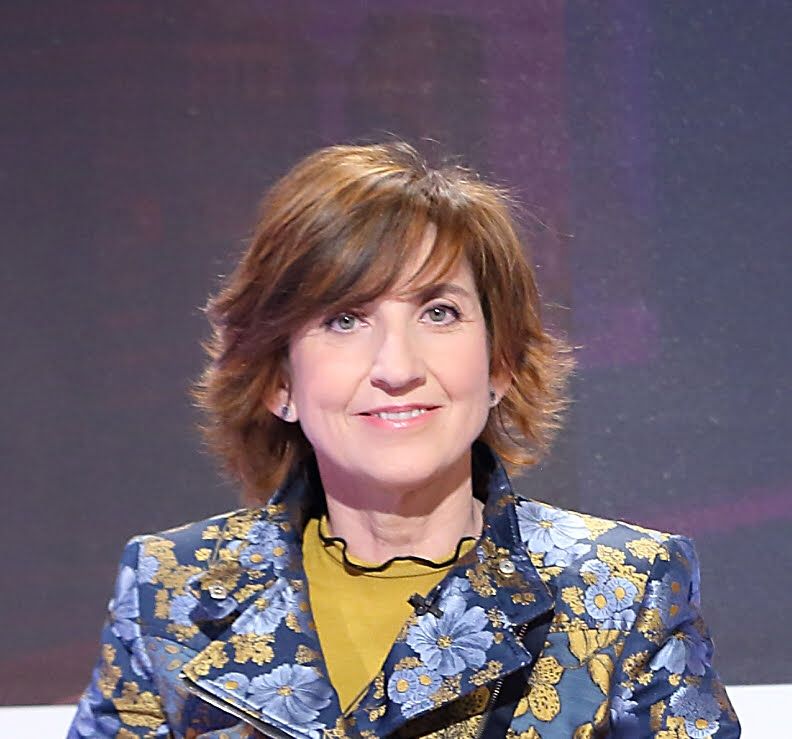

Interview with Begoña Suárez on the occasion of Equal Pay Day
Begoña Suarez, is the deputy director general for Entrepreneurship, Equality in the Company and Collective Bargaining for Women, of the Women's Institute of the Ministry of Equality, on the occasion of Equal Pay Day, she gave us the following interview.
Do you think that the social and economic reality we are experiencing right now makes it more necessary than ever to dedicate a day to remember that salary discrimination is a reality in many Spanish companies?
In 2010, the Government decreed February 22 as Equal Pay Day to highlight the importance that the gender gap had at that time in the field of remuneration. Right now in 2021, eleven years later, unfortunately this reality and this Day is still very topical. Although the pay gap has been reducing a little in recent years, the truth is that it is still widespread throughout our country. Not only in ours, but in all countries, not only in Europe, but in the world, in fact last year the United Nations established an equal pay day, precisely, with the same objective, that of raising awareness and drawing attention to the persistence of pay inequalities between women and men. These differences have diverse and very complex origins. Finally, it is the sum of the discrimination that women suffer in the labor market and also in the private sphere and unfortunately this year it has increased significantly with the social and economic consequences derived from the covid-19 crisis.
And what do you think are the factors that mark these differences in women's payrolls?
There are many factors that lead to pay differences between women and men, starting with the segregation of the labor market, that men and women work in very different fields and sectors but, above all, that these sectors have different valuations. The fact that women are responsible for care, education, and health, and that in many cases this care is taken almost for granted and is not adequately valued, means that there is a starting pay difference. They are tasks that contribute a lot to society and yet when it comes to giving them an economic value, society gives them a very small value. I believe that this is one of the things that will be progressively modified in the near future, although it is difficult to address because multiple gender biases and stereotypes still persist.
From the segregation of the labor market to the low number of women in positions of responsibility, to the excessive dedication of women to care and the lack of co-responsibility in these care tasks... these are some and there are many other factors that ultimately cause women and men to have different salaries in the labor market.
Among her duties as Deputy Director, “the application of the principle of equal treatment and non-discrimination in working conditions between women and men” stands out.Starting from this premise, what concrete actions can be undertaken from the position you occupy and from the Government for the real equalization of salaries between men and women who perform the same job, or jobs of equal value?
Unfortunately we have a lot to do. The Equality Law approved in 2007 was a pioneering law that placed special emphasis on the need to correct labor inequalities. In this sense, it introduced a specific chapter to promote the implementation of equality measures in companies, to also establish them as mandatory in companies with more than 250 people on staff, to combat sexual and gender-based harassment, and to combat all those discriminations that, in the end, add up and lead to different salaries between women and men.
Do you think that this law, despite having been enacted a few years ago, may need a new reading?
The 2007 law being a pioneering law, if we evaluate it 14 years after its birth we see that there are some areas where it was not as effective as it should have been. Aware of this, the Government in 2019 approved a RDL of urgent measures for equal treatment and opportunities between women and men that gave a boost to those aspects that had not advanced enough after the 2007 law. In that sense, it was mandatory for companies with 50 or more people on the staff to implement equality plans and, above all, a very important fact: with this RDL the Statute was modified. of Workers to make specific reference to receiving the same remuneration, not only for the same work but for work of equal value.
This RDL required a regulatory development that we already have published. It was published in October of last year and will come into force on April 14. This is RDL 902/2020 Equal Pay for Women and Men.
What are going to be the strong points of this royal decree law with respect to the issue at hand?
This RDL is going to be essential to advance pay equality because it aims to improve transparency in pay. Since this RDL of 2019, all companies have to prepare a salary record. This registry has to be disaggregated by sex and there we will be able to see if there are pay differences between women and men. Furthermore, after the entry into force of this RDL on Equal Pay, companies with more than 50 people on staff will have to carry out remuneration audits, they will have to define the jobs that have equal value in their companies and, once these jobs of equal value are defined, they will have to modify the remuneration in accordance with the value assigned to the jobs.
What you describe to us is situated on a more theoretical legislative level, but how is it going to materialize for companies?
As a consequence of this RDL, in the Ministry of Labor and in the Women's Institute of the Ministry of Equality we are working to develop a job evaluation tool that will be made available to the entire business community to facilitate this preparation and definition of jobs of equal value. In the same sense, we are going to work to create a Guide to Remuneration Audits with a gender perspective that also makes it easier for transparency to be effective and for there to be no differences in companies in our country.
These are training developments that I believe are going to be fundamental and, then, from our responsibility as the Subdirectorate of Entrepreneurship and Equality in the Company, what we do is make tools available to companies, an advisory service, help them effectively implement the law and help them to really implement equality plans.
We have recently developed a guide to help prepare these equality plans and we have a permanent service that accompanies companies that wish to do so in the equality plan process. We like to insist that making equality plans and making a diagnosis of the company is essential because it allows us to get to know our company, it allows us to take an x-ray that, in the end, is an opportunity to improve our procedures, both in human resources and in other productive systems that we have installed that are sometimes repeated automatically without evaluating. The fact that we have to implement equality plans, take equality measures and have to make a prior diagnosis will help us really get to know our company. I believe that we have to live it not only as an obligation that must be fulfilled. It can be considered as one more task that I have to undertake. Since I have to undertake this undertaking, what I would like to do is invite companies to experience it as an opportunity to really get to know their company, to improve and modernize their business management system, which will have an impact, as many international reports show, in an improvement in productivity, in improving and retaining talent, since in the end that is money and income statements.
The effects of the pandemic on society and the economy mean that women are once again the ones harmed by wage discrimination. Does this discrimination also lead to less entrepreneurship, fewer possibilities of internal promotion to management positions or greater difficulties for family conciliation?
We have to be aware of the triple dimension of the pandemic, which has caused a health, social and economic crisis of extraordinary dimensions; it is necessary to work on the scope it has had and the dimension it has had on women.
All the studies and reports that have been carried out in recent months are showing that the pandemic is especially affecting women, fundamentally for four reasons: on the one hand, due to the overload of healthcare work and essential services that falls fundamentally on women; women represent 70% of healthcare personnel worldwide and have a very majority presence in sectors of food trade, hospital cleaning, nursing home cleaning, nursing home care and care of dependent people.
Secondly, women continue to carry out the majority of domestic work and care of dependent people, both paid and unpaid, and also assume a greater mental load derived from this care. Thirdly, women also suffer greater job insecurity and poverty, which puts them in a worse place to face a new period of crisis, especially young women, those who have low qualifications and also migrant women. Added to this is that some of the most affected sectors, such as commerce, tourism, and hospitality, are highly feminized.
And finally, one of the things that we cannot forget is the increased risk of gender violence that has occurred during the pandemic and other types of violence against women derived precisely from the situation of confinement and in some cases isolation that has been harsher at the beginning of the pandemic but still remains in force.
As a consequence of these four factors, which I have just pointed out, we can effectively say that women are being especially harmed by the crisis. In fact, in recent times we have seen how women's unemployment grows at a significantly higher rate than men's unemployment and that other gender gaps that exist in employment are increasing, such as the one we are discussing in this interview, which is wage discrimination.
Given that your subdirectorate is also responsible for the promotion, promotion, promotion and evaluation of the implementation of equality plans in companies, what data and assessment can you offer us about the implementation of said plans currently?
In relation to the Equality Plans, I would like to highlight that we are now in a different moment and I would say that it is an exciting moment.
The requirement for Equality Plans that was included in the Equality Law of 2007 for companies that had 250 or more people on their staff has now occurred following the publication of the Royal Decree Law on Urgent Measures to guarantee equal treatment, there has now been a significant change.
Since 2009, companies with 50 or more people on staff have the obligation to prepare and implement equality plans, but I also want to point out that recently, on January 14, Royal Decree 901 came into force, which regulates equality plans and their registration, and this is going to give a very significant change in the content, negotiation and preparation of equality plans, because this Royal Decree specifically establishes how these equality plans should be negotiated, establishes the It is mandatory that all equality plans have a prior diagnosis and establishes the points that this diagnosis must have.
Which is very important because it has to address, from access to the company, professional promotion, the enjoyment of conciliation rights measures, the salary issue, sexual and gender-based harassment, vertical segregation in the company. Therefore, and as a result of this diagnosis that we develop, we have to implement measures to correct the inequalities that have become evident.
Therefore, thanks to this Royal Decree we also know what content equality plans must have and what is also very important is the obligation to register these equality plans; Because you asked me in the question, the reference to “what data and what assessment can we offer?” Well, unfortunately little data, because as before having this Royal Decree published there was no obligation to register all equality plans, only those that were contained in the collective agreement and we did not have data on how many of the companies obliged to prepare equality plans had them. Nor data on its content that would allow us to make an assessment and a critical estimate of what fundamental aspects were being developed in the equality plans.
The data so far is not enough to make an assessment, nor to know how many of the obligated companies were carrying out their obligation and what the content of these plans was.
Finally, I would like to ask you something in conclusion: Does the Spanish company approve or fail in this regard?
Well, I would say that we are entering a new period, which is a challenge for many companies to start working on the negotiation and preparation of the equality plan. As I said before, I think it is an opportunity if we really analyze and take it seriously to truly know our companies and improve our management procedures. And I am convinced that the Spanish company will approve and comply perfectly with the obligation to implement equality plans, those that are obligated, and equality measures, those that are not. In other words, in that regard I am optimistic and I fully trust that the Spanish company is modern and intelligent, it knows that it has to take advantage of all the talent and an important way to take advantage of talent and improve the work environment is to promote effective equality within our company, so I am sure that the majority will undoubtedly approve.