
Zendal Group: the production of the antigen for the COVID-19 vaccine, from Galicia to the world
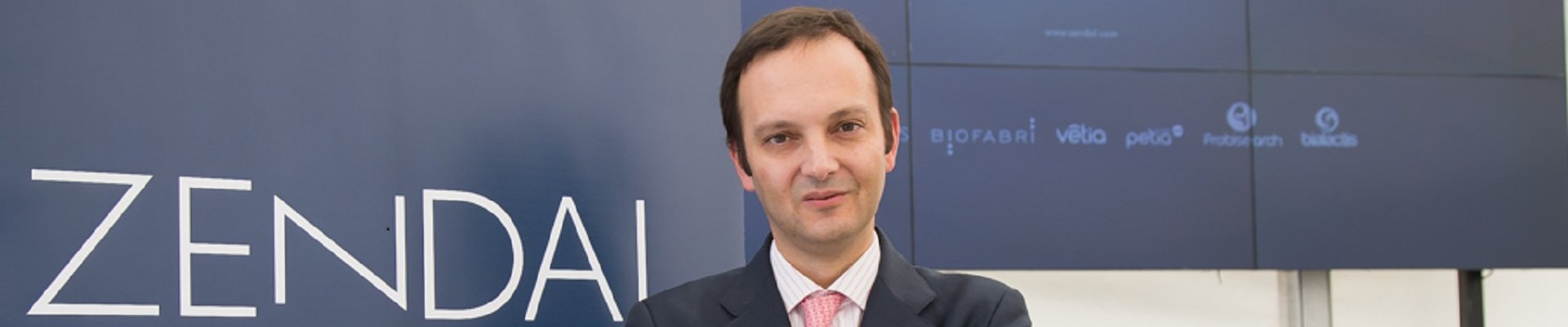
The race to develop a vaccine against COVID 19 has the participation of an important biopharmaceutical group,Zendal Group, a mutual company of Fraternidad-Muprespa based in O Porriño, Pontevedra. Zendal Group, through its subsidiary Biofabric, has been chosen by the American company Novavax for the industrial production of its vaccine antigen in the European Union. The news of this participation in the search and marketing process for the vaccine has already made headlines in some of the main newspapers in this country. The clinical trials of the vaccine are currently in phase 2 and phase 3 will be developed in the third quarter of 2020. With extensive experience in the development of new human vaccines, for example the Nobel vaccine against tuberculosis, Grupo Zendal is positioned as one of the most important biopharmaceutical companies in the sector. To better understand their work, from the Communication Department of Fraternidad-Muprespa we have spoken with Andres Fernandez, CEO of the Zendal Group and CEO of Biofábric. Born in 1974, he has a degree in business sciences from the University of Vigo and an MBA from the IE Business School of Madrid.
How do you evaluate the choice of your company for the production of this antigen?
We are very happy, it really is an opportunity: an opportunity for growth, an opportunity to help in this situation and also an opportunity to make ourselves known a little more, which are three very positive factors for us.
What tipped the balance towards you?
It turns out that we had been preparing for this for a long time. We were not prepared for it to arrive so quickly, but since we already had a previous base, it has helped us get here. There is another factor that must not be forgotten: the global vaccine manufacturing capacity is saturated, it was not prepared to manufacture two doses for each individual who inhabits this planet. We must take advantage of all the capacity that is possible, which is why we have also accelerated a lot, because it is necessary at a global level.
We had been preparing for this for a long time. Our previous foundation has helped us get here
How is an antigen made? What technology is involved in the process?
There is a part of R&D that we do not do, which in this case Novavax does. They give us a cell culture and a virus. What we do is grow that cell. Viruses do not reproduce on their own but have to infect a cell. When it reaches a certain volume, it is infected with the virus, to generate a lot of virus or virus protein. When we have enough, that culture is cut and what is done is what is called purification, which serves to keep only the part of the virus that is necessary for the vaccine, and remove all the other elements that are not useful. The purer the better. Purification is done in several steps, not just one. When you reach that end point you already have the antigen. After that, in the case of the Novavax vaccine they have a very powerful anti-adjuvant, we no longer do this part, at least for now, where it is mixed with that adjuvant and packaged in its little bottles, it is labeled - right now the numbering of the vials has to be one by one - it is put in its case and distributed at the temperature that is necessary. Vaccines are normally distributed at a temperature between two and eight degrees, although there are some in development right now that would have to be distributed at below-zero temperatures.
What risks might be involved in distributing a vaccine at sub-zero temperatures?
The closer a vaccine is to room temperature, the easier it is to distribute. Europe and the US have infrastructure prepared for this, but there are other countries where it may cost more. It may not even reach the appropriate temperature and the vaccine may deteriorate, so this is an important factor that can be a limitation and even an issue of the feasibility of vaccination at a global level.
Producing the antigen in parallel to carrying out clinical trials entails risk, but we have great faith
What risks do they face due to the fact that clinical trials and antigen production are carried out in parallel?
We, as I said before, are investing a lot in this project. If this project does not end up working out, then we will have a series of investments that we will have to see what we dedicate to. There is a risk but since we have a lot of faith we don't pay much attention to that risk either.
Is Novavax considering a date for it to be on the market?
I honestly don't know, because I don't know the clinical trial plan. The clinical trial in phase 3 has already begun and I believe that it could be in the second half of next year if the clinical phase goes well, maybe even if it goes very well it could be sooner, it will also depend on the evolution.
The production they carry out has an impact for the Zendal Group, but also for the O Porriño region?
It undoubtedly has it, because our suppliers are like us, increasing what they can and trying to serve us as quickly as possible at a volume much higher than what they were used to. So yes, this indirect employment impact is a reality and when the volume comes, it comes that way too.
What occupational risk prevention procedures do you carry out in your company?
Well, in that we are quite strict and we try to minimize the risk almost to zero, but well the reality is that the case of Novavax is not the vaccine that generates the most risk, it is what is called a biosafety organism 1, which means that it has a very low level of danger, especially because it is grown in insect cells and humans cannot, should not, be affected in that sense. Therefore the risk is not the most serious. Our facilities are prepared to work up to biosafety level 3 and our staff is vaccinated against all diseases, wears all types of personal protective equipment and the rooms have very high air renewal rates so that nothing stays there. We have a very developed culture that risk has to tend to zero. Zero is impossible but it has to tend to zero. We have quarterly health and safety committees, where you (Fraternidad-Muprespa) participate. There, any risk and any possible event that has occurred is evaluated and the aim is to ensure that it never happens again.
We are very strict and try to minimize the risks. The danger of the Novavax vaccine is very low
How did Grupo Zendal face the declaration of the pandemic and confinement?
The first phase was very chaotic. There was a first moment where very drastic prevention measures had to be taken for the staff. We had to reduce the number of people per room, which greatly limited our production, because from the outset we had to cut the risk. When we got there, we tried to see how far we could change those measures that would allow us to increase production. The first phase was 15 days, the chaotic one. In the next phase it lasted another 15 days and well, as we have learned more about the disease and how it works, we have reached a very good status. X PROTXe99f2c79 Some of the staff have been teleworking for a long time, but in a productive company, remote work is very difficult, which is why most of the staff has had to come during the entire confinement, because in the end we are an essential industry. Not only when it comes to human health vaccines.
Do you think that your work to manufacture the Novavax vaccine will put Galicia on the world map?
Galicia has always been in the world, what we like about this is that it is recognized that Galicia is a biotechnological power, because we already were, not only because of us, there are other companies here of great relevance. But maybe we didn't have enough relevance worldwide and this is giving us a much better image in that sense.
Galicia is a biotechnological power and this will now give us a better image worldwide
What do you think is the most immediate future of Grupo Zendal?
We will continue to grow, with virus or without virus we will continue to grow, that has always been in the plan. So far we have been lucky, our strategic process is a very reflective process in which 50 people from the staff are involved, it is not something that I decide, it is something that we do as a group and since we have teamwork that works very well and is coordinated very well, so far we have been right. It doesn't mean that we get one hundred percent of things right, there are lines of work that we have had to discard but for the most part they have gone well. In manufacturing we have always been a benchmark, that is why we were able to go from animal health to human health. We have a very important commitment to quality but we also have a commitment to R&D that has been fundamental in the development. The future is to continue growing.
Can you explain to us why Grupo Zendal adopted this name?
We have named the company Zendal because, apart from the fact that we like the name, we believe that the values that Isabel Zendal had coincide with those of our company. We are a company that works in what are called "neglected diseases" in English, the diseases that no one wants to treat. We have also worked all our lives on zoonotic diseases, that is, transmissible from animals to humans. We are concerned about the well-being of humanity and we believe that these are the same values represented by this woman who, as you well know, dedicated herself to caring for 21 children to guarantee that the vaccine could reach the entire world from Spain and end an epidemic, a pandemic that was very important at that time. The expedition left on November 30, 1803 from La Coruña.