

Common Contingency Benefit
Social Security considers a common contingency to be temporary disability resulting from a common illness or a non-work accident that prevents the worker from carrying out his or her work activity and requires health care.
The purpose of the financial benefit for temporary disability is to compensate for the loss of income while this situation lasts.
This benefit is managed by
How to process it?
If a worker begins a temporary disability process due to a common illness or non-work accident, the Public Health Service (SPS) will issue the medical reports for sick leave, confirmation and discharge. Fraternidad-Muprespa doctors do not have the authority to issue these medical reports.
When the company has arranged this coverage with
Amount of benefit
The worker will receive a subsidy of between 60% and 75% of his daily base of wages. price:
- From the 4th to the 20th day, the worker will receive 60% of his regulatory basis.
- Starting on the 21st day, you will receive 75% of your regulatory basis.
General requirements
In processes arising from a common illness, it will be necessary to prove a minimum contribution period of 180 days within the five years immediately prior to the date of medical leave.
When the temporary disability results from a non-work accident, it will not be necessary to prove said contribution period.
Delegated payment of the benefit
In general, as long as the company has opted for this coverage with Fraternidad-Muprespa, the company will pay the financial benefit on the payroll to the worker through the delegated payment and will subsequently offset said amounts in the corresponding Social Security contributions.

Direct payment
In certain situations, the financial benefit will no longer be paid by the company and will be paid directly by Fraternidad-Muprespa:
- Termination of the employment contract.
- Breach of obligation by the employer of the delegated payment.
- Worker who exceeds six months of medical leave from a company with less than 10 workers.
- Express extension of INSS after 12 months of medical leave.
Exhaustion of the maximum term of the benefit of 18 months duration.

Special Situations of Temporary Disability (IT) of Common Contingency
Certain situations of temporary disability, even though they are considered a common contingency, have a specific regime regarding the start of the benefit, its amount or the entity responsible for payment.
For this reason, the regulations of the Social security establishes a differentiated regime for these situations, which are detailed below.
Secondary disabling menstruation
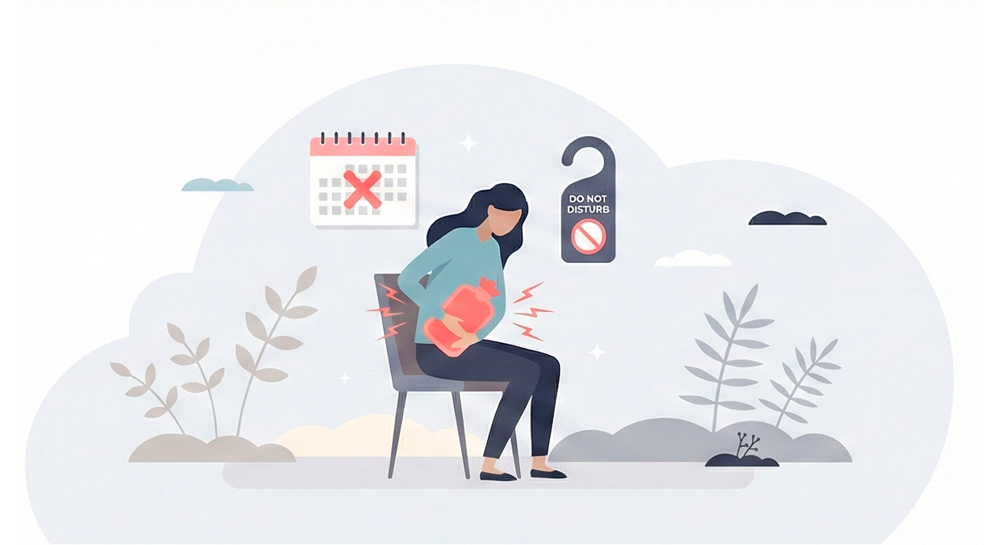
It is a special situation of temporary disability that allows access to financial benefits from the same day of medical leave, without the need to prove a previous contribution period or lack.
Applicable regulations
Organic Law 1/2023, of February 28, on sexual and reproductive health and voluntary interruption of pregnancy.
Royal Legislative Decree 8/2015, of October 30 (TRLGSS).
Concept | Applicable regime |
| Possibility of relapse | No |
| Contingency | Common |
| Need for waiting period | No |
| Birth of the benefit | From the medical leave day |
| Duration | Until medical discharge |
| Amount | From the 1st to the 20th day: 60% BR. From the 21st: 75% BR |
| Mutual payment responsibility | From day one:INSS or Mutual |
Termination of pregnancy

Temporary disability resulting from the interruption of pregnancy, whether voluntary or not, has a specific regime that guarantees economic protection from the day following the medical leave.
Applicable regulations
Organic Law 1/2023, of February 28, on sexual and reproductive health and voluntary interruption of pregnancy.
Royal Legislative Decree 8/2015, of October 30 (TRLGSS).
Concept | Applicable regime |
| Possibility of relapse | Yeah |
| Contingency | Common / Professional (if it occurs as a result of an AT or EP) |
| Need for waiting period | No |
| Birth of the benefit | From the day after the discharge |
| Duration | Until medical discharge |
| Amount | From the 2nd to the 20th day: 60% BR. From the 21st: 75% BR |
| Payment Responsibility | From 2nd day:INSS or Mutual |
Pregnancy of the working woman from the first day of the 39th week

It is a special situation of temporary disability that financially protects the worker from the beginning of the 39th week of gestation until the moment of delivery.
Applicable regulations
Organic Law 1/2023, of February 28, on sexual and reproductive health and voluntary interruption of pregnancy.
Royal Legislative Decree 8/2015, of October 30 (TRLGSS).
Concept | Applicable regime |
| Possibility of relapse | Yeah |
| Contingency | Common |
| Need for waiting period | Yeah |
| Birth of the benefit | From the day after the discharge |
| Duration | Until medical discharge.(Day before birth or loss of the fetus). |
| Amount | From the 2nd to the 20th day: 60% BR. From the 21st: 75% BR |
| Payment Responsibility | From 2nd day:INSS or Mutual |
Living donation of organs or tissues for transplantation

Living donation of organs or tissues constitutes a special situation of temporary disability that guarantees the financial protection of the donor throughout the clinical process.
Applicable regulations
Law 6/2024, of December 20, to improve the protection of live donors of organs or tissues for subsequent transplantation.
Royal Legislative Decree 8/2015, of October 30 (TRLGSS).
Concept | Applicable regime |
| Possibility of relapse | Yeah |
| Contingency | Common |
| Grace period | No |
| Birth of the benefit | From the medical leave day |
| Duration | Until medical discharge |
| Amount | From the 1st day: 100% of the regulatory base |
| Payment Responsibility | From day one:INSS or Mutual |