
Large representation of Fraternidad-Muprespa at the Preveras Congress
Fraternidad-Muprespa participated on October 13 and 14 in the 12th International and 16th National Congress of Ergonomics and Psychosociology held in Gijón, an event that included a large representation of the Mutua. After an institutional inauguration by Yolanda Díaz, second vice president and minister of Labor and Social Economy, the different debates organized in round tables began.
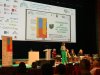
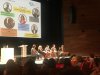
The first with the participation of Fraternidad-Muprespa took place on Thursday in the round table “Precariousness, diversity and happiness? Not everything goes”, moderated by Mar Morales, director of the department of Prevention and Development of Health Culture at Mutua. The objective pursued by the table was the need to be rigorous with welfare actions aimed at improving the health of the company. “We cannot put the focus on the worker, diverting attention from what should be a priority,” said Morales, to emphasize that there is a need for “preventive measures aimed at introducing changes in the organization, in the workload and in its capacity to cause stress, anxiety and depression.”
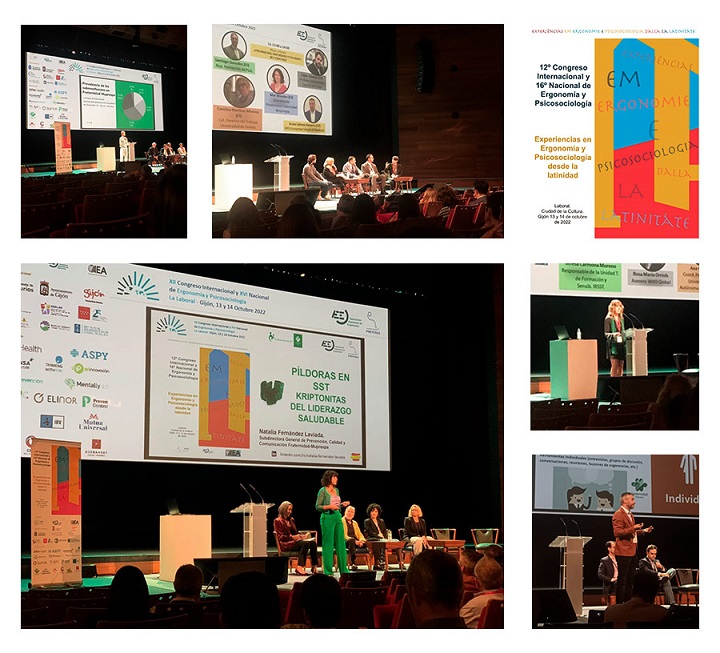
Already in the afternoon Maria Eugenia Colotto, prevention consultant, took part in the round table “E ergonomics, crisis and NT: new paradigm?" Colotto focused on musculoskeletal disorders and explained that the Barcelona Delegation of the Mutua has identified that 44% of the accidents reported in the accident record between January and June 2021 were due to overexertion. "This confirms the work that remains to be done in companies to reduce or mitigate these overexertions and professional contingencies in general," said Colotto, who stressed the importance that Fraternidad-Muprespa grants to work hand in hand with its mutual companies to promote 'participatory' ergonomics as a response to overexertion.
The first day concluded with the table “Psychosocial risks and employment with a gender perspective”, moderated by Ana Fdez. Castro, director of the Delegation of Fraternidad-Muprespa in Gijón. Fdez. Castro focused on the differences in women's working conditions. “Feminized tasks, temporality and monotonous and repetitive activities mean that exposure to psychosocial risks does not affect men and women equally," he said. "Many risks are associated with highly feminized occupations and others are specific to women, such as sexual harassment or discrimination based on sex." Therefore, he concluded "it is necessary to get companies to commit to the application of the gender perspective."
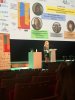
On Friday the congress resumed its activity with the round table “Pills in ergonomics and psychosociology for safety and health at work”, which was attended by Natalia Fdez. Laviada. The deputy general director of Prevention, Quality and Communication of Fraternidad-Muprespa shared his vision on healthy leadership. "Now, less coercive, more influential and close leadership is vital, capable of managing diversity in all its variants, of leading diverse groups, in a face-to-face and virtual context, of being an e-leader. Leaders must be brave, exemplary, authentic, ethical, promoters and drivers of the change that society in general and our companies in particular need," he highlighted, and then went on to describe the 'anti-leaders', who have lost the ability to influence the behavior of others towards a goal.
Ivan Fernandez, Mutua Prevention consultant, was in charge of closing the presence of Fraternidad-Muprespa in this Congress. He did so by participating in the “Human factor and real work” panel, where he analyzed the concepts of human error and success, an analysis that “helps establish future paths to promote success and minimize error,” he said. Fernández also stressed that “within the human factor we always highlight the error, but we do not take into consideration the success, especially because it does not cause damage.” “Although we insist on analyzing the error and attribute a very high percentage of work accidents to it, we do little at the individual level,” he concluded.