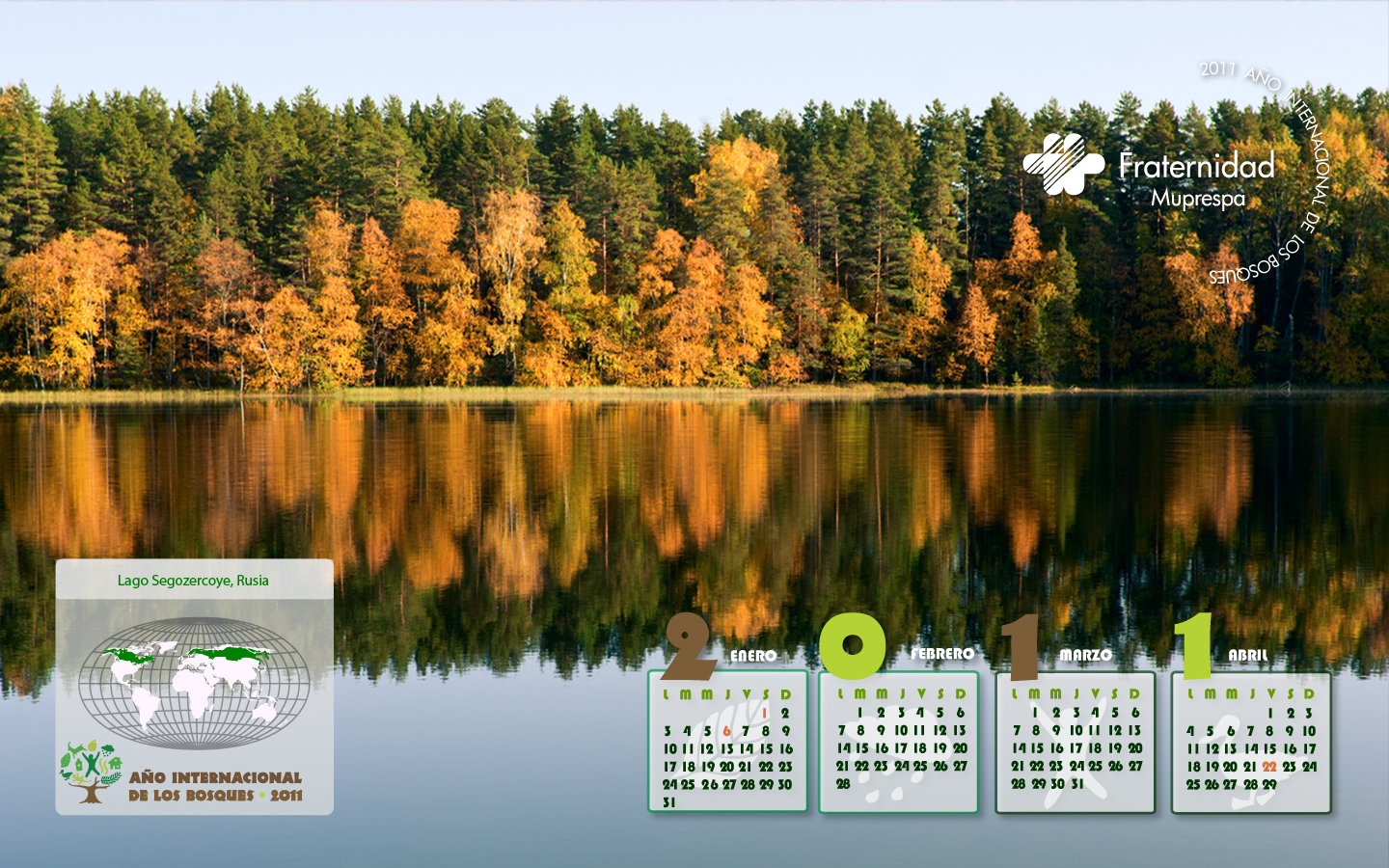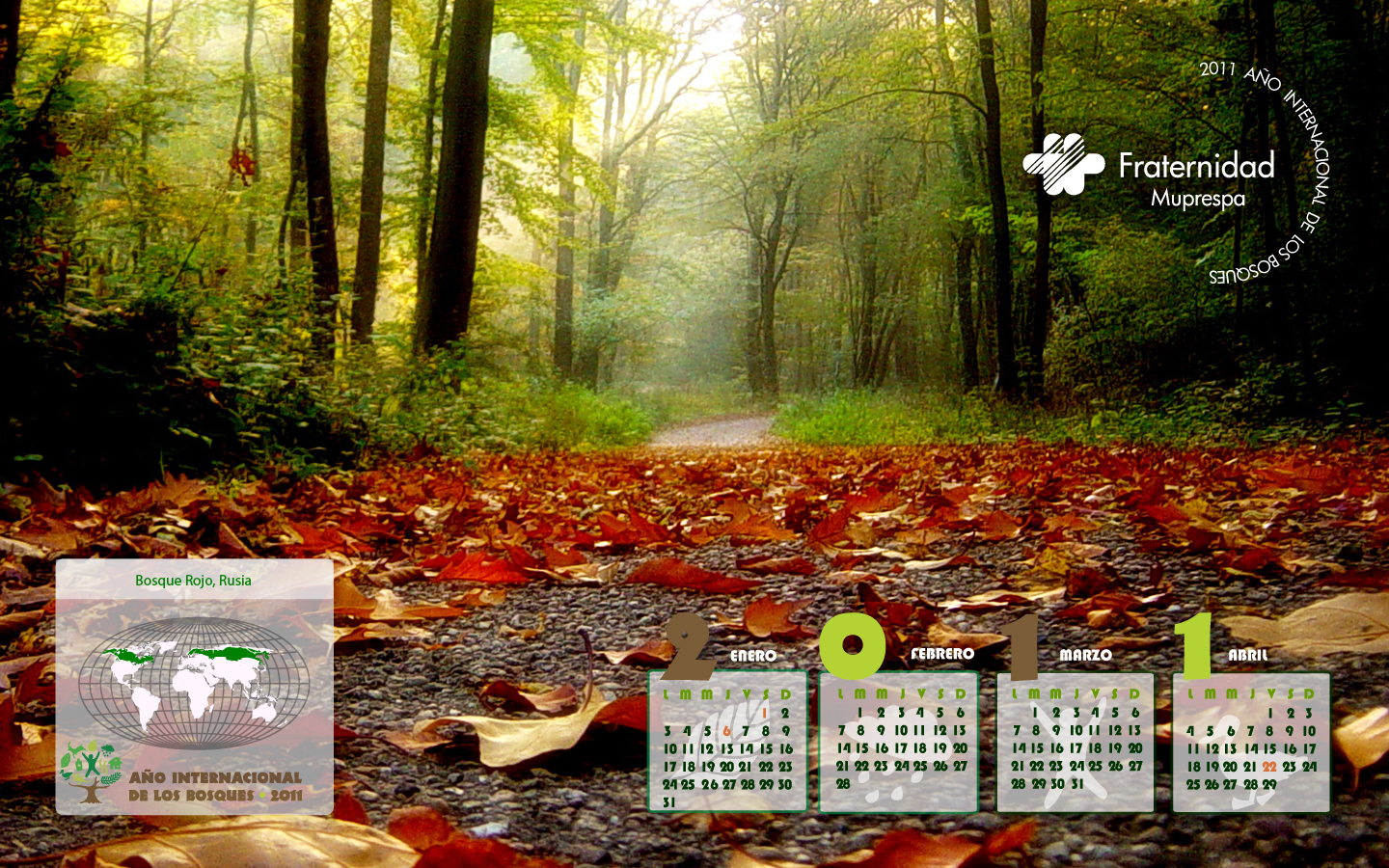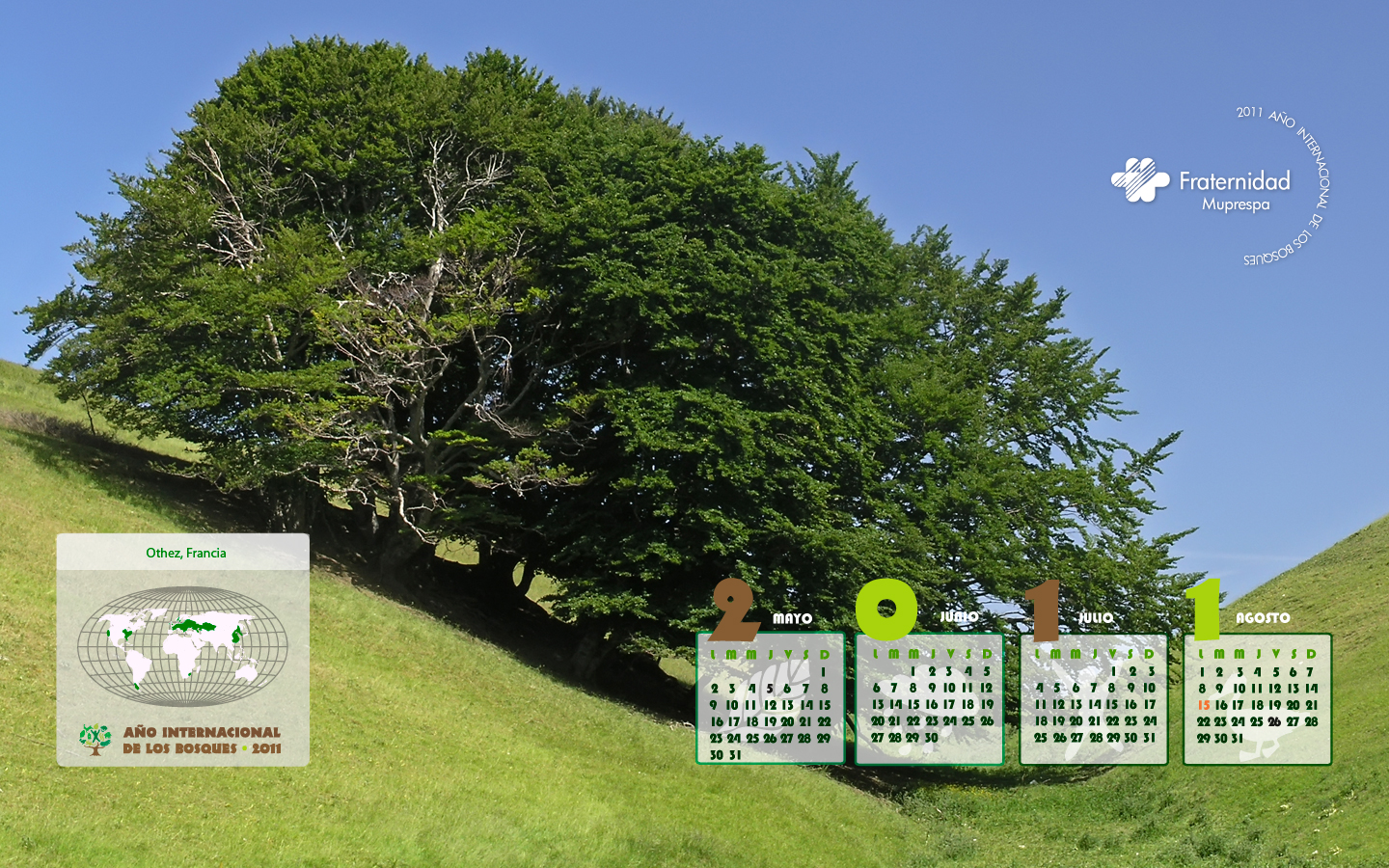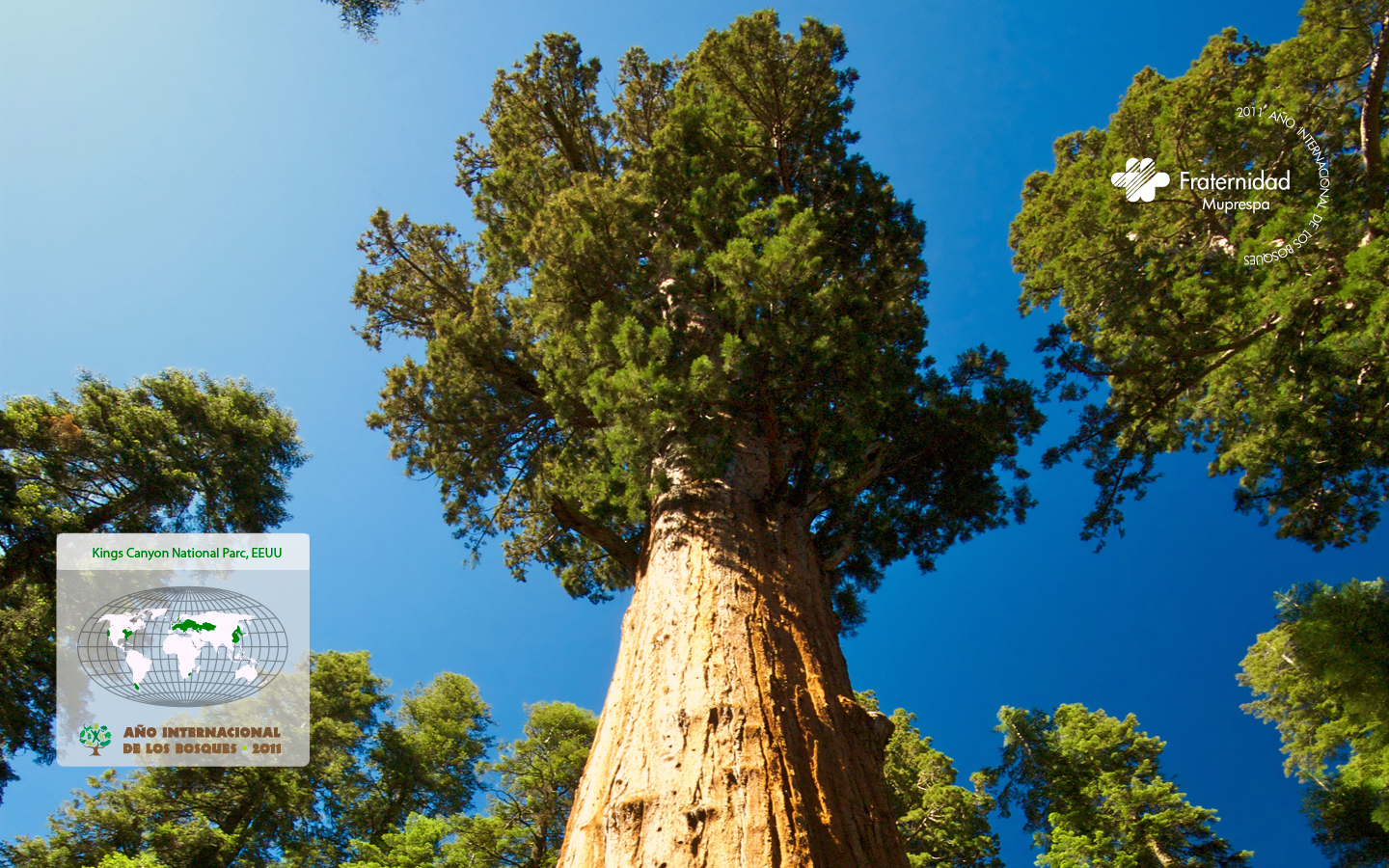
Wallpapers 2011 - International Year of Forests
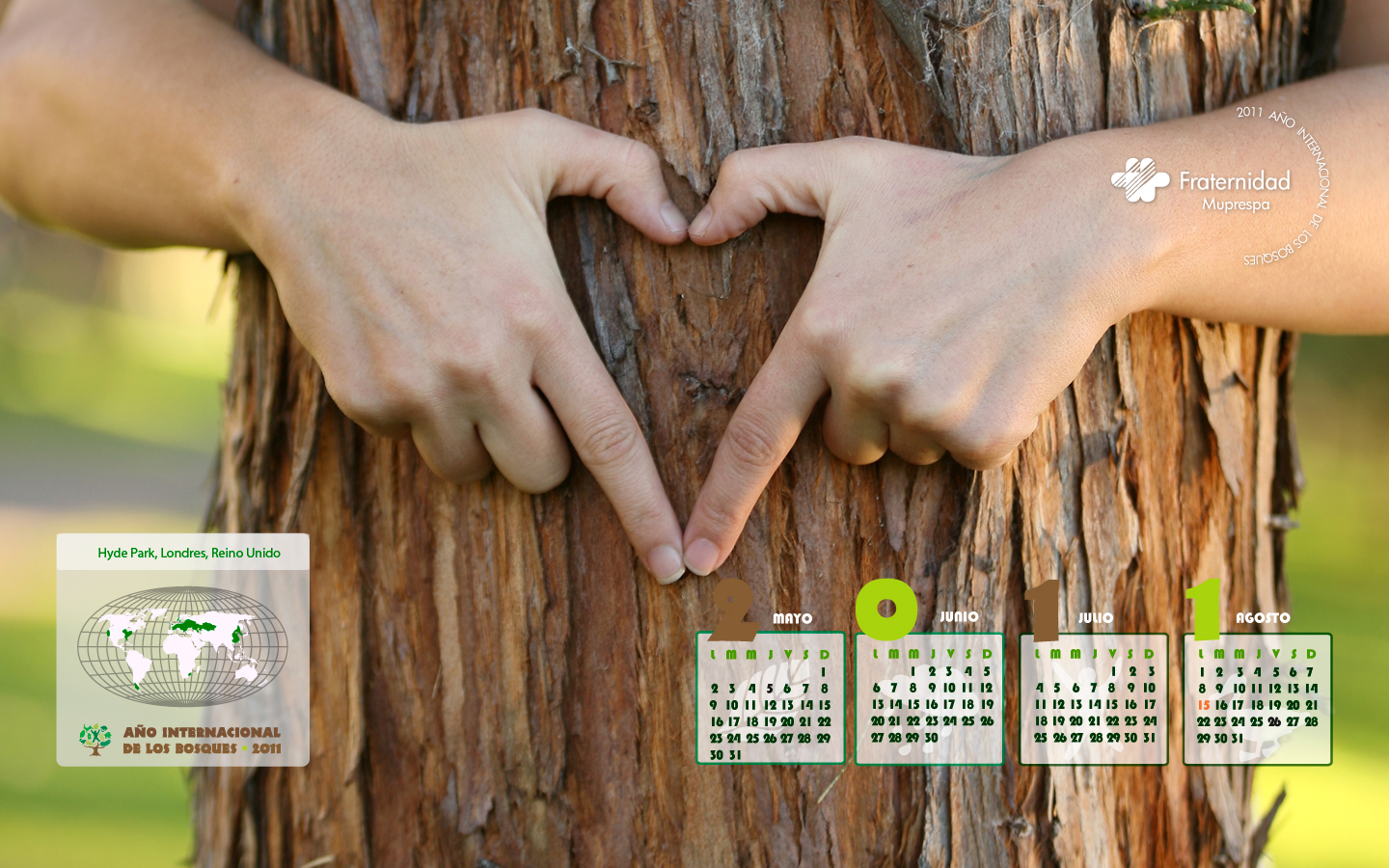
On 20 December 2006, the General Assembly, in its resolution 61/193, declared 2011 the International Year of Forests and invited Governments, the United Nations system, relevant non-governmental organizations, the private sector and other actors to make concerted efforts to raise awareness at all levels to strengthen the sustainable management, conservation and sustainable exploitation of all types of forests for the benefit of present and future generations.
WHAT IS A FOREST?
1. m. Site populated with trees and bushes.
2. m. Disorderly abundance of something, confusion, intricate issue.
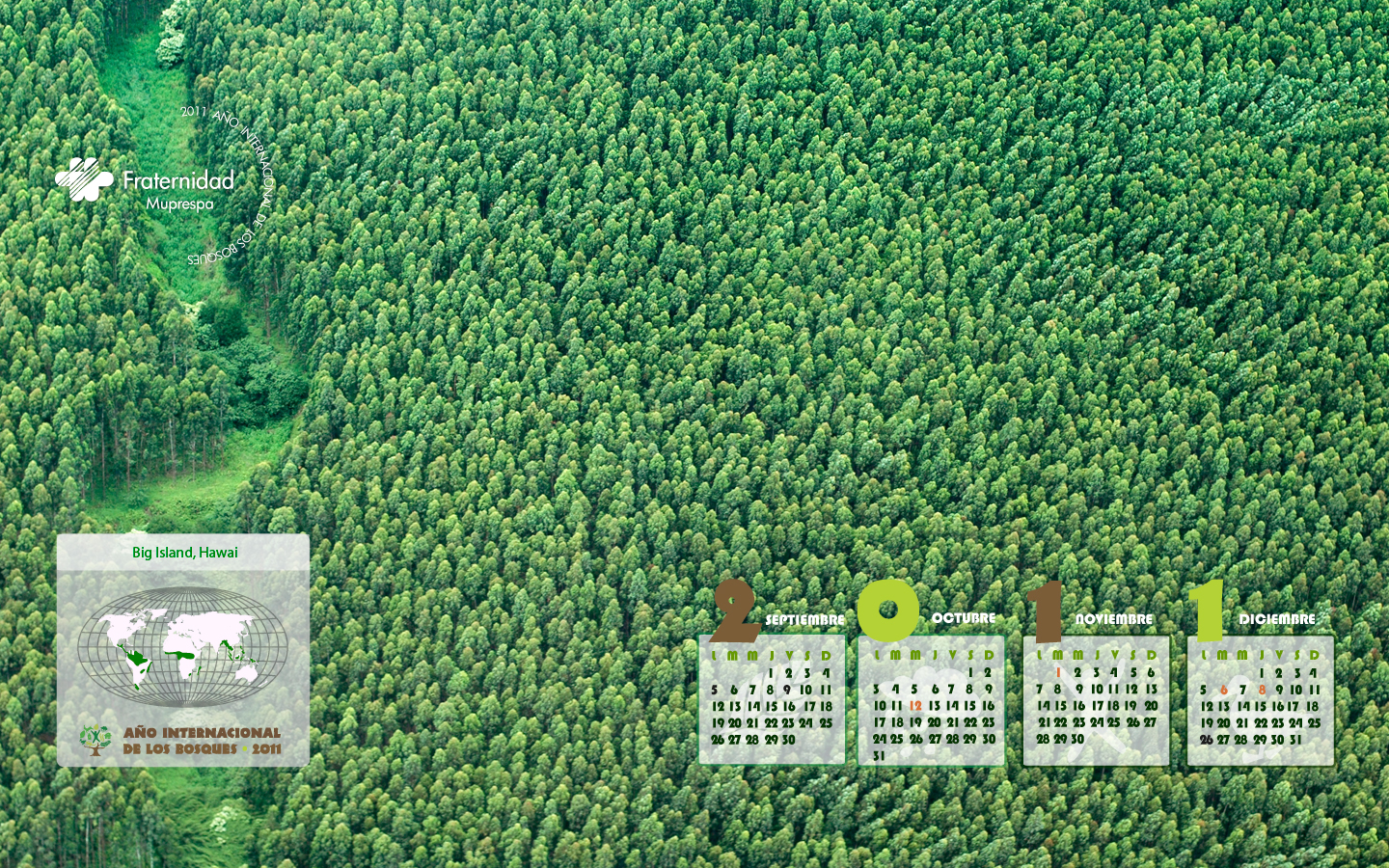
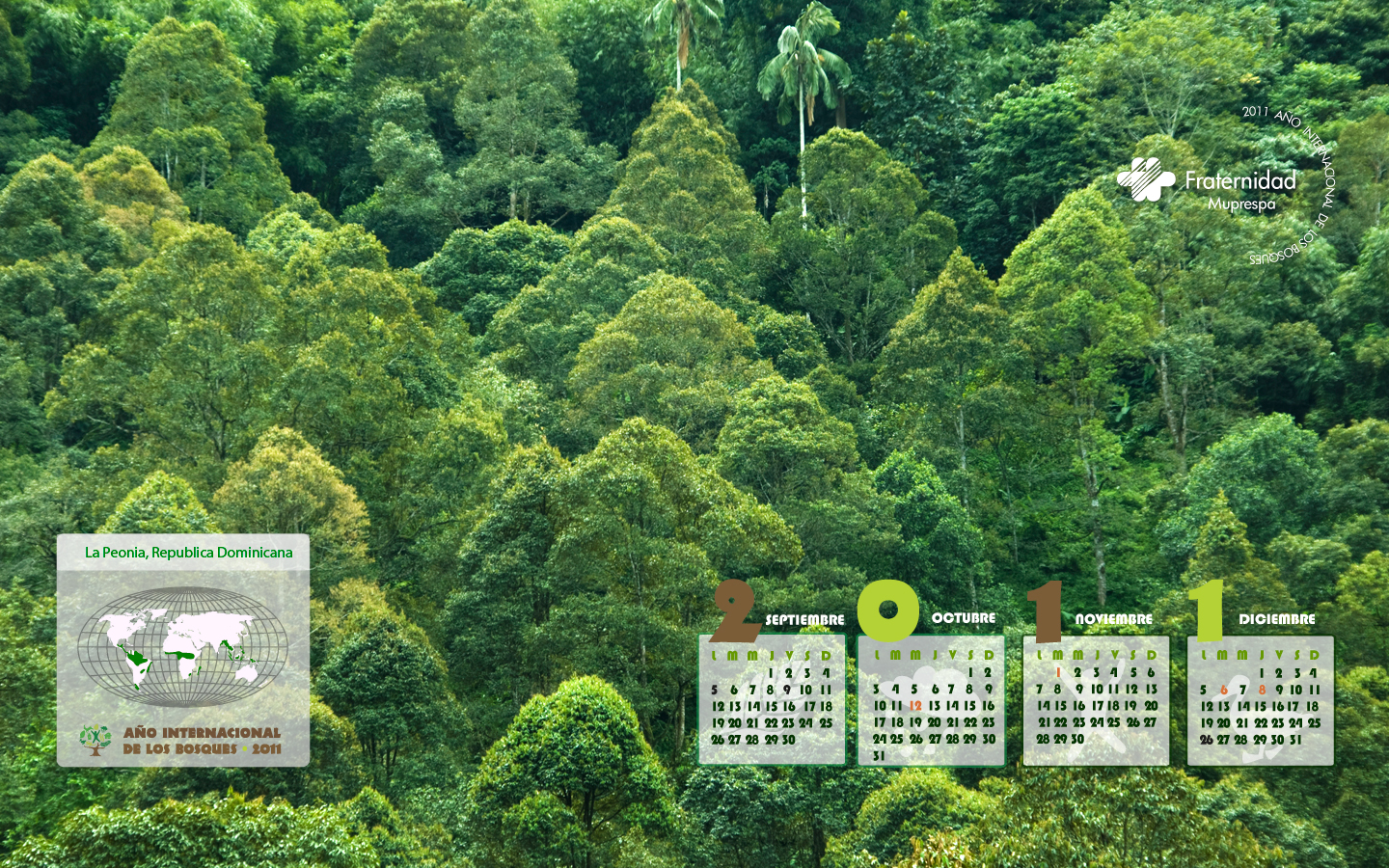
Expanding the concept, it can be said that "forest is all that surface of land where plant associations are growing, predominating trees of different sizes that have been exploited or not, capable of producing wood or other products; they influence the climate and the hydrological regime and also provide protection to wildlife."
Forests can be classified in different ways, and at different degrees of specification. One way is to determine the ecosystem in which they exist, along with the longevity of the leaves of most trees (whether evergreen or deciduous). Another classification is established by the predominant composition of the forests, broad-leaved, coniferous (pine), or both, giving rise to:
- Boreal Forests: they occupy the subarctic zone, and are generally made of trees with evergreen leaves (conifers).
- The Forests of the Temperate Zones: they include deciduous broadleaf forests and evergreen coniferous forests. In warm temperate zones there are broad-leaved evergreen trees, such as the Mediterranean forest and the laurel forest.
- Tropical and subtropical (or Riparian) Forests: include tropical and subtropical moist forests, tropical and subtropical dry forests, and tropical and subtropical coniferous forests.